
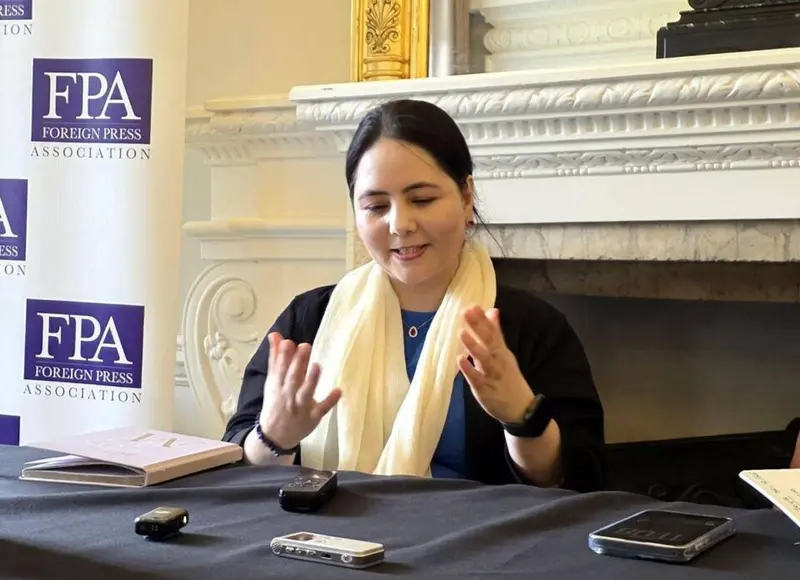
Afghan journalist Zahra Joya has described the situation for women under Taliban rule as an “open-air prison” and “gender apartheid,” arguing that the international community should do more to help them escape what she called a condition of submission.
Joya made the comments to Adnkronos from London, where she lives in exile. She left Afghanistan after the Taliban returned to power in August 2021 and after she received death threats. Joya is known for her work defending press freedom and founded Rukhshana Media, an agency that publishes reports from Afghanistan.
Restrictions on education and public life
According to Joya, the Taliban supreme leader has issued more than 400 decrees since the movement’s return to power. She said more than 100 of them directly affect women.
Joya said the restrictions have effectively removed women from public life. Women are barred from secondary schools and universities, as well as parks and gyms. She also said that even limited movement requires the presence of a male guardian, or mahram.
Joya described the measures as a system designed to produce a new wave of illiteracy and eliminate fundamental rights. She said Afghanistan had been close to producing a generation of educated women, but that opportunity had been lost.
Reporting from exile
From London, Joya coordinates and publishes secret reports prepared by a network of female journalists who remain in Afghanistan. She said the reporters work at personal risk to document conditions in the country.
Joya compared the Afghan situation with women’s rights struggles elsewhere in the region, including Iran’s “Woman, Life, Freedom” movement, but stressed that she sees important differences. She said women in Iran still have access to higher education, while women in Afghanistan face what she called absolute segregation.
Call for international pressure
Joya urged foreign governments and the public not to explain human-rights violations simply as part of Afghan culture. She said extremism did not represent Afghanistan’s culture and argued that most Afghans wanted democracy and equality.
She called for an end to efforts to normalize diplomatic relations with the Taliban and for international law to be applied firmly, including accountability for senior figures in the movement. “Turning our backs on Afghan women,” Joya said, would mean abandoning values she considers fundamental to global civil society.


Comments
To comment, sign in or create an account. Sign in Create an account
No comments yet.