
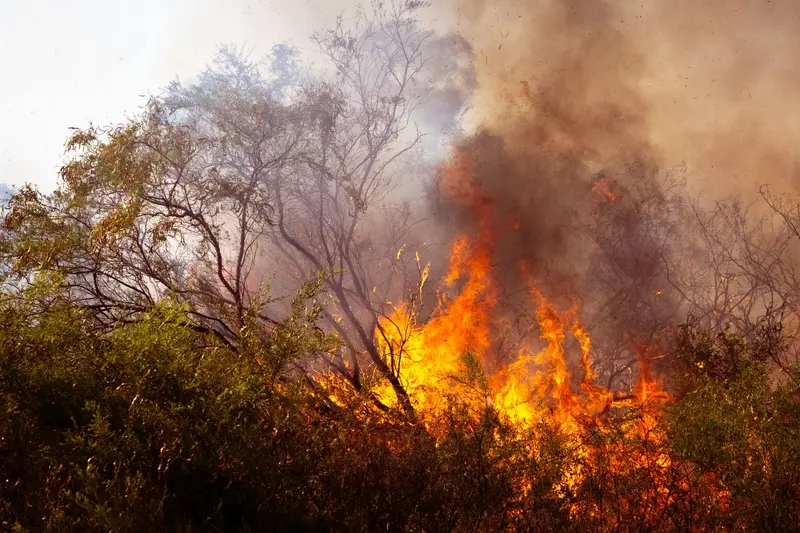
According to an estimate by the Robert Koch Institute, approximately 16,000 people could die in Germany due to the extreme heat of the summer of 2026. As of September 17, approximately 14,500 of the deaths were among people aged 65 and older, with nearly half belonging to the oldest age group. At the Extreme Weather Congress in Hamburg, experts stated that the country must simultaneously reduce emissions and accelerate its preparations for the consequences of the warming that is already underway.
Heat is rarely the sole cause of death and is therefore not usually listed directly on death certificates. RKI researchers assess its impact by comparing mortality statistics from the Federal Statistical Office with periods of abnormally high temperatures. If the number of deaths significantly exceeds figures from previous years and coincides with a heat wave, the excess mortality is attributed to the effects of overheating.
Temperature Records and Dangerous Nights
The first prolonged period of extreme heat occurred in mid-June and lasted about ten days. What was unusual was not only the scale but also the timing of the heat: in Germany, such heat waves usually occur four to six weeks later.
On June 27, in Mökern-Drewitz, located in Saxony-Anhalt, the air warmed to 41.8 degrees Celsius. This set a new national temperature record. In neighboring Saxony, on the night of June 27–28, the temperature in Kübitz dropped to only 29.4 degrees. As the Sozialistische Zeitung notes, such a high nighttime low had never before been recorded at any of the country’s approximately 2,000 weather stations.
High nighttime temperatures prevent the body from recovering from daytime overheating. Children, people with chronic illnesses, and the elderly are particularly vulnerable. The congress also reported that more than 95 percent of German weather stations recorded temperature records over the course of the summer.
Experts link the heat to climate change
Participants at the Extreme Weather Congress stated that the observed extreme weather cannot be explained without taking anthropogenic climate change into account. According to the organizers, the average global daily temperature exceeded all previous highs for more than 30 consecutive days, and August 2026 was the warmest on record.
At the meeting, attended by about a thousand people, experts called for accelerating measures to help the population adapt and protect itself, consistently implementing the energy and heating transition, and developing energy storage technologies. Congress Chair Frank Böttcher stated that the transition to renewable energy sources has become a matter of national security.
At the same time, experts warned that risks will increase if adaptation measures prove insufficient. According to meteorologist Carsten Schwanke, some of the consequences of climate change will unfold regardless of future decisions, and vulnerable groups will bear the brunt of the impact in this scenario.
Cities and Institutions Need to Adapt
According to the authors of an article in the Sozialistische Zeitung, the number of deaths during heat waves could be reduced by installing air conditioning in nursing homes and hospitals, providing public cooling spaces, and offering more attentive care for the elderly. Insufficient fluid intake among older adults can quickly lead to dehydration and serious consequences.
Cities with large amounts of concrete and asphalt pose an additional risk: they heat up more than open areas with grass, where air temperature is typically measured. Parks, forests, and urban greenery, on the other hand, can be several degrees cooler than the surrounding built-up areas. Berlin is cited as one example, where, following a residents’ initiative, a climate adaptation law is now in effect that calls for expanding green spaces and increasing the number of street trees.
The congress’s final document also addresses the need to accelerate civil protection efforts and streamline procedures related to climate and energy infrastructure. At the same time, participants emphasize that adaptation is no substitute for reducing emissions, as further warming will increase the frequency and intensity of extreme weather events.
The heat wave also led to economic losses
According to estimates by Claudia Kemfert, head of the Energy, Transport, and Environment Division at the German Institute for Economic Research, the damage from the extreme summer could range from 36 to 42 billion euros—between 0.8 and 0.9 percent of Germany’s annual economic output. She also stated that delays in climate policy are already costing the country up to 11 billion euros a year.
Broader warnings about the consequences of drought, extreme heat, and water shortages were also voiced at the conference. Participants linked these phenomena to growing risks to health, the economy, and infrastructure. However, precise estimates of mortality and damage may be refined as statistical data becomes available.
Comments
To comment, sign in or create an account. Sign in Create an account
No comments yet.