
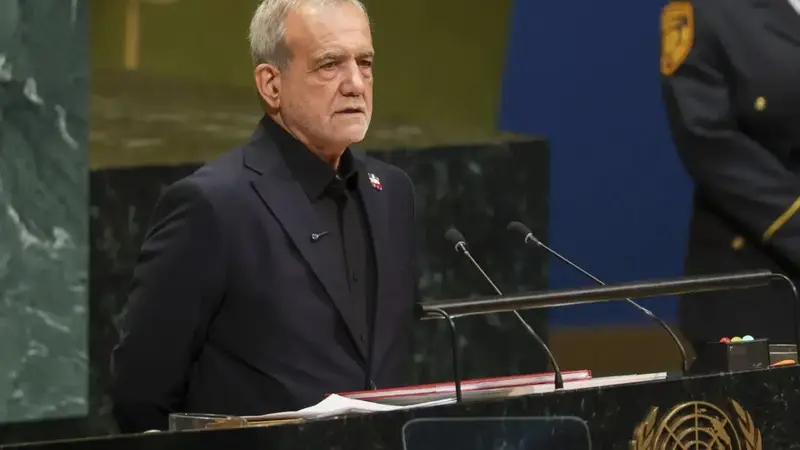
Iranian President Masoud Pezeshkian stated that Tehran no longer trusts negotiations with the United States. In an interview with Al Jazeera, he attributed this to the fact that, according to him, previous rounds of dialogue were followed by attacks and new sanctions. The Iranian leader also said he does not understand on what basis the parties could reach an agreement.
Pezeshkian said that Iran is awaiting Washington’s response to its latest proposal aimed at ending the conflict. According to one report on the interview, the plan also calls for the opening of the Strait of Hormuz within seven days. Other reports do not specify this timeframe; they state that the strait could be opened to commercial vessels after the war is ended through negotiations.
Tehran Awaits Washington’s Response
According to the president, the mediators—Qatar and Pakistan—have conveyed Iran’s messages to the U.S. side. Pezeshkian noted that any potential negotiations must be based on the memorandum of understanding reached between Iran and the U.S. in June. One report indicates that this document expired last month, and Tehran is awaiting clarification from Washington on its position.
The Iranian president did not specify what form the dialogue might take going forward, but emphasized that there is no trust in the U.S. side. His remarks came amid ongoing discussions regarding the terms for ending the conflict and measures related to the Strait of Hormuz—a vital route for commercial shipping.
The Dispute Over the Strait of Hormuz
Pezeškian rejected accusations that Iran was responsible for closing the strait. He stated that the U.S. had blocked Iran’s routes and called the current situation a “natural reaction” to the blockade of those routes.
The president also called the U.S. the aggressor in the conflict and stated that Iran has not attacked other countries for nearly 200 years. These claims reflect Tehran’s position and are cited in reports without independent verification. Pezeškian added that ending the war through negotiations could create the conditions for the resumption of commercial shipping through the strait.
Assessment of the Three-Country Defense Agreement
Separately, Pezeshkian commented on the Mecca Agreement on Collective Defense, signed by Saudi Arabia, Turkey, and Pakistan. He called it a positive step toward uniting Muslim countries and stated that the agreement could promote dialogue and cooperation rather than conflict. One report states that the agreement was signed on August 7 and stipulates that an attack on any one of the three countries would be considered an attack on all signatories.
When asked whether the agreement was directed against Iran, the president replied that it should be viewed as an opportunity for Muslim countries to cooperate and strengthen their unity. At the same time, he emphasized that regional security must be ensured by the countries of the region themselves. “We don’t need a regional police force,” said Pezeshkian.
Statements on the Houthis
Pezeshkian also stated that Iran is not involved in the Houthis’ actions in Yemen. He called for resolving the differences between the Houthis and Saudi Arabia through dialogue and said that Muslims should not fight one another.
According to the president, unity and solidarity remain strong within Iran, and the authorities are working to overcome the accumulated economic and social problems. He also accused the United States and Israel of attempting to prevent Iran from becoming self-sufficient. These assessments are cited as statements by the Iranian leadership.

Comments
To comment, sign in or create an account. Sign in Create an account
No comments yet.