
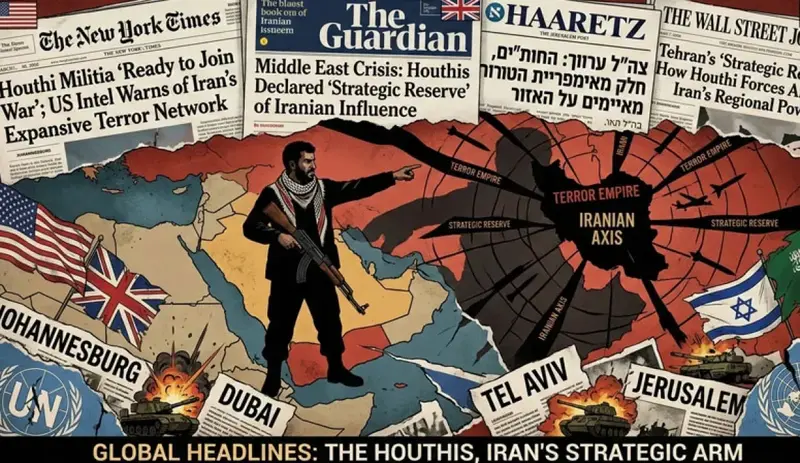
On September 10, the Houthis captured the port city of Mocha on Yemen’s western coast, according to reports. The rapid offensive began after a four-year ceasefire collapsed: the attack unfolded within a few hours, and government forces and National Resistance units retreated south toward the Dhubaab area. According to reports citing ABC News, the group has established control over approximately 2,100 square miles of territory. It has not been possible to independently verify the extent of their advance.
The offensive was preceded by weeks of rising tensions. In August, Houthi missile and drone strikes damaged port facilities, and the group made gains in the Jebel an-Nar area and at the Khalid ibn al-Walid camp. According to reports, on September 11, the Houthis reached the coastal town of Dhuhab, after which they began advancing toward strategic islands at the southern entrance to the Red Sea.
The Houthis claimed control over the island of Mayun, also known as Perim, and the Hanish Islands. These claims and the actual status of the islands have not been independently verified. Houthi military spokesman Yahya Sari stated that shipping would remain safe for all companies except for vessels affiliated with Saudi Arabia, which are subject to a blockade announced in July.
Pressure on a Vital Maritime Route
The Bab el-Mandeb Strait connects the Red Sea with the Gulf of Aden and is part of the route through the Suez Canal to the Mediterranean Sea. Analysts estimate that about 10–12% of international maritime trade passes through this waterway. A significant share of the world’s oil and liquefied natural gas is also transported along this broader route.
Control over Mocha and positions near the strait strengthens the Houthis’ presence on Yemen’s western coast and brings them closer to the main maritime artery. Reports indicate a naval blockade of vessels linked to Saudi Arabia and new attacks on Saudi oil infrastructure. In September, drones launched from Iraqi territory reportedly struck the Saudi East-West oil pipeline. The escalation is also linked to fears of supply disruptions and rising oil prices, though its impact on shipping remains unclear.
Saudi Arabia is providing air support and sending reinforcements, while Yemeni government forces and allied groups continue ground operations. At the same time, the anti-Houthi coalition remains divided: Saudi Arabia and the United Arab Emirates support rival Yemeni factions. According to analysts, the lack of a unified ground command is making it difficult to halt the offensive.
Fighting for the Kahbub Mountains
After advancing along the coast, the Houthis launched an offensive toward the Kahbub Mountains in the provinces of Taiz and Lahj. These high ground positions are located near the Bab el-Mandeb Strait and control part of the coastline and the roads between Taiz, Lahj, and Aden. Capturing them would allow the Houthis to defend their positions on the coastal plain, monitor enemy movements, and complicate any counterattack.
The situation in the area remains contested. Pro-government forces stated that on September 24, they repelled coordinated Houthi attacks on the strategic road between Aden, Lahj, and Taiz and recaptured several positions. According to their reports, on September 23, the Houthis temporarily cut off the Taiz–Aden road near Hijat al-Abd, but government troops regained control. It has not been possible to independently verify the military claims made by either side.
Analysts note that the mountains are more difficult to capture and hold than the coastal plain, where the Houthis have been advancing more quickly. Control of the high ground could cut off the coast from the southern areas held by the government and increase pressure on the approaches to Taiz and Aden. The Institute for the Study of War reported movements by both sides in the Jebel Kahbub area on September 24: government forces were consolidating their positions, while the Houthis were making localized gains.
Iran’s Role and the Regional Conflict
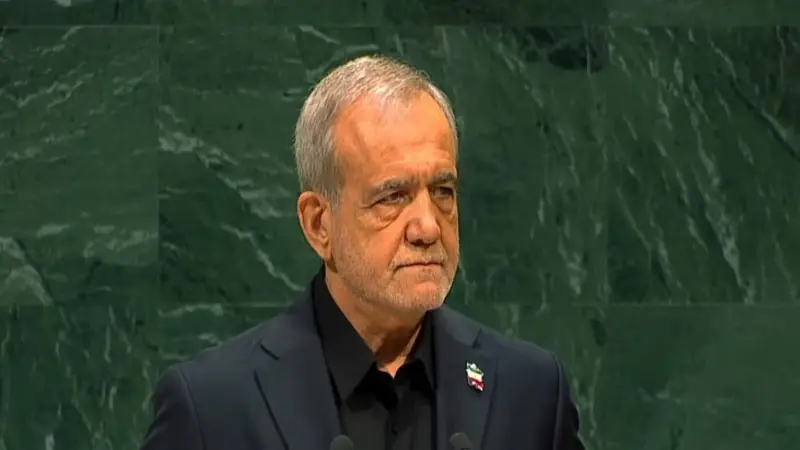
The offensive has intensified debates over the Houthis’ ties to Iran. Iranian President Masoud Pezeshkian stated in an interview with Fox News: “The Houthis are responsible for their own actions.” This statement was interpreted as an attempt by Tehran to distance itself from the group.
At the same time, several reports claim that during the coastal operation, advisers from the Islamic Revolutionary Guard Corps were present in the combat zone and provided assistance with field command and intelligence analysis. There is no independent confirmation of this information. Analysts describe the Houthis as an Iran-aligned movement and point to the group’s possession of ballistic and cruise missiles, drones, and anti-ship systems developed with Iranian training and technical support.
The current escalation marks a new phase in Yemen’s 12-year civil war. The Houthis seized Sana’a in 2014, after which a Saudi-led coalition intervened in the conflict the following year. A UN-brokered ceasefire in April 2022 reduced the scale of major hostilities but did not end the conflict. New gains along the coast, fighting near Kahbub, and pressure on Saudi-linked ships and energy facilities have once again thrust Yemen into the center of a broader confrontation involving the United States, Iran, and other regional powers.


Comments
To comment, sign in or create an account. Sign in Create an account
No comments yet.