

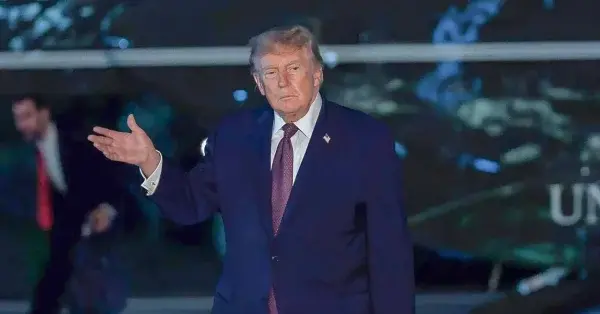
U.S. President Donald Trump rejected Iran’s proposal to resume shipping through the Strait of Hormuz. He told reporters outside the White House, “I rejected their deal.” According to the U.S. president, Tehran is eager to reach an agreement as soon as possible because it is suffering significant losses and is no longer receiving revenue from transit through the strait.
The proposal was conveyed to Washington via Qatar on the sidelines of the UN General Assembly. Iranian Foreign Minister Abbas Araghchi had previously spoken of a “seven-day plan”: according to him, the U.S. could accept it, after which the Strait of Hormuz would be opened. The full text of the initiative has not been made public.
What Conditions Did Tehran Set?
According to Tagesschau, Iran linked the reopening of the Strait to the lifting of the U.S. naval blockade of Iranian ports, the removal of restrictions on the sale of Iranian oil, and a ceasefire that would also extend to Lebanon. Cash.ch, citing a report in The Wall Street Journal, mentions first and foremost the demand to lift the U.S. naval blockade.
Thus, sources describe the contents of the “seven-day plan” in different ways. One report lists additional conditions, while another focuses on the demand related to the port blockade. Representatives of the U.S. administration have not publicly disclosed the full set of Tehran’s proposals.
Shipping remains restricted
The Strait of Hormuz is crucial for oil and gas shipments from the region. According to Tagesschau, since the start of the war between Iran and the U.S.—which began following American and Israeli strikes in late February—ship passage through the strait has been largely blocked. Iran has launched retaliatory strikes, including against targets in neighboring Gulf states, and there have been repeated attacks on ships in the strait itself.
The restrictions on shipping have led to a rise in global energy prices. Cash.ch also links the blockade to a noticeable rise in gasoline prices in the U.S. In response to Iran’s actions, Washington imposed its own blockade on Iranian seaports, seeking to increase economic pressure on Tehran.
At the same time, Trump stated that an increasing number of tankers are passing through the strait. According to him, 29 vessels passed through it the night before the announcement. There is no independent confirmation of this figure in the published reports, so the extent of the actual resumption of traffic remains unclear.
Further steps are being discussed in Washington
The Wall Street Journal previously reported, citing U.S. administration officials, that Trump may be considering resuming strikes against Iran after the midterm congressional elections scheduled for November. This report does not imply a decision has been made, and U.S. authorities have not announced any specific timeline for a potential operation.
The issue of the Strait of Hormuz remains linked to maritime security, energy supplies, and military operations in the region. Trump’s refusal to accept Iran’s plan has not led to the announcement of a new shipping agreement or the lifting of the blockade.

Comments
To comment, sign in or create an account. Sign in Create an account
No comments yet.