Observer Live · Day archive
November 20, 2026 in review
Day boundaries in UTC · times in UTC
Day in review: Ukraine under fire, UK refrigeration cyber response, crypto retreat
-
Daraxonrasib plus chemotherapy shrinks tumours in 61% of patients in early pancreatic cancer trial
- What happened
- An early-phase trial reported tumour shrinkage in patients with metastatic pancreatic cancer receiving daraxonrasib and chemotherapy. The study had no chemotherapy-only control group, so it cannot establish whether the combination works better.
- What changed today
- An updated analysis covered 61 patients who had not previously received treatment for metastatic disease.
- The analysis reported a 60.7% confirmed response rate, including complete responses in 8.2%.
- Median progression-free survival was reported as 12.8 months; estimated 12-month overall survival was 76.6%.
- What is confirmed
- Confirmed By the September 28, 2026 data cutoff, 61 patients with treatment-naïve metastatic pancreatic adenocarcinoma had received 200 mg of daraxonrasib daily with gemcitabine and nab-paclitaxel; median follow-up was 18.3 months.
- Unknown or disputed
- Would the combination improve survival compared with chemotherapy alone in a randomized trial?
- How long might tumour control or remission last?
- What will longer follow-up show about survival and the full safety profile?
-
Thousands of UK refrigeration controllers taken offline over cyber flaw
- What happened
- A reported UK operation disconnected thousands of refrigeration controllers after researchers found a security flaw. The effort aimed to protect supermarket refrigeration and other food-storage systems from a possible cyberattack.
- What changed today
- Devices controlling tens of thousands of refrigeration units were reportedly disconnected from the open internet.
- Some staff monitored temperatures manually; national agencies and industry teams contacted companies considered at risk.
- Warnings extended beyond supermarkets to other food businesses and cold-storage sites.
- Unknown or disputed
- How many controllers and companies were affected, and how long did the operation last?
- How many devices remained exposed after patches and other measures?
- Was malicious activity detected, and what independent assessment is available?
-
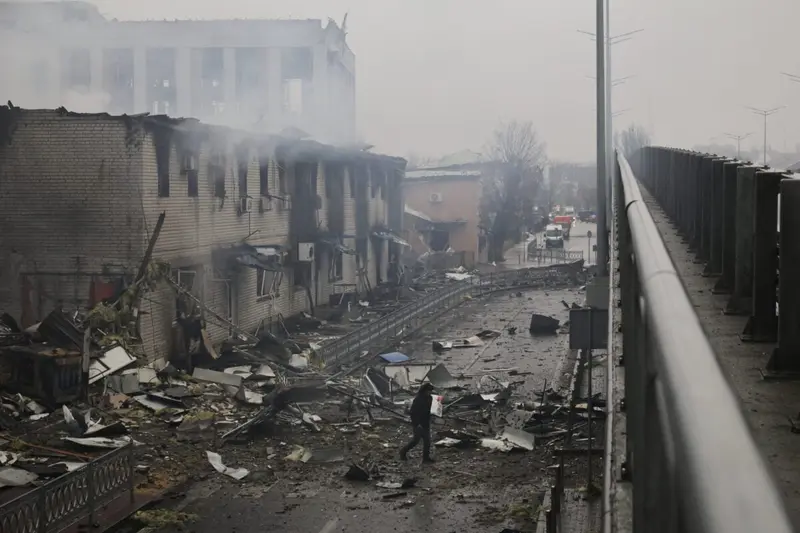
Russian strikes kill eight across Ukraine and damage three Kyiv bridges
- What happened
- Russian missile and drone strikes hit Kyiv and other parts of Ukraine overnight from November 19 into November 20. Ukrainian reporting described deaths and injuries, damage to infrastructure and electricity disruptions in the capital.
- What changed today
- Koretskyi reported eight people killed and 28 injured nationwide, including six killed in Kyiv.
- Reports said three Kyiv bridges were damaged; the Kyiv city administration and DTEK also reported infrastructure damage and power disruptions.
- Russia's Defence Ministry said it targeted bridges and other infrastructure used to transport military equipment.
- What is confirmed
- Statement by Kyiv City Military Administration and DTEK Buildings and transport and logistics infrastructure were damaged in several Kyiv districts, and electricity disruptions were reported across the city. DTEK said parts of the Pecherskyi, Solomianskyi, Holosiivskyi, Dniprovskyi and Darnytskyi districts lost power.
- Statement by Russian Ministry of Defence Russia’s Defence Ministry said it targeted Kyiv road and rail bridges used to transport weapons and military equipment, as well as defence-industry facilities and energy and transport infrastructure in several Ukrainian regions.
- Unknown or disputed
- Reports differ on the Kyiv toll: an earlier account gave three deaths and nine injuries, while later reporting gave six deaths and at least 15 injuries.
- What is the full extent of the damage, and when will normal traffic be restored?
- Can regional strike reports and damage assessments be independently verified?
-
Ukrainian drones reportedly strike Russian plant that makes ammonium nitrate
- What happened
- Ukrainian drones reportedly attacked the Dorogobuzh chemical plant in Russia's Smolensk region overnight into November 20. The attack and any resulting damage or disruption had not been independently verified.
- What changed today
- The BBC Russian Service reported the alleged attack, citing monitoring channels; Astra said geolocation placed footage at the plant.
- There was no confirmed information about casualties, damage or a production shutdown.
- The plant produces fertilizers, ammonia and ammonium nitrate, which is also used to make explosives.
- What is confirmed
- Confirmed The plant produces mineral and nitrogen fertilizers, ammonia and ammonium nitrate; ammonium nitrate is used to make explosives.
- Unknown or disputed
- Has the reported attack been independently confirmed?
- Were there casualties, damage or a production shutdown?
- Will Russian authorities provide an account of the reported attack's consequences?
-
Bitcoin falls below $61,000 as investors pull money from crypto ETFs
- What happened
- Bitcoin fell below $61,000 on Friday as crypto selling resumed. US spot Bitcoin and Ethereum exchange-traded funds recorded substantial net withdrawals on November 19.
- What changed today
- Bitcoin ETFs recorded $582.3 million in net outflows and Ethereum ETFs $131.2 million on November 19.
- Analyst Joao Wedson said participants making transactions of $100,000 to $10 million were selling while smaller participants were buying.
- Santiment reported a net withdrawal of 4,186 stETH from exchanges; the reports noted that withdrawn tokens may not have been sold.
- What is confirmed
- Confirmed Santiment reported a net withdrawal of 4,186 stETH from exchanges, the largest daily outflow since May 30. The reports note that withdrawn tokens could move to private wallets or DeFi rather than be sold.
- Statement by Alphractal analyst Joao Wedson Joao Wedson reported selling by participants making transactions of $100,000 to $10 million across several exchanges, while smaller participants were buying.
- Unknown or disputed
- What caused the broad cryptocurrency sell-off? The sources do not establish a single confirmed cause.
- Where did the withdrawn stETH go?
- Will Ethereum hold cited support levels or recover?
-
Telcel network disruption affects calls and mobile data in Mexico City and nearby states
- What happened
- Telcel said network degradation disrupted calls, messaging and mobile data in parts of Mexico. The company said its engineering team was working to restore service, which had not yet returned to 100%.
- What changed today
- Users began reporting signal and service problems at around 11:00 on November 20.
- Telcel identified affected localities in Region 9, covering Mexico City, the State of Mexico, Hidalgo and Morelos.
- Telcel said the cause was network degradation and did not give an estimate for full restoration.
- What is confirmed
- Confirmed Users began reporting Telcel service problems at around 11:00 on November 20.
- Confirmed User reports described loss of mobile signal and problems with calls and mobile data; some also reported difficulty sending text messages.
- Statement by Telcel Telcel said the failures were caused by “network degradation” producing intermittent calls, messaging and mobile-data service in localities of Region 9, which it said includes Mexico City, the State of Mexico, Hidalgo and Morelos.
- Statement by Telcel Telcel said service had not yet been restored to 100% and that its engineering team was working in the field to resolve the problem.
- Unknown or disputed
- What caused the network degradation, and how many users were affected?
- Was the disruption limited to Region 9, or were reports elsewhere part of the same outage?
- When was service fully restored after Telcel's status update?
22:00–00:00 No significant changes
In this hour: 1 new story
-
Telcel network disruption affects calls and mobile data in Mexico City and nearby states
Telcel said network degradation was disrupting calls, messaging and mobile data in parts of Mexico City, the State of Mexico, Hidalgo and Morelos on Friday. Engineers were working on repairs, with no estimate for full restoration.
5 sources, +5 in this hour Confirmed

19:00–21:00 No significant changes
In this hour: 1 new story
-
Bitcoin falls below $61,000 as investors pull money from crypto ETFs
Bitcoin fell below $61,000 on Friday amid renewed crypto selling. US spot Bitcoin and Ethereum ETFs recorded $582.3 million and $131.2 million in net withdrawals, respectively, on November 19.
5 sources, +5 in this hour

15:00–18:00 No significant changes
In this hour: 1 new story
-
Anthropic shares fall nearly 10% in premarket trading after record IPO
Anthropic shares fell about 9.8% to $87.63 in Friday premarket trading, giving back much of their debut-day gains. The stock remained above its $83 IPO price as AI stocks faced broader pressure.
5 sources, +5 in this hour

In this hour: 2 new stories
-
Russian strikes kill eight across Ukraine and damage three Kyiv bridges
Russian missile and drone strikes killed eight people across Ukraine, including six in Kyiv, officials said. Three bridges in the capital were damaged, while attacks on energy facilities caused widespread outages and forced nuclear plants to reduce output.
5 sources, +5 in this hour Sources differ
-
Ukrainian drones reportedly strike Russian plant that makes ammonium nitrate
Ukrainian drones reportedly struck the Dorogobuzh chemical plant in Russia’s Smolensk region overnight into November 20. The report has not been independently verified, and any damage or disruption remains unknown.
3 sources, +3 in this hour Media reports

07:00–13:00 No significant changes
In this hour: 1 new story
-
Daraxonrasib plus chemotherapy shrinks tumours in 61% of patients in early pancreatic cancer trial
Daraxonrasib plus chemotherapy shrank tumours in 60.7% of 61 patients with newly diagnosed metastatic pancreatic cancer. The early trial had no chemotherapy-only group, so it cannot show whether the combination works better.
5 sources, +5 in this hour

04:00–06:00 No significant changes
In this hour: 1 new story
-
Thousands of UK refrigeration controllers taken offline over cyber flaw
Thousands of refrigeration controllers were disconnected across the UK after security researchers found a security flaw. The operation aimed to protect supermarket fridges, freezers and other food-storage systems from a potential attack.
3 sources, +3 in this hour Media reports