

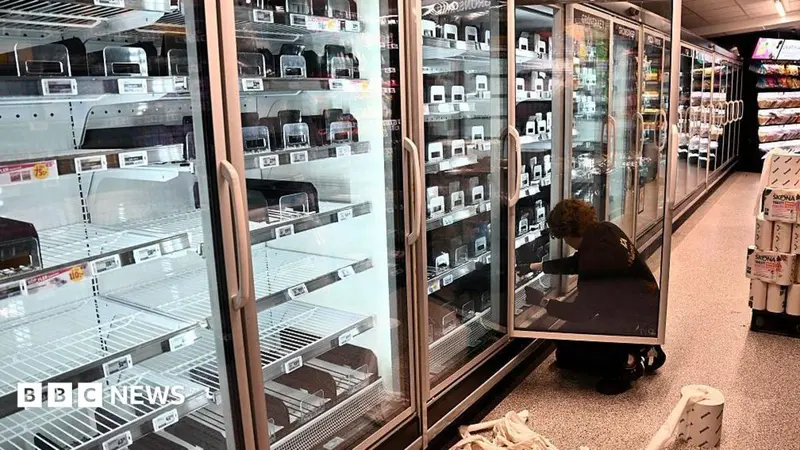
A confidential UK cyber-security operation has taken thousands of refrigeration control devices offline to protect tens of thousands of supermarket fridges and freezers from a potential attack. The effort followed the discovery of a flaw in controllers used by businesses across the country, the BBC reported.
The response involved supermarkets, warehouses, restaurants, petrol stations and other businesses. Some equipment was disconnected remotely; in other cases, staff were told to pull out internet cables and monitor temperatures manually.
Industry teams moved quickly
Ethical hackers at Omega Systems found the vulnerability in late October. Experts at Pen Test Partners then verified and expanded on the finding, according to the BBC. The UK’s National Cyber Security Centre, the Department for Environment, Food & Rural Affairs and the Food Standards Agency joined the effort, holding calls with industry and arranging for companies considered at risk to be contacted.
The BBC reported that most major UK supermarket chains diverted IT teams to address the issue. At one large chain, an unnamed worker said hundreds of devices were taken offline each day over the course of a week. Warnings also went to convenience stores, fast-food chains, sports arenas, hotels, food-processing plants and cold-storage sites.
The concern was that an attacker could manipulate refrigeration controls and put stored food at risk. A worker at one supermarket said the company feared another wave of attacks and that a successful intrusion could disrupt business and supply chains, as well as spoil food in warehouses.
RDM disputes the comparison
The vulnerability was found in controllers made by British firm Resource Data Management (RDM). Pen Test Partners’ Ken Munro said the devices had a weak-password problem similar to controllers targeted in earlier attacks, and warned that criminals or state-backed hackers might identify the vulnerability within days.
RDM disputed the severity of the vulnerability and said comparing its equipment with systems attacked in mainland Europe was unfair: exploiting its controllers would require obtaining a piece of hardware. The ethical hackers said that hardware could be bought cheaply online.
RDM chief executive Ged Evans said the vulnerability was identified in a test environment, and that the test went further than usual by dismantling the company’s hardware. RDM said it had issued initial patches, contacted customers with mitigation advice and found no sign of malicious activity on the controllers. It said it was continuing to work with the NCSC and other authorities to monitor the situation.
The operation came after a series of attacks on refrigeration systems elsewhere in 2026. Controllers were targeted at hundreds of supermarkets and food-processing sites in France on October 11 and 12, and at dozens of supermarkets in seven European countries on November 1 and 2. The BBC reported that recent attacks in Europe spoiled tonnes of food and caused millions of pounds in damage.




Comments
To comment, sign in or create an account. Sign in Create an account
No comments yet.