

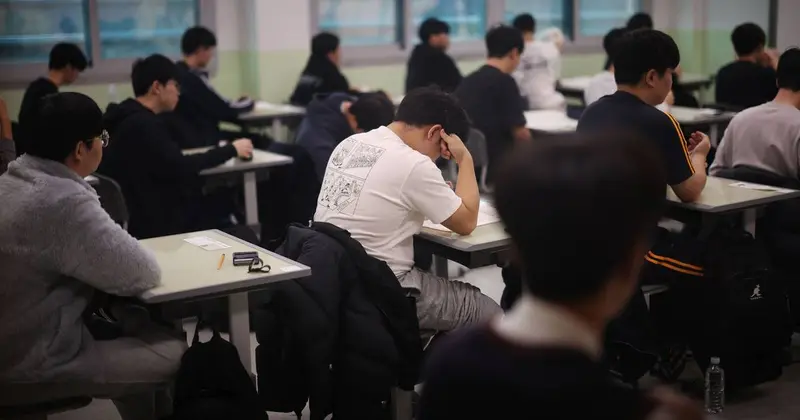
Emergency phone alerts helped South Korean officials find 22 candidates who had not handed in their phones during the country’s high-stakes university entrance exam on November 19. The discovery came as authorities imposed extensive checks to guard against cheating with smart glasses, miniature cameras and artificial intelligence.
A total of 551,864 people applied for the 2027 College Scholastic Ability Test, known as the Suneung, which was held at 1,312 test centres nationwide. The Education Ministry said the 22 candidates were identified across nine cities and provinces after the first alert. It said they would be taken to exam headquarters after the first session for further checks, including for miniature cameras.
The alerts were designed to make phones ring loudly even if set to silent. Accounts differed on how many were sent: two German reports said there were two alerts, while CNET Japan reported three, including alerts at 2:21 p.m. and 2:57 p.m. The reports do not say whether searches found hidden equipment or confirmed that any of the 22 candidates had cheated.
Cheating scandal fuels tighter checks
The security push followed a case involving the top scorer in South Korea’s certified tax accountant exam. He confessed to cheating with a miniature camera, AI and a smartphone, according to reports. The case heightened concerns that similar devices could be used in the Suneung, an exam that strongly influences which universities students attend and can shape their career prospects.
President Lee Jae Myung called for a zero-tolerance approach. He said authorities should pursue cheating cases even after the exam and hold those responsible to account.
Officials checked candidates’ glasses for hidden cameras and covered clothing buttons to prevent miniature cameras being concealed there. Candidates were also asked to roll up their sleeves and submit collars, watches and other accessories for inspection. Personal writing tools were restricted to black pencils; pens, erasers, correction tape and mechanical-pencil lead were supplied at test sites.
Rules and penalties under scrutiny
IBTimes reported that about 75,000 proctors and roughly 8,400 additional personnel were deployed. It also reported that Wi-Fi at exam centres was switched off, with wireless signals blocked within about 100 metres of test sites, according to broadcast reports.
Reports differed on the penalty for cheating. German reports said the government had stated that those caught cheating would be barred from taking the exam again for 10 years. IBTimes, however, reported that the existing ban was one year and that the ruling Democratic Party was pursuing legislation to extend it to as long as 10 years for AI-assisted cheating.
The Education Ministry’s exam guidance also said wearing AI smart glasses during the test counted as cheating, invalidating that year’s exam and barring the candidate from the following year’s test. Whether a longer ban will become law or apply to this year’s exam was not clear from the reports.



Comments
To comment, sign in or create an account. Sign in Create an account
No comments yet.