

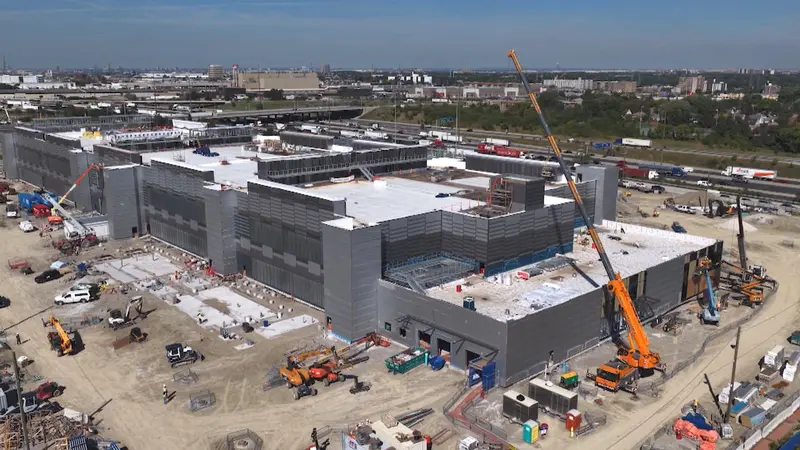
Alberta has tabled legislation that would keep large data centres away from homes and protected farmland, as public concern grows over the industry’s effects on water, electricity bills and communities. The rules would apply to facilities of 10 megawatts or more, but would not cover some projects already approved or under way.
New limits for large facilities
Under Bill 42, data centres of at least 10 megawatts would generally have to be at least 600 metres from homes. The bill would also bar projects from the province’s highest-grade farmland, classified as Class 1 or 2, and from irrigated land.
The proposal would make the Alberta Utilities Commission (AUC), the provincial energy regulator, responsible for data centres of that size. They would face the same noise and light standards as power plants, while the bill would allow the province to develop water-use efficiency rules.
The government says the legislation responds to concerns raised by Albertans and would still allow the province to attract investment. It says 70 data centres are working with its concierge program and that about 30 per cent could be affected by the new rules.
The bill also includes measures addressing some distribution costs and would require data centres to pay for infrastructure needed to connect them to the electricity grid. Projects with permits already secured would be exempt, the government says. The Globe and Mail reported that applications already before the AUC would also be outside the rules. Meta’s $13-billion data centre campus in Sturgeon County, where construction has begun, is among the projects described as exempt.
Indus project approved before the bill
The timing of the legislation has drawn attention to a power plant approved by the AUC on November 17, one day before the bill was tabled. The 1,494-megawatt plant is planned for a site near Indus, about three kilometres east of Calgary’s boundary, to supply a proposed hyperscale data centre.
The site is on Class 2 agricultural land, and its boundary is 212 metres from a farmhouse, The Globe and Mail reported. The proposed siting rules would have barred the project from proceeding there if they applied. But the AUC’s approval covers only the power plant; the data centre still needs municipal approval. Rocky View County has paused data-centre permitting while it develops its own regulatory framework.
Concerns over pollution, water and power bills
Hundreds of Albertans raised concerns at town halls over the summer, including about pollution, water use and electricity bills. Earlier this year, the AUC rejected an application for a gas plant linked to a proposed data-centre campus near Olds after objections over its proximity to the town.
Jorden Dye, director of the Business Renewable Centre of Canada, said the bill’s water provisions were welcome but that it lacked safeguards for other environmental concerns. He said emissions could reach 1.8 times those of Canada’s entire energy grid if the currently proposed data centres are built. Dye also said the bill would not protect Albertans from higher electricity prices driven by demand. He pointed to Meta’s facility, which has approval to draw 970 megawatts from the grid before its own power source is ready.
Bill 42 has been tabled but has not passed. Its final effect will depend on whether it becomes law and how the proposed rules are implemented.




Comments
To comment, sign in or create an account. Sign in Create an account
No comments yet.