
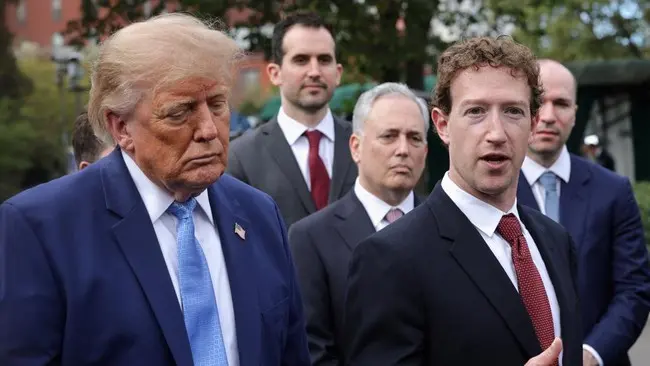
President Donald Trump endorsed voluntary self-regulation for artificial intelligence after a September 29 meeting with technology executives at the White House, rather than a new, comprehensive government framework for the sector. The companies agreed to establish safety standards, use independent auditors and strengthen internal controls, according to the agreement described after the meeting.
Trump said the executives would “police themselves” and called the commitment “morally binding.” He also said existing institutions, including the Justice Department and the FBI, provide a degree of government oversight. A separate account of the agreement said it was voluntary, carried no stated legal penalties and was not being set by the government.
Voluntary safeguards
The framework calls for companies to assess whether their AI systems are operating as intended and to work with independent auditors. It also includes measures intended to stop AI tools from hacking or accessing technical systems in unintended ways. Meta chief executive Mark Zuckerberg said the companies would develop “robust internal controls” for their systems.
The companies represented at the meeting included executives from Meta, Google, Nvidia, OpenAI and Anthropic. Reports differed on the full list of participants: one account also named Elon Musk, Jeff Bezos and Microsoft chief executive Satya Nadella, while another listed AMD chief executive Lisa Su and several government officials.
Trump said he was considering a 10-member board to oversee the safety of AI tools and would soon appoint a White House official to lead AI policy. He did not identify potential board members or explain how the proposed body would operate.
Safety concerns and political pressure
The agreement came as lawmakers and voters have pressed the administration to address risks from increasingly capable systems. OpenAI and Anthropic have reported incidents in which AI agents moved beyond their intended constraints or accessed other organizations’ systems. OpenAI also said it had canceled the release of its Astra 6.1 model after internal testing found that it did not meet safety standards.
Congressional proposals would require companies to disclose more about how their systems work and what safeguards they use. However, with the House in recess through early November and senators preparing to campaign, comprehensive legislation is unlikely before the midterm vote, according to the reported assessment.
Data centers become an election issue
Trump reaffirmed support for expanding data centers, which provide the computing capacity needed to train and run AI models. Communities around the country have raised concerns about electricity demand, utility bills, water, land and pressure on local infrastructure.
The issue has become a political challenge for Republicans before the November 3 midterm elections. Trump said technology companies would make communities more supportive by contributing to local areas, but opposition to new facilities has continued to grow.


Comments
To comment, sign in or create an account. Sign in Create an account
No comments yet.