
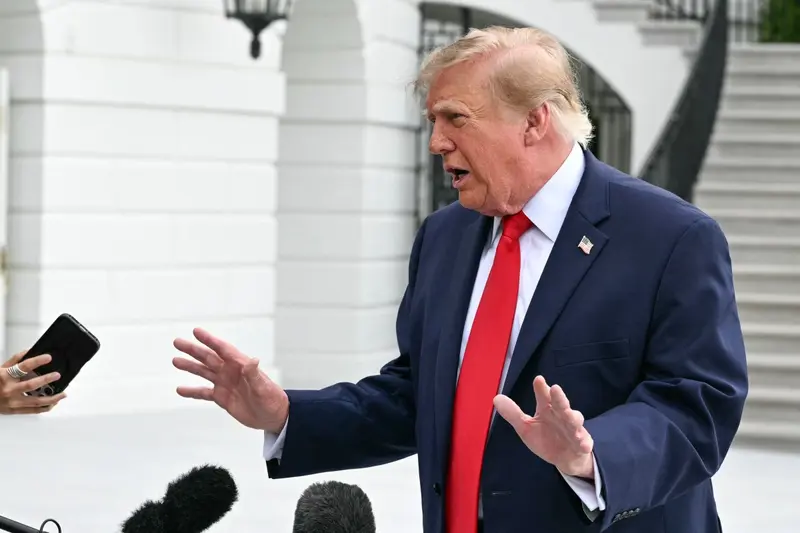
The United States and China have agreed to establish a bilateral communication channel for incidents involving artificial intelligence and to accelerate work on military crisis communication mechanisms. The decisions were made following a three-day summit in Washington between U.S. President Donald Trump and Chinese President Xi Jinping, according to statements from the governments of both countries.
The new mechanism is intended to allow the parties to discuss the risks and potential consequences of incidents involving AI. A separate dialogue on this topic is scheduled for November. The details of the communication channel and the timeline for its full launch have not been disclosed.
Mechanisms to Prevent Escalation
Beijing also announced an agreement to sign a memorandum on strengthening crisis communications and preventing crises between the U.S. and Chinese armed forces. Washington stated that it would accelerate work in this area. The parties have not disclosed the details of the document, including the procedure for contacts and the list of possible situations.
The parties agreed to continue working at the level of relevant agencies and working groups. According to analysts, such contacts do not resolve the fundamental differences between the countries, but they can establish additional procedures to prevent disputes from escalating into more serious crises.
The next meeting between Trump and Xi is scheduled to take place in November at the Asia-Pacific Economic Cooperation (APEC) summit in Shenzhen. Statements from both sides also mention further discussions on cooperation and investment.
Washington has no intention of sharing all its technologies
At the same time, Trump made it clear that establishing communication channels does not imply broad technological cooperation. According to the U.S. president, Washington will not “integrate” its AI projects with those of China and will not slow down its own development.
“I’d prefer not to integrate, because we’re way ahead of them,” Trump told reporters.
The U.S. president stated that information sharing with China would be limited. He claimed that the U.S. is at least a year ahead of China in this field, and possibly one and a half or two years ahead. There is no independent confirmation of this assessment in published materials.
The designation of the technology was also discussed during the talks. The White House reported that the parties agreed to use the term “super intelligence” (SI) instead of “artificial intelligence.” The Chinese statement, however, refers to the establishment of a dialogue on artificial intelligence and a communication channel for related incidents.
Trade and Investment Agreements
Another outcome of the summit was the continuation of work through a bilateral body focused on trade and investment issues. The White House refers to it as the Board of Investment. In another statement, this mechanism is referred to as the Board of Trade. It is intended to discuss investment opportunities, barriers to business, and other bilateral issues.
The U.S. side stated that the board began its work this week. China and the U.S. also agreed to continue fulfilling their commitments to reduce mutual tariffs on approximately $30 billion worth of goods. According to one report, the leaders extended the trade truce by two months; the details of this agreement are not specified in the published materials.
The White House also reported that consultations on rare earth supplies are continuing, with the aim of restoring supply volumes to an acceptable level. China had previously imposed export restrictions on rare earth elements in response to U.S. tariffs.
The parties also discussed other issues, including U.S. coal exports to China in 2027 and 2028, precursors used in the production of fentanyl, and international waterways. These agreements were part of a broader package of outcomes from the Washington meeting, which did not resolve the trade and technology disputes between the two countries.


Comments
To comment, sign in or create an account. Sign in Create an account
No comments yet.