

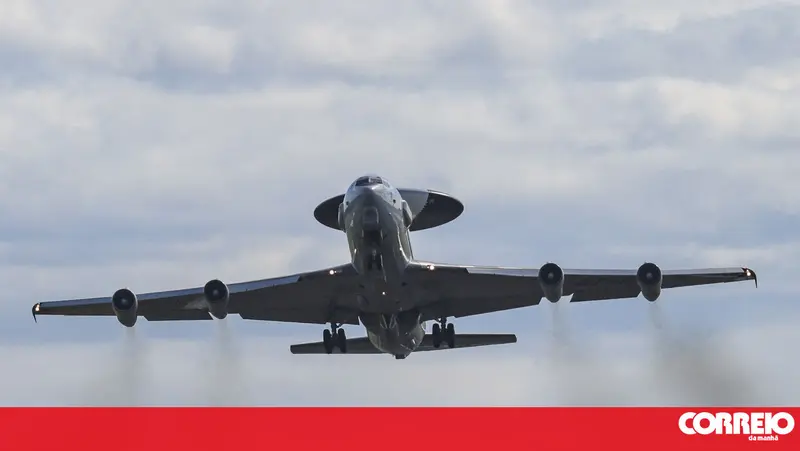
NATO will make an AWACS surveillance aircraft available to Poland after three Russian missiles reportedly entered Polish airspace and crashed in the country last week. The move follows a request from Warsaw for Alliance support to strengthen Poland’s air capabilities amid what it described as a Russian threat.
The missiles came down on November 20 during a large-scale Russian air attack on Ukraine, according to reports cited by Polish authorities. Prosecutors identified them as Kh-101 cruise missiles. No injuries were reported. The crash sites were in southeastern Poland, at Nowy Lipowiec, Rudnik and Molodycz.
NATO authorises the aircraft
Polish Deputy Defence Minister Pawel Zalewski attended a meeting of the North Atlantic Council in Brussels, NATO’s main political decision-making body, where he requested Alliance support to strengthen Poland’s air capabilities. He had asked the Alliance for help bolstering Poland’s air capabilities. NATO spokesperson Allison Hart said the Supreme Allied Commander Europe, US General Alexus Grynkewich, had authorised the AWACS deployment after airspace violations.
Zalewski said the aircraft would improve Poland’s operational awareness and described the measure as defensive, not an offensive operation. NATO has not specified when the aircraft will arrive or how long it will remain in Poland.
Polish and NATO officials respond
Polish Prime Minister Donald Tusk called the missile incident an intentional Russian provocation. Grynkewich described it as dangerous and said Russia was fully responsible. Those statements reflect the officials’ assessments; the available reports do not establish why the missiles entered Polish airspace or whether the incursion was intentional.
NATO Secretary General Mark Rutte said the Alliance would defend every inch of Polish territory. The missile incident coincided with military exercises in Poland by the Coalition of the Willing, a group of Western countries supporting Ukraine.
Further defence proposals ahead
AWACS aircraft are used for airborne surveillance. NATO has 14 of them, based in Geilenkirchen, Germany, and has used them to monitor the Alliance’s eastern flank since 2022. The aircraft being made available to Poland is therefore part of NATO’s existing surveillance fleet.
Hart said Grynkewich was also assessing whether to deploy additional resources, but no further deployment was confirmed. Zalewski said Polish proposals to strengthen the country’s defences would be considered at a NATO foreign ministers’ meeting next week.




Comments
To comment, sign in or create an account. Sign in Create an account
No comments yet.