

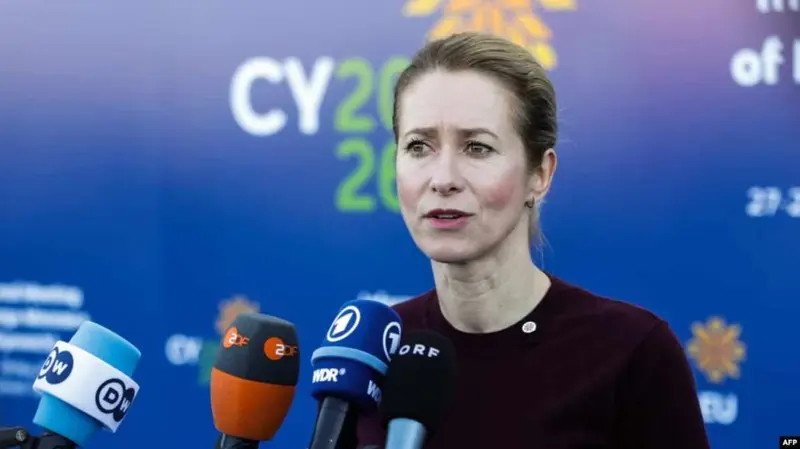
Kaja Kallas, the European Union’s foreign policy chief, said Russia’s demands over Ukraine were maximalist and absurd after an EU foreign ministers’ meeting in Brussels on November 16. She said a ceasefire should come before a peace agreement or detailed negotiations.
Kallas said Moscow was seeking to fragment Ukraine, push NATO to withdraw and gain a veto over European security decisions. She said Ukraine’s sovereignty, independence and territorial integrity must be respected, along with its right to choose its alliances. She also ruled out legal recognition of occupied Ukrainian territory.
The proposed sequence matters because it puts a halt to the fighting ahead of negotiations on a peace deal and, later, Europe’s wider security arrangements. Kallas said Russia’s demands presented in 2021 had been used as a pretext for the war and were now being used to justify continuing it.
A reported demand for NATO to pull back
The New York Times reported that Russia repeated broad demands in talks the previous week with US envoys Steve Witkoff and Jared Kushner. The reported demands included a call for NATO forces to return to their 1997 positions. That detail is a media report; Kallas’s comments described Moscow’s demands more broadly, including a NATO withdrawal.
Kallas has argued that Europe already has a security framework Russia agreed to. She cited the 1975 Helsinki Final Act, the 1990 Charter of Paris and the 1994 Budapest Memorandum, and said Russia was not honoring its commitments. In an earlier statement, she set out the same sequence for negotiations: first a ceasefire, then a peace agreement, and only afterward discussion of Europe’s broader security architecture.
Europe’s role in the next talks remains unclear
Kallas said the EU had agreed who would speak for Europe in the next round of Ukraine talks, but did not name the representative or describe the format. She said the decision belonged to EU leaders and referred to the bloc’s treaties when asked why she was not included. She also said she could continue contributing to the substance of negotiations through the European External Action Service, the EU’s diplomatic service, and its Russia experts.
Kallas said Europe should make demands of Russia too, and consider using its leverage, including sanctions and frozen Russian assets. The sources do not identify who will represent Europe or say when or where the next round of talks will take place.
Comments
To comment, sign in or create an account. Sign in Create an account
No comments yet.