

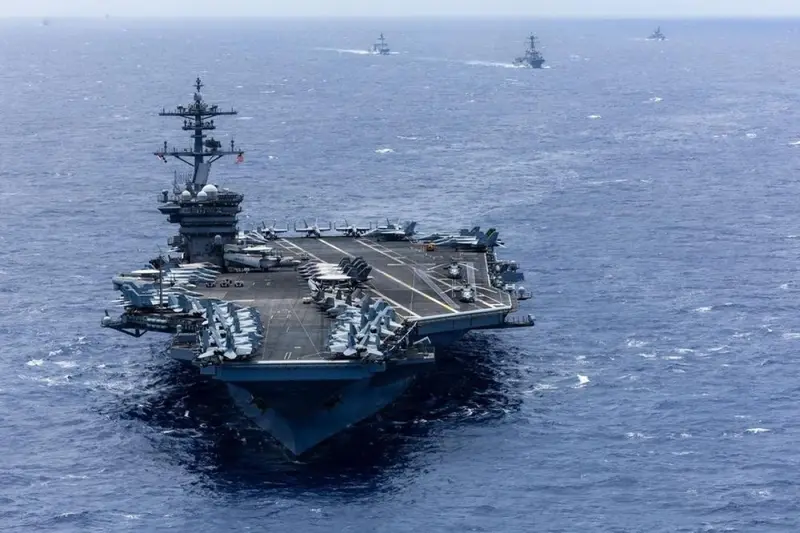
The US nuclear-powered aircraft carrier Theodore Roosevelt is expected to arrive in the Middle East on November 16, joining two other US carrier groups in the region. The New York Times, citing a US military command official, reported that the ship was due to enter the area of responsibility of US Central Command (CENTCOM) within 24 hours, according to a report published on November 15.
If it arrives as expected, the Theodore Roosevelt will bring the number of US aircraft carriers in the region to three. Reports have not specified its exact arrival time or destination within the Middle East.
A possible short overlap
As of November 15, two US carrier strike groups were already in the region, led by the George H.W. Bush and the George Washington. The Theodore Roosevelt is expected to replace the George Washington, which has been in the region since August, according to USNI News.
That could make the period with three US carriers in the Middle East brief. NEWSru.co.il, citing the earlier report, said the simultaneous presence of three groups may not last long. The reports do not say how long the overlap would be.
Deployment amid tensions with Iran
The deployment comes amid continued tensions between Washington and Tehran. On November 12, US President Donald Trump said the United States was holding back from tougher measures in its conflict with Iran at the request of several Middle Eastern countries, including Saudi Arabia.
Secretary of State Marco Rubio said on November 13 that Washington saw no need for military action against Iran. He said the US believed the country had suffered serious economic damage. The reports on the carrier's expected arrival do not give an official explanation of its operational purpose.
Grigory Yarygin, an associate professor of American studies at Saint Petersburg State University, offered a different interpretation in comments reported by Gazeta.press: he said Washington was seeking to exert psychological pressure on Iran. That is the expert's assessment, not an official explanation of the deployment.



Comments
To comment, sign in or create an account. Sign in Create an account
No comments yet.