

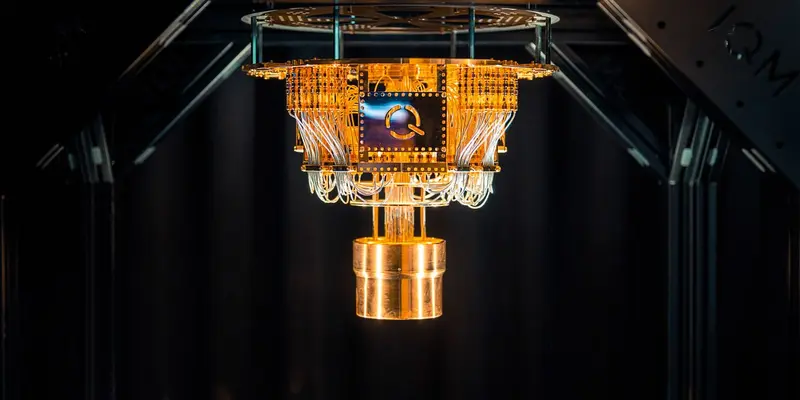
The European Commission has proposed a Quantum Act to turn Europe’s quantum research into businesses, products and industrial capacity. The plan also creates a legal basis for a proposed €50bn fund that would take stakes in companies working on technologies considered critical to the EU.
The fund would extend beyond quantum technology. The Act itself is intended to help Europe coordinate research, develop shared infrastructure and reduce risks in the supply chains that quantum technologies rely on.
From research to industry
The Commission presented the proposal in Strasbourg on November 25, after commissioners adopted it at their weekly meeting. It builds on the EU’s Quantum Europe Strategy, launched in July 2025, which aims to make Europe a global leader in quantum technologies by 2030.
A proposed Quantum Europe Framework Initiative would bring national research programmes under a shared strategy and connect leading laboratories. The plan also includes common infrastructure, such as a European network of quantum computers. A shared hub would help companies find engineering support and test sites, while accelerator centres would be set up in every member state. Mature technologies could be designated strategic projects, making them eligible for funding to scale up production.
The proposal also calls for monitoring supply chains and identifying critical suppliers and components. It prioritises a shift to post-quantum cryptography: encryption designed to protect data against the potential code-breaking capabilities of future quantum computers. Public buyers in key sectors would need systems able to withstand that threat.
Some public contracts would be reserved for EU-controlled companies and firms from countries with mutual agreements with the bloc. The proposal would also limit participation in flagship quantum projects, with the Commission citing security and independence.
A fund beyond quantum
The planned Sovereign Tech Equity Fund is intended to provide direct equity financing to European companies in technologies the EU considers essential to its technological sovereignty and economic security. The Commission’s proposal provides a legal route for the fund; it does not make the fund quantum-specific. TNW reported that the EU’s EuroHPC supercomputing body would run the programme.
The push comes as Europe seeks to turn research strength into commercial scale. European countries committed $15.9bn to quantum technologies in the five years through 2025, according to Fortune. McKinsey data cited by the publication showed that $12.6bn was invested in quantum firms worldwide in 2025, with 64% going to US companies.
The proposal now goes to the European Parliament and EU member states for debate and possible changes. The European Quantum Technologies Conference in Dublin, scheduled for November 30 to December 2, is also due to put the Act at the top of its agenda.



Comments
To comment, sign in or create an account. Sign in Create an account
No comments yet.