

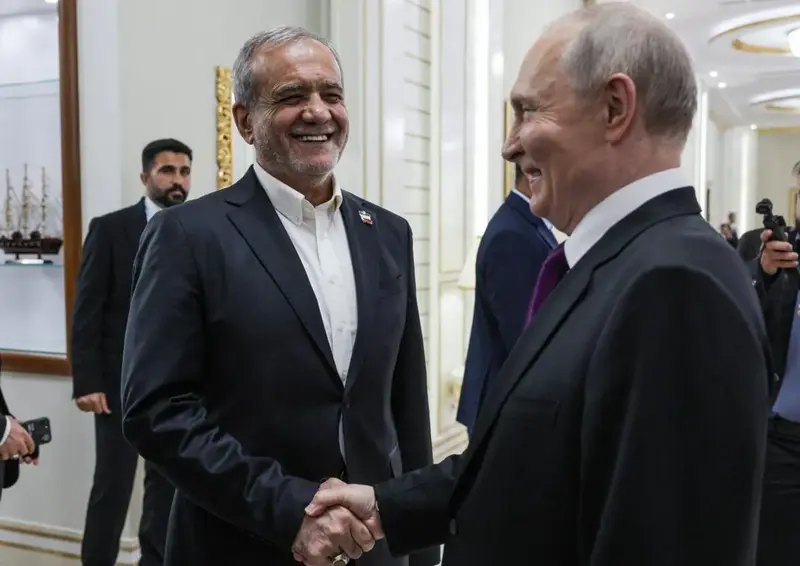
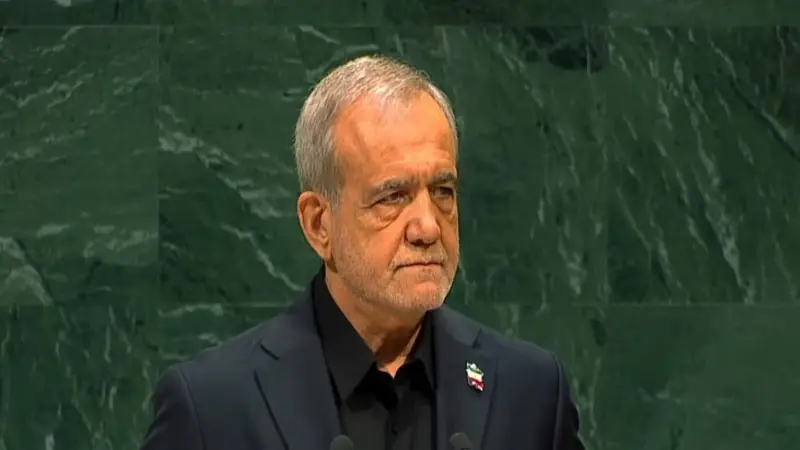
Russian President Vladimir Putin and Iranian President Masoud Pezeshkian met in Turkmenistan on Thursday evening, October 8, to discuss the regional war and bilateral ties. Putin said Russia would help pursue a diplomatic settlement, while Pezeshkian said Iran would not leave the negotiating table.
The leaders met on the sidelines of a Commonwealth of Independent States summit and a Caspian Sea environmental summit. The Commonwealth of Independent States is a regional intergovernmental organization. Pezeshkian had travelled to Turkmenistan to attend and address both gatherings.
Iran sets out its negotiating position
Putin said Iran was making genuine efforts to end the conflict and had offered new proposals for a peaceful settlement. He said Iran had not caused the conflict and Russia would make every effort to help resolve it through diplomacy.
Pezeshkian said Iran wanted to end the war while protecting the Iranian people’s rights under international law. He said discussions with the United States would continue through intermediaries once the proposals were finalized.
Lebanese broadcaster Al-Manar reported that Tehran was revising its own proposals, while a Xinhua report said Iran had revised the U.S. proposal. The proposals’ contents and the timing of further mediated talks remain unclear.
The war began on February 28 with U.S. and Israeli attacks on Iran, according to the Austrian newspaper Kurier. Iran responded with missile and drone attacks on targets in the region.
Kremlin says no message was sent to Trump
Kremlin spokesperson Dmitry Peskov said on October 9 that Pezeshkian had not asked Putin to pass a message to U.S. President Donald Trump. The question followed Trump’s comments about a possible telephone call with Putin.
Peskov also explained why the meeting took place a day earlier than planned. He said the presidents faced time constraints and decided to speak when an opportunity arose, despite the late hour.
Leaders seek closer economic ties
Putin said relations were developing positively under the comprehensive strategic partnership treaty signed in early 2025. According to Xinhua, he said bilateral trade grew by more than 21% in 2025, with growth continuing during the first seven months of 2026.
Pezeshkian said trade, economic and humanitarian ties were expanding and called for faster cooperation under the countries’ strategic program. He said both governments had the political will to develop their relationship further.
Comments
To comment, sign in or create an account. Sign in Create an account
No comments yet.