

The U.S. agreement with the Venezuelan company North American Blue Energy Partners (NABEP) may face serious legal and logistical obstacles. Donald Trump presented it as a way to obtain Venezuelan oil to replenish the U.S. Strategic Petroleum Reserve. The agreement was announced following a January military operation by U.S. forces, during which, according to reports, Venezuelan President Nicolás Maduro was captured and Delcy Rodríguez became the country’s interim president.
The U.S. administration claims that the Office of Strategic Capital (OSC) within the Pentagon will receive approximately one-third of North American Blue Energy Partners—Venezuela’s second-largest private oil company. Previously, U.S. officials had spoken of a 35% stake. In a written briefing from the Pentagon to members of Congress, however, the discussion focused on warrants—rights to purchase shares in the future—rather than direct ownership of shares.
Recent reports indicate that the U.S. Strategic Petroleum Reserve has reached a historic low following the invasion of Iran, which has heightened the administration’s interest in additional supplies. Trump stated that the Venezuelan deal would help replenish the reserve. Experts, however, doubt that Venezuelan oil will be able to reach the reserve anytime soon.
Questions About the OSC’s Authority
Experts in U.S. law doubt that the law establishing the OSC allows the agency to own shares in private companies. Law professor Ashley Dix stated that Congress apparently did not grant the OSC such authority. In August, a Pentagon spokesperson also said that the agency does not acquire stakes in private companies.
The proposed solution was to transfer the stake to another Pentagon division—Industrial Base Analysis and Sustainment (IBAS). Its official mission is to strengthen the U.S. defense industrial base, not to manage oil assets. Recent reports link this arrangement to Deputy Secretary of Defense Steven Feinberg—a billionaire who recruited former employees of the private investment firm Cerberus to the OSC. The changing structure of the deal has heightened investors’ doubts about its legality and transparency.
Contract Term and Supply Issues
A separate point of contention concerns the agreement’s term. Trump spoke of a 100-year contract; however, according to experts, Venezuelan law prohibits agreements on oil resource development with a term exceeding 25 years. Venezuelan authorities have also cited a 25-year term.
There are also differing accounts of who signed the agreement. Trump said that the U.S. had reached an agreement with Venezuela. The State Department calls it a private agreement with a private company and asserts that the country’s interim government did not participate in the negotiations. The administration also states that the majority of the board members of Nabep, a company registered in Barbados, will be U.S. citizens.
Under the terms presented, the State Department will have the right to purchase 20% of all oil produced by Nabep at cost. The procurement mechanism, transportation routes, and the start dates for these operations have not been publicly explained. The lack of transparency regarding the terms and the company’s operations in Venezuela cast doubt on the possibility of using this oil to replenish U.S. reserves.
The Role of Alejandro Betancourt López
At the center of the deal is Nabep owner Alejandro Betancourt López. The 46-year-old entrepreneur studied in Massachusetts, owns real estate in Spain, the United Kingdom, and New York, and has experience in the energy sector. In early September, Secretary of State Marco Rubio spoke about his experience in the oil business. Recent reports describe Betancourt as an intermediary between the U.S. and Venezuela’s interim government and link his presence within the administration’s inner circle to one of Rubio’s staff members.
Betancourt has previously been mentioned in investigations and court documents related to allegations of corruption and money laundering. However, he has never been convicted or charged with a crime. His attorney has denied allegations that the businessman ordered or encouraged the payment of bribes, and stated that U.S. authorities have not named him as a defendant or an official target of an investigation. In addition, it is reported that he was targeted by hackers linked to the Venezuelan government who were attempting to track his assets.
U.S. administration officials have not disclosed all the details of the negotiations. An opaque ownership structure, legal uncertainties, and the lack of a clear supply mechanism could deter major oil companies and investors.
Political Context
The agreement continues Trump’s longstanding interest in gaining access to other countries’ energy assets in the wake of military conflicts. Recent reports remind us that he expressed similar views regarding Iran in 1987, and later regarding Iraq and Libya. Critics compare the Venezuelan initiative to Trump’s promised border wall and view it as military propaganda rather than a realistic policy.
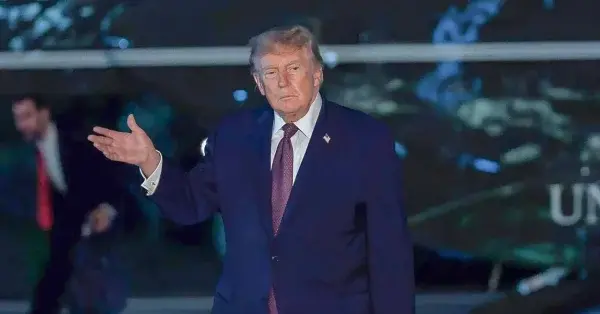
Representatives of the energy sector, including the head of Exxon, have previously described Venezuela as an unattractive destination for investment. Despite these warnings, Trump continues to portray the seizure of assets as legitimate spoils of war, stating at the UN that the spoils belong to the victor. The U.S. share of the proceeds, the term of the agreement, and the prospects for deliveries to the strategic reserve remain a matter of dispute.

Comments
To comment, sign in or create an account. Sign in Create an account
No comments yet.