
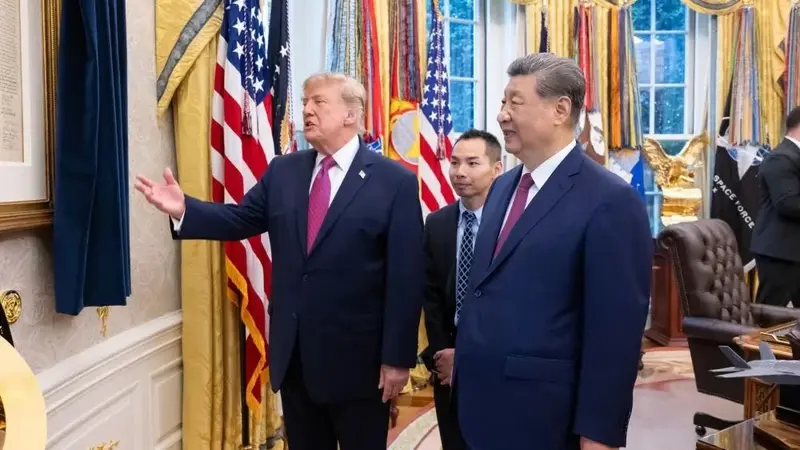
The United States and China reached a series of agreements during Chinese President Xi Jinping’s three-day state visit to Washington from Sept. 23 to 25, according to readouts from the two governments. Xi met President Donald Trump as the countries sought to stabilize relations while leaving major disagreements, including over Taiwan, unresolved.
The arrangements extend a trade truce and give negotiators more time to work on a broader economic agreement. Existing accounts list Jan. 10, 2027, as the confirmed end date, while other statements describe a two-month extension of a truce that had been scheduled to expire on Nov. 10. The relationship between the two dates was not explained.
Trade measures and new councils
The two countries agreed to reciprocal preferential tariff treatment for $30 billion in non-sensitive goods. The categories described in the government accounts include U.S. agricultural products, seafood and medical devices, as well as Chinese consumer goods such as appliances and toys.
China also agreed to import at least 10 million metric tonnes of U.S. coal annually in 2027 and 2028. The arrangement was included among the summit’s trade outcomes. The two sides said they would also continue the results of earlier consultations in Kuala Lumpur and establish or operationalize the US-China Board of Trade and the US-China Board of Investment.
A working group on agricultural trade is to be created, with sector discussions scheduled to begin before the end of 2026. The councils and working group are intended to provide mechanisms for carrying out the new arrangements and addressing obstacles in bilateral commerce.
The measures do not resolve the structural disputes that have strained relations between the world’s two largest economies. Businesses will now watch whether the commitments are implemented on schedule. The summit readouts presented the goal of a stable and constructive strategic relationship based on respect, fairness and reciprocity.
AI dialogue and incident channel
Washington and Beijing agreed to establish a bilateral dialogue on the risks and benefits of artificial intelligence. The next meeting is scheduled for November. The countries will also create communication channels for incidents involving AI, although the procedures, participants and scope have not been publicly detailed.
The U.S. account used the term “superintelligence,” while China continued to refer to the technology as AI in its readout. Chinese officials said the two sides should expand exchanges and seek common ground as the technology develops. Existing accounts identified Chinese Vice Premier He Lifeng and U.S. Treasury Secretary Scott Bessent as leaders of the dedicated dialogue.
Security and international issues
The leaders agreed that Iran should honor its commitment not to develop nuclear weapons and said no country or institution should impose tolls on international waterways. They also agreed to strengthen military-to-military communication to help prevent crises.
The two sides said they would continue cooperation against narcotics and transnational crime. Chinese accounts cited joint work on cases involving new psychoactive substances and precursor chemicals, as well as arrests of suspects in both countries, but did not provide further details in the summit summary.
The countries agreed to support each other in hosting informal APEC leaders’ meetings and G20 summits. Trump and Xi intend to attend meetings hosted by the other side, including an APEC meeting in Shenzhen in November and a G20 summit in Miami in December.
The leaders also recalled that China and the United States had been allies during World War II and fought side by side. The reference formed part of the summit’s broader message on cooperation, but did not remove differences over Taiwan. China urged Washington to oppose Taiwan independence, while U.S. officials said the fundamental U.S. policy toward the island had not changed.



Comments
To comment, sign in or create an account. Sign in Create an account
No comments yet.