

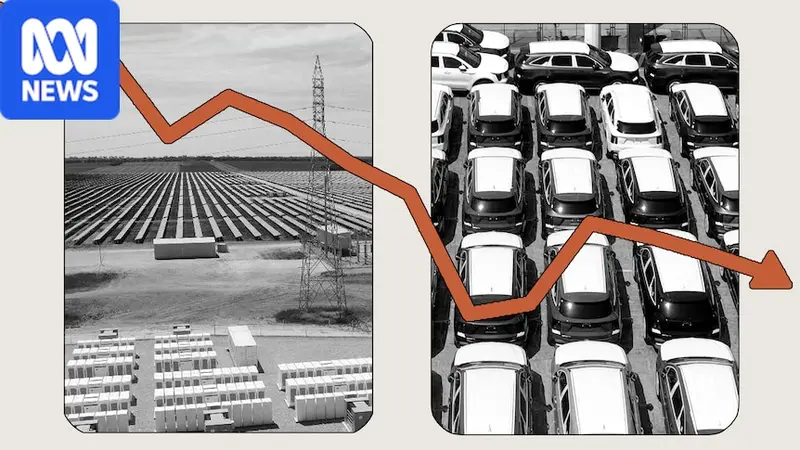
Australia’s greenhouse gas emissions fell by 6.2 million tonnes, or 1.3 per cent, in the year to June 2026. But projections in the government’s annual climate statement show the country remains well short of its 2035 emissions target, even if additional announced measures are included.
Climate and Energy Minister Chris Bowen presented the statement to Parliament on November 26. He said the pace of cuts in 2026 was about one and a half times faster than the average over the previous decade. The Climate Change Authority, the government’s expert advisory body, warned that reductions would still need to accelerate substantially.
The gap to the 2035 goal
Australia’s legislated targets are to cut emissions by 43 per cent by 2030 and reach net zero by 2050. The government has also committed to reducing emissions by 62 to 70 per cent by 2035, compared with 2005 levels.
Modelling suggests Australia is on track to just meet its 2030 target. The outlook is less favourable for 2035: under current policies, emissions are projected to be 48 per cent below 2005 levels. A separate scenario that includes announced measures still being developed puts the reduction at 50 per cent — short of the government’s 2035 commitment.
The Climate Change Authority said meeting the 2030 and 2035 goals would require sustained average annual cuts of about 25 to 30 million tonnes of carbon dioxide equivalent. It described closing the gap as a formidable challenge.
Renewables are growing, but delivery matters
Renewable sources supplied 45.9 per cent of electricity in the National Electricity Market in the year to September. Bowen said the approved renewable-energy projects in development were enough to meet the government’s goal of 82 per cent renewable electricity by 2030.
Climate Change Authority chair Matt Kean said the challenge was now to get those projects financed, built and connected to the grid. He also pointed to the need for timely planning and environmental approvals and continued support from communities hosting new developments.
Bowen said Queensland’s decision to abandon its renewable-energy targets and extend the operation of coal-fired power plants would significantly affect emissions. He also said reversing previously approved renewable projects created uncertainty for future investment.
Transport emissions remain a concern
Emissions fell in electricity, agriculture, industrial processes and stationary energy use, according to Anna Malos, a climate policy expert at the Climateworks Centre. Transport emissions, by contrast, increased slightly.
The latest figures show progress, but the projections make clear that sustaining it will not be enough on its own: Australia needs much faster annual cuts to meet its 2035 goal.

Comments
To comment, sign in or create an account. Sign in Create an account
No comments yet.