
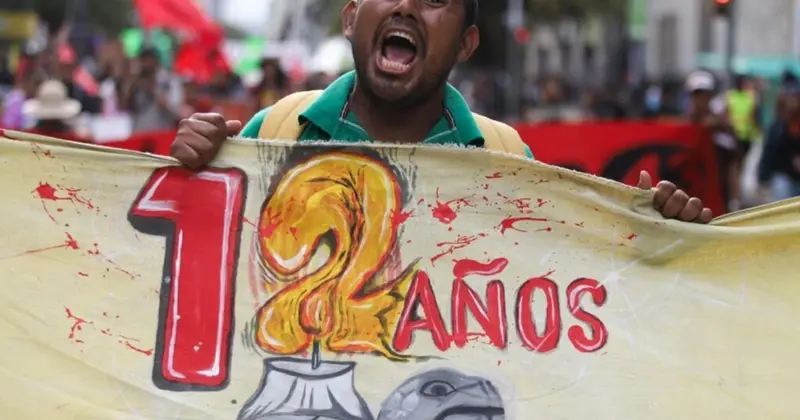
On September 26, relatives of the 43 students from the Raúl Isidro Burgos School in Ayotzinap took to the streets of Mexico City once again, demanding to know the fate of the young people who disappeared following the events in Iguala in September 2014. The main march proceeded from the Angel of Independence to the Zócalo. Participants included families, students from Ayotzinapa, representatives from other rural teacher-training colleges, and civil society organizations.
Protests marking the 12th anniversary of the disappearances also took place in Guerrero and other regions. Participants demanded the truth, the continuation of the search, and the prosecution of those who may have been involved in the students’ disappearance. The families say that the investigation has still not definitively established what happened to each of the 43 young people.
Human rights activists are demanding the handover of documents
Amnesty International has called on Mexico’s federal authorities to ensure that the military hands over all available information regarding the events known as the “Night of Iguala.” This refers to 853 documents prepared in 2014 by the Regional Intelligence Fusion Center “El Centro” in Iguala, Guerrero state.
According to the organization’s Mexican chapter, the military has not handed over the materials despite a court order. Amnesty International linked the documents to a lawsuit filed by families, civil society organizations, and the Interdisciplinary Group of Independent Experts. The organization reported that the Fifth District Administrative Court in Mexico City ordered the release of this information in February 2026.
Human rights advocates believe the documents may contain information about the detention and transfer of students on the night of the attack and in the days that followed. Previously, the Interdisciplinary Group of Independent Experts stated that it had received only a portion of the documents and that these indicated the existence of other information relevant to the investigation and search efforts.
“Transparency is fundamental to holding the Mexican state accountable in this landmark case of enforced disappearance,” said Edith Olivares Ferreto, executive director of Amnesty International in Mexico.
The Issue of Destroyed Video Footage
Separately, Amnesty International called for an investigation into the deletion of footage from security cameras at the municipal palace in Iguala. According to the organization, this footage could have served as evidence, and its disappearance may indicate the destruction of evidence and a possible cover-up of the crime.
The organization stated that the Mexican government is obligated to take all necessary measures to establish the circumstances of the disappearances and to bring the suspects before regular courts while respecting the right to a fair trial. Amnesty International also urged that new information be communicated first and foremost to the relatives through official channels and that unconfirmed reports not be circulated.
Families Seek Control Over the Investigation
On the eve of the march, the students’ relatives visited the Supreme Court of Mexico. On September 25, they met with its president, Hugo Aguilar Ortiz, and discussed the status of military documents and other legal proceedings related to the case. According to a report on the meeting, the chief justice promised to monitor the case files and maintain contact with the families.
On September 24, the relatives also appealed to the National Human Rights Commission. They expressed their disagreement with the commission’s recommendation on the case, arguing that it downplays the possible role of the military. The commission, for its part, stated that it is not authorized to establish criminal liability or exonerate the armed forces.
The Inter-American Commission on Human Rights called for a more thorough investigation into the possible involvement of the military and police, as well as an examination of the political chain of command, the operations of security agencies, and possible links between government officials and criminal groups. The Commission emphasized that, 12 years later, the students remain missing, and the circumstances of the incident have not been fully explained.
As part of the ongoing investigation, former Guerrero Governor Ángel Aguirre Rivero has been brought to trial on charges related to the investigation into the students’ disappearance. However, his case does not provide a definitive answer regarding the fate of the 43 students. Authorities have also announced new arrests, the examination of communications, and an analysis of the actions of various individuals involved in the events in Iguala.
Subsequent investigations have cast doubt on the “official account” presented during the administration of Enrique Peña Nieto. According to that account, the students were killed and their remains were burned at a landfill in Cocule. The work of independent experts and new forensic evidence revealed contradictions in the initial account. Fragments of the remains of some of the students were discovered and identified; however, the fate of the entire group of 43 people remains unknown.


Comments
To comment, sign in or create an account. Sign in Create an account
No comments yet.