
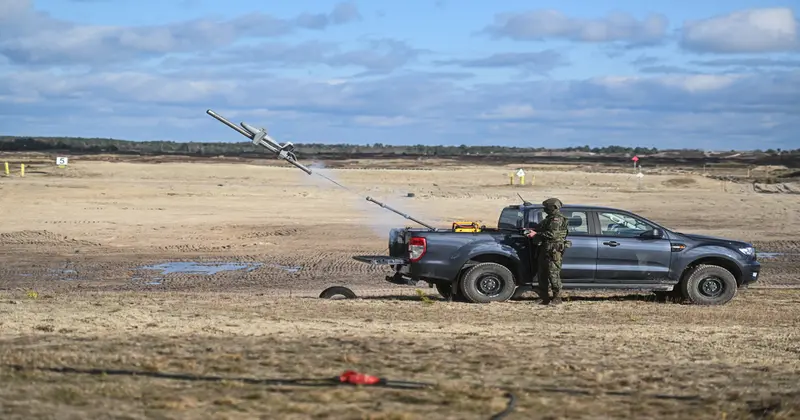
European countries are stepping up security measures amid airspace violations, suspected acts of sabotage, and military incidents that officials and analysts link to Russia. These warnings have intensified following a new assessment by Danish intelligence, which indicates that the security situation has deteriorated and that Moscow is increasingly willing to take risks. At the same time, authorities in Finland and Estonia are calling for restraint, emphasizing that public alarm does not constitute evidence of an imminent attack.
New Incidents and Warnings
On September 24, Moldova reported four drone incursions. Two drones exploded on the ground, and the wreckage of a third was found after it crashed. The northern part of the country’s airspace was temporarily closed. In Romania, two drones crossed the border; one of them exploded near Solca, about 30 kilometers west of Suceava. A nearby border crossing with Ukraine was temporarily closed.
Poland is investigating a fire at a Starlink ground station near Wola Krobowska, about 40 kilometers south of Warsaw. The facility is operated by the state-owned telecommunications company Exatel; it transmits internet traffic to Ukraine. Polish Deputy Prime Minister and Minister of Digital Affairs Krzysztof Gawkowski stated that the incident bears signs of sabotage, which may have been aimed at disrupting Ukrainian military communications. No final conclusions regarding the cause of the fire have been reported.
Poland also reported that a Russian Mi-8 military helicopter from the Kaliningrad region briefly entered Polish airspace. Amid Russian strikes near the borders of Poland and Romania, NATO fighter jets were scrambled, and Poland evacuated two border checkpoints. On September 24, Czech Gripen fighter jets conducted an Alpha Scramble in Poland during an alert triggered by drones.
European media also reported on three drones carrying explosives discovered in early August at Leipzig/Halle Airport, a Russian frigate firing flares at a Danish military helicopter, and new incidents involving drones and missiles near NATO territory. A definitive link between all these incidents and Moscow has not yet been established; investigations are ongoing.
Danish intelligence reports a broader threat
In a threat assessment dated September 24, Danish intelligence stated that Russia is planning and preparing sabotage operations on Danish territory against companies in the defense sector. The document states that Russian forces are acting increasingly aggressively toward NATO military units in the Baltic region, and that Moscow is demonstrating a greater willingness to take risks.
Danish Defense Minister Jeppe Bruss warned that in the coming months, Russia may intensify its hybrid campaign against Western countries, leading to more frequent attacks and serious consequences. According to him, the current situation is the most dangerous since the end of the Cold War.
European officials and analysts believe that the alleged operations may have several objectives: sabotage, intimidation, and testing the response time of NATO’s defense systems. Polish Foreign Minister Radosław Sikorski issued a warning to Russia at the UN. Polish representatives also discussed the possibility of small Russian special operations groups operating on NATO territory. Czech intelligence agencies separately warned of possible limited incursions or false-flag operations designed to exploit the West’s vulnerabilities.
Attacks on Kyiv and Differing Assessments of the Threat
On the evening of September 27, Russian drones struck Kyiv and its outskirts, causing fires in residential and commercial areas. According to preliminary reports, at least two people were killed at the “Stolichny” market in Sofiivska Borshchahivka, and several others were injured. Kyiv Mayor Vitali Klitschko reported that a total of nine people were injured in the capital; six of them, including a child, were hospitalized. Debris fell in the Dniprovskyi and Darnytskyi districts, and fires broke out in the Vinogradar and Voskresenka districts.
Polish Prime Minister Donald Tusk stated that Moscow is simultaneously seeking to exhaust Ukraine and European countries. Ukrainian President Volodymyr Zelenskyy warned that Russia may attempt to destabilize other European states to weaken support for Kyiv, and acknowledged the risk of offensive operations in the next five years.
Finnish President Alexander Stubb took a more cautious stance, stating that there are no factual grounds to expect an imminent Russian attack on Finland. He warned that an excessive reaction to hybrid incidents could serve Russia’s interests. Estonian Foreign Ministry spokesperson Jonathan Vsevjov also said that the current alarm is unwarranted and called on citizens to remain calm and continue supporting Ukraine.
Russia denies preparing for military action against Europe. President Vladimir Putin has stated that accusations of planning aggression are being used by European countries as a pretext for preparing for war. European authorities continue to strengthen their defenses, while the connection between individual incidents and Russian entities remains the subject of investigations and political assessments.



Comments
To comment, sign in or create an account. Sign in Create an account
No comments yet.