
Since the summer of 2026, drone flights or explosions have been reported almost daily in countries across Central and Southeastern Europe. The most notable series of incidents occurred on September 24 in Moldova, Romania, and Poland: airspace violations, explosions, the closure of border facilities, and NATO fighter jet sorties took place amid Russian attacks against Ukraine.
In countries bordering Ukraine, air raid sirens are sounding more and more frequently due to strikes on Ukrainian territory near their borders. In addition, there are reports of attacks on infrastructure, border crossings, and railway facilities. A number of politicians in the Baltic states, Poland, Moldova, and Romania view these events not only as hybrid pressure but also as a direct threat to security.
A series of incidents on September 24
Four drone flights were recorded in Moldova. Two drones exploded within the country’s territory, after which authorities temporarily closed the airspace in the north. Parliament Speaker Igor Grosu reported that Chisinau is in talks with Romania and Ukraine regarding joint measures to strengthen the defense of Moldovan airspace.
According to Grosu, Moldova is capable of controlling its airspace but has extremely limited capabilities to shoot down drones. Details of the negotiations were not disclosed. Moldovan President Maia Sandu stated that Russian attacks on Ukraine have once again affected Moldova and pose a threat to all of Europe.
In Romania, two drones violated the country’s airspace; one of them exploded in the northern part of the country. Authorities closed a nearby border crossing leading to Ukraine. In addition, Romanian and NATO forces scrambled fighter jets in response to the Russian attack in Ukraine near the Danube Delta.
Romanian Defense Minister Radu Miruță called for a diplomatic protest against Russia. However, Bucharest’s official response remained more restrained than the statements made by Polish and Moldovan officials. Romanian authorities also reported that the latest drone to crash on Romanian territory possessed “new technical capabilities” and may have been a new type of Russian drone.
Poland Scored Fighter Jets
In Poland on September 24, NATO fighter jets were scrambled twice due to Russian attacks near the border. Two border crossings were evacuated following drone strikes. The day before, on September 23, a fire broke out at a Starlink satellite ground station approximately 40 kilometers south of Warsaw. The Polish government called the incident an act of sabotage.
Polish Deputy Prime Minister and Minister of Digital Affairs Krzysztof Gawkowski stated that the fire could have been another element of hybrid warfare and was intended to disrupt the Ukrainian military’s access to the internet. However, he noted separately that Russia’s involvement cannot yet be considered proven.
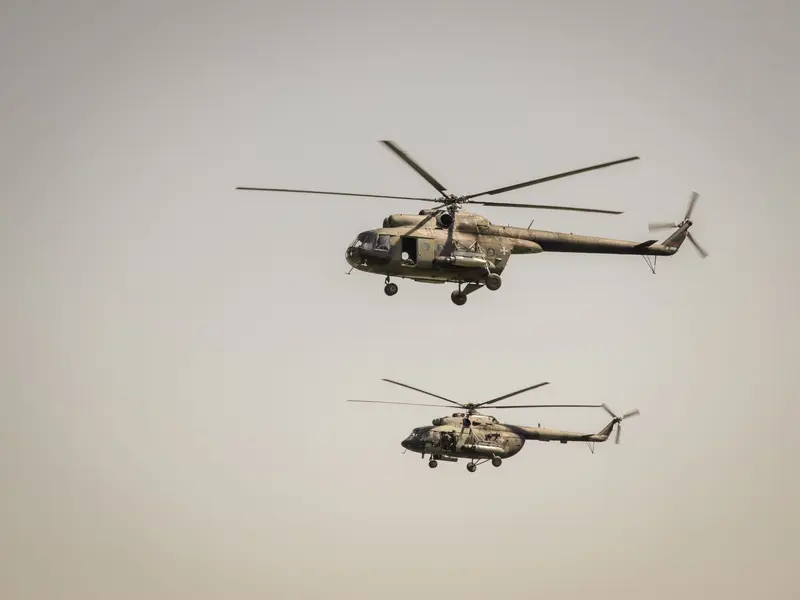
On the same day, according to the Polish Army’s Operational Command, a Russian Mi-8 helicopter violated Polish airspace from the direction of the Kaliningrad Oblast. The helicopter penetrated 300 meters into Polish airspace and remained there for 42 seconds.
Warnings About the Growing Threat
Polish Prime Minister Donald Tusk stated that Russia seeks to exhaust not only Ukraine—by destroying its industrial and energy infrastructure—but also Europe. He described the situation as a form of pressure for which one must be prepared, and he suggested that the fire at the Starlink station was likely the result of deliberate actions.
Previously, European officials often described such incidents as a “hybrid war.” However, the rise in airspace violations and explosions has shifted public rhetoric in countries neighboring Ukraine. Romanian President Nicușor Dan stated that his country is feeling the direct consequences of the war through constant airspace violations and will continue to support Ukraine.
Denmark also warned that in the coming months, Russia may intensify its hybrid war against the West and NATO. According to assessments by Danish military and intelligence agencies, the attacks could become more frequent and have more serious consequences. Defense Minister Jeppe Bruse described the current situation as the most serious since the end of the Cold War.
Reports of possible Russian drone attacks against Italy, France, and Spain have not yet been officially confirmed. French President Emmanuel Macron stated that French intelligence agencies had not received any information from the CIA regarding preparations for such an attack, although he called the likelihood of a Russian attack on Europe plausible.



Comments
To comment, sign in or create an account. Sign in Create an account
No comments yet.