

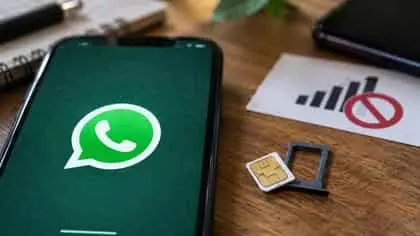
India’s Department of Telecommunications has given messaging platforms until December 31 to link accounts to active SIM cards on users’ devices. The requirements are expected to apply from January 1, 2027, potentially disrupting WhatsApp and Telegram access for people whose registered SIM is elsewhere.
The rules concern messaging services that use Indian mobile numbers for registration. Apps will have to verify that the registered number remains linked to an active SIM or eSIM on the device.
Keeping the number active may not be enough
SIM binding means maintaining a connection between a messaging account and the SIM associated with its registered number. Users who remove that SIM, deactivate it or replace it could lose access to some app functions.
Access could remain suspended until the same number is restored through a valid SIM or eSIM profile. BhaskarLive reported that users with an active eSIM linked to the registered number on the device are unlikely to face issues solely because they do not use a physical SIM card.
The changes could particularly affect people who keep their registered SIM in a second phone while messaging on another handset. Users who remove the SIM and rely on Wi-Fi could also face interruptions. On dual-SIM phones, the number linked to the messaging account would need to remain active.
Exactly how linked devices and secondary phones will work remains unsettled. Indian news outlet M9 News said the experience would depend on each platform’s implementation.
Government targets accounts operated from abroad
The government says the requirements aim to curb cyber fraud and misuse of Indian mobile numbers. The telecommunications department said fraud networks have bought Indian SIM cards, registered messaging accounts and then operated those accounts from outside India.
Authorities believe keeping accounts tied to active SIMs will make that misuse harder. The stated targets include financial fraud, impersonation and scams in which criminals pretend to place victims under arrest remotely.
Platform coverage and desktop access remain key questions
WhatsApp and Telegram are among the services expected to fall under the requirements because they use phone numbers for registration or identification. Signal’s position is less clear: M9 News said it was covered, while BhaskarLive said its status remained unresolved.
BhaskarLive also said Snapchat was not expected to be covered. The precise scope of the requirements for those two services remains unconfirmed.
The compliance timetable has already shifted. M9 News said the government extended an initial March 2026 deadline after technology companies raised technical difficulties.
The outlet also said the department dropped an earlier proposal to log users out of web and desktop sessions every six hours. Instead, it adopted a risk-based approach under which suspicious activity could trigger a logout.




Comments
To comment, sign in or create an account. Sign in Create an account
No comments yet.