

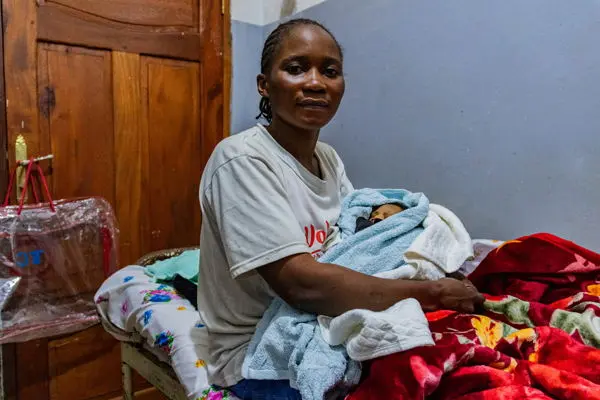
Kenya's second Ebola patient is a 39-year-old man related to the country's first confirmed patient, authorities said. The first patient died in Nairobi on October 5. The second case was announced a week after the first infection was detected.
In the Democratic Republic of Congo, the Bundibugyo Ebola outbreak has reached 9,144 confirmed cases and 4,410 deaths. It affects seven provinces and 65 health zones in the country's east.
Transmission continues despite local declines
The World Health Organization said transmission remained high and uneven five months after the outbreak was officially declared. Its October 11 situation report described repeated declines and rebounds, without a sustained downward trend.
Ituri province accounts for more than 70% of cumulative confirmed cases, although its share is falling. Slower transmission in some areas has been offset by continued or renewed spread elsewhere, including North Kivu. Significant transmission also continues in Haut-Uélé.
The WHO said delays in detecting infections, tracing contacts and treating patients were allowing transmission chains to continue. Population movements, insecurity and difficulties reaching some communities have also hampered the response.
Vaccination is continuing under research programmes. Of 70,000 Ervebo doses allocated to the DRC on August 17, 20,000 were assigned to a phase 3 trial. Another 2,000 went to an observational study, while 30,000 were designated for health workers and frontline responders under separate research protocols.
Vaccine supplies remain uneven. In Haut-Uélé, 470 of 1,060 preregistered people had been vaccinated, while stocks in Bas-Uélé had run out.
Funding allegations raise unanswered questions
A separate October 15 news website report attributed allegations of missing Ebola-response funds to Jean Kaseya of Africa CDC, an African Union body. It said $700 million had disappeared, but also reported that only $200 million of $960 million allocated by donors was accounted for, without reconciling those figures.
The allegations remain independently unverified. The report also said some non-governmental organisations had refused scrutiny of their accounts and were ordered to cooperate or face expulsion from the DRC.
Children face high death rates and limited access to research
Médecins Sans Frontières (MSF), the medical humanitarian organisation, said children under five accounted for 24% of confirmed cases in North Kivu. The corresponding share in Ituri was 13%.
At MSF's Ebola treatment centre in Butembo, North Kivu, 24 of 30 children treated between June and September died. Most were younger than five.
Stéphanie Hoffmann, MSF's project coordinator in Butembo, said most children admitted during the summer had previously been hospitalised for other illnesses. She said they were very likely to have contracted Ebola in healthcare facilities.
MSF urged researchers to prioritise children in studies of Bundibugyo treatments and vaccines. The EBO-PEP trial, which is testing an oral medicine to prevent infection after exposure, is expected to admit some children. Those weighing less than 20 kilograms remain excluded because a suitable paediatric formulation is unavailable.
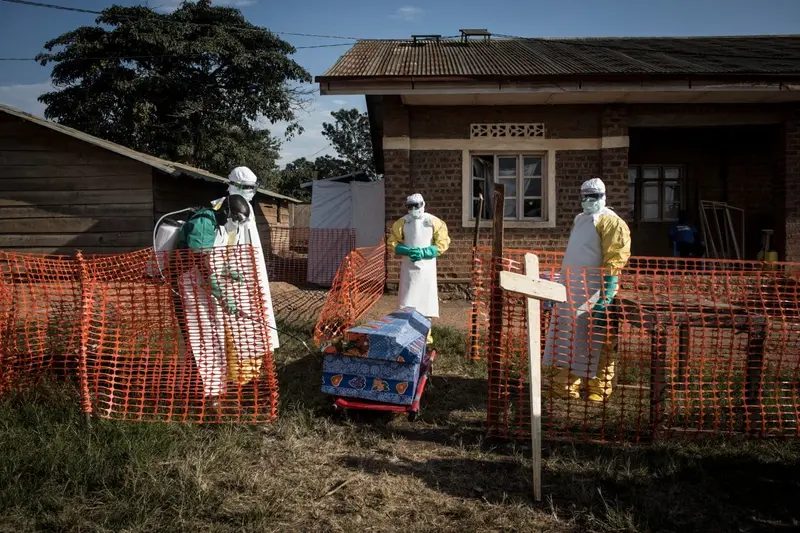
The WHO said ending the outbreak requires rapid detection and isolation, safer care and burials, and stronger cross-border coordination. It also called for follow-up of at least 95% of contacts.
Comments
To comment, sign in or create an account. Sign in Create an account
No comments yet.