

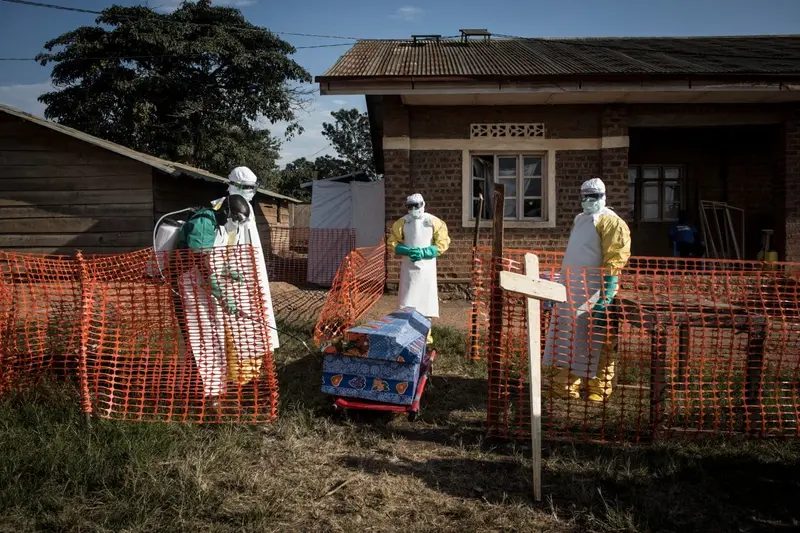
The outbreak has spread to seven provinces in northern and eastern Congo, affecting 65 health zones. Fighting, shortages of medical supplies and public mistrust are hampering efforts to contain it.
The national public health institute reported a case-fatality rate of 48.3% and 2,389 recoveries, according to AFP. Earlier figures published on October 13 put confirmed cases at 8,978 and deaths at 4,336, compared with the later totals of 9,066 and 4,381.
Infections may be going undetected
Officials said confirmed infections may account for only about one-third of the total because many cases go undetected, according to an Associated Press report. A large share of deaths has occurred outside treatment centres, raising concern among officials and health workers.
The outbreak began in Ituri, a province in northeastern Congo, and authorities declared it on May 15. It is the country’s 17th Ebola outbreak. Experts suspect the virus had been circulating for weeks or months before the declaration, though its exact starting date remains uncertain.
The previous deadliest outbreak in Congo, between 2018 and 2020, caused nearly 2,300 deaths among about 3,500 reported cases. Globally, only the 2014–2016 West African epidemic was larger than the current outbreak. It caused more than 11,000 deaths in Guinea, Liberia and Sierra Leone, according to the World Health Organization.
Conflict and mistrust obstruct the response
Fighting between government forces and rebel groups, including M23, makes delivering healthcare resources to remote areas difficult. The response also faces shortages of treatment centres, population movements and poor compliance with preventive measures.
Medical staff and humanitarian workers face mistrust in affected communities. Some residents believe the outbreak is a scheme for officials to divert money, and several incidents involving responders have been reported in recent months.
Regional cases add to concern as vaccine trial approaches
Kenya reported its first imported case in the week before October 13. The patient, a Kenyan national who had lived in Congo, travelled through Uganda before reaching Nairobi, where he died. Uganda recorded 20 cases and two deaths earlier in the year before being declared Ebola-free in August.
The current outbreak is caused by the Bundibugyo strain, which has no approved vaccine or treatment. Chikwe Ihekweazu, executive director of the WHO Health Emergencies Programme, said on October 13 that a clinical trial to assess a vaccine against the strain was being prepared in Congo for the coming weeks.

Comments
To comment, sign in or create an account. Sign in Create an account
No comments yet.