
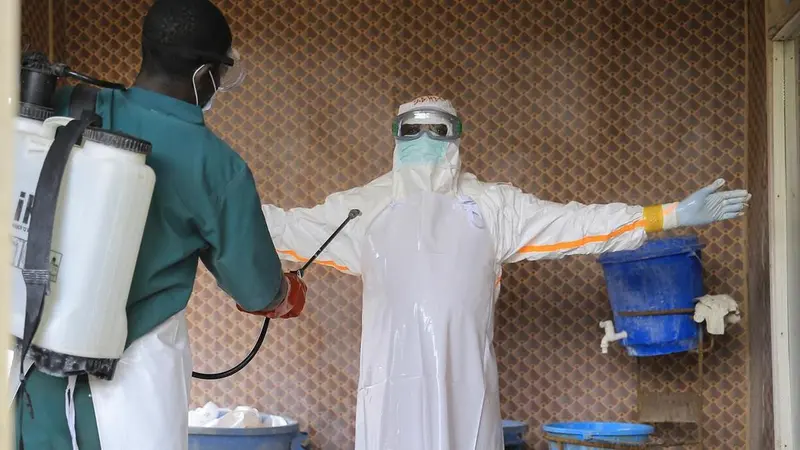
Kenya confirmed its first Ebola case on October 6 after a Kenyan citizen died in Nairobi. The patient had travelled from the Democratic Republic of the Congo, where an Ebola outbreak has killed more than 4,000 people.
Patient travelled through Uganda
Health Minister Aden Duale said the patient had lived in DR Congo for seven years. He fell ill about a month before travelling and received treatment at several hospitals there.
The patient travelled by road to Kampala, Uganda’s capital, before flying to Nairobi on October 3. He passed airport health screening, then a relative took him to a hospital in the city. He was placed in isolation.
Duale said the patient’s symptoms included fever, chills and bleeding beneath the skin. Tests confirmed infection with Bundibugyo, the rare type of Ebola virus causing the current outbreak. The patient died late on October 5.
Authorities trace contacts and flight passengers
Duale said Kenya remained on high alert and authorities had identified 28 people who had been in contact with the patient. Health teams were also tracing 23 passengers and four crew members from his flight from Uganda.
Health Ministry director Patrick Amoth said identified contacts would remain in isolation for 21 days. They could be released after testing negative for the virus. Whether any contacts have become infected is not yet known.
The patient’s burial was planned for October 6 under public-safety protocols, Duale said.
Outbreak continues in DR Congo
The outbreak was declared in eastern DR Congo in mid-May. Figures attributed to the World Health Organization and Congolese authorities put the toll above 8,000 cases and 4,000 deaths, although their precise totals differ.
Uganda recorded 20 cases and two deaths before being declared Ebola-free in August. One case was also reported in France during the current outbreak.
There is no approved vaccine or treatment for the Bundibugyo virus. Trials of vaccines and treatments are under way in Ituri province in DR Congo.
The World Health Organization has warned that the outbreak could become the deadliest recorded, outpacing efforts to track and contain it. Medical aid organisation Médecins Sans Frontières said cases were surging in North Kivu, a province in eastern DR Congo. The organisation said the province accounted for nearly 40% of new cases.
Comments
To comment, sign in or create an account. Sign in Create an account
No comments yet.