

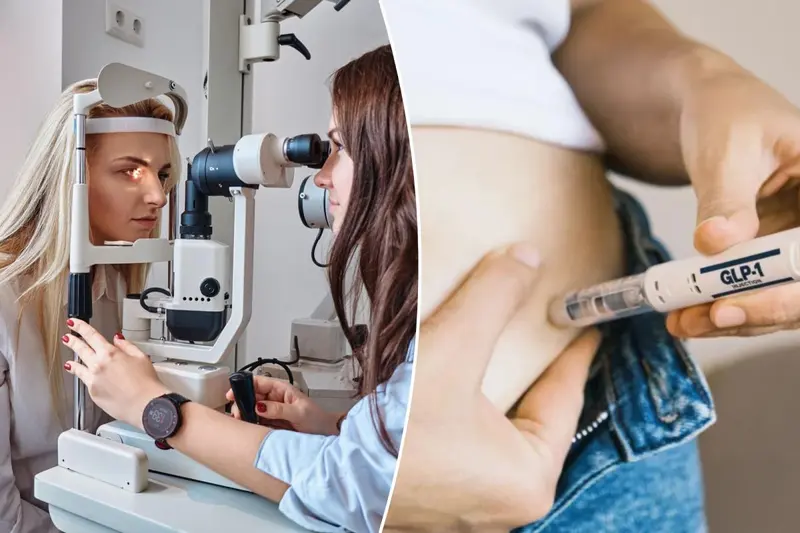
The US Food and Drug Administration ordered manufacturers on November 9 to add a warning about a possible risk of a rare eye condition to the safety labels for all GLP-1 drugs. The condition can cause lasting vision loss, so the change applies to people taking these medicines for diabetes, obesity and other conditions.
The drugs include Ozempic and Wegovy, made by Novo Nordisk, and Mounjaro and Zepbound, made by Eli Lilly. The FDA described the risk as potential: its decision does not establish that the medicines cause the condition, or that an individual patient will develop it.
What the evidence shows — and does not
The condition, called non-arteritic anterior ischemic optic neuropathy, or NAION, occurs when blood flow to the front of the optic nerve drops. The FDA said it had received reports involving every currently marketed GLP-1 product. It also cautioned that those reports are hard to interpret because risk factors for NAION overlap with conditions common among people taking the drugs.
An FDA analysis of more than 125 clinical trials found about six cases per 100,000 people who took a GLP-1 drug for at least a year. The rate was fewer than four per 100,000 among people taking a placebo or other medicines to lower blood sugar. These estimates indicate a rare event, but do not settle whether the drugs themselves raise the risk.
A 2024 study had reported that diabetes patients taking semaglutide were four times more likely to develop NAION than patients not prescribed the medicine. The FDA said the study had limitations, but warranted further assessment. Its broader review included clinical-trial, animal and post-marketing data, as well as observational studies and case reports. The agency said it could not identify how GLP-1 drugs might increase the risk.
What patients should watch for
NAION can cause sudden, painless loss of vision in one eye. Other reported symptoms include blurred vision, blind spots, distorted colours and hazy patches affecting central vision. The FDA advises anyone taking a GLP-1 drug who develops new vision problems to contact a health professional immediately.
If a clinician suspects NAION, the FDA advises prompt referral to an ophthalmologist. It says stopping the GLP-1 drug should be considered for patients who develop the condition, unless the benefits of treatment clearly outweigh the risk. There is no proven treatment to reverse vision loss caused by NAION.
The European Medicines Agency reached a separate assessment in 2025, classifying NAION as a very rare side effect of semaglutide, affecting up to one in 10,000 patients. The FDA’s announcement did not specify when manufacturers must complete the new label changes.




Comments
To comment, sign in or create an account. Sign in Create an account
No comments yet.