

U.S. import bans on selected Canadian goods are due to take effect at 12:01 a.m. Eastern Time on Tuesday, September 29, as President Donald Trump says he expects Ottawa to seek a new trade agreement within three to four weeks.
The restrictions mainly cover certain alcoholic beverages, dairy byproducts and motorcycles. They are the latest escalation in a dispute that intensified after trade talks between Washington and Ottawa broke down in late August. The United States subsequently imposed tariffs of up to 50 percent on a range of Canadian goods, and Canada introduced retaliatory duties several weeks later.
Trump predicts a deal within weeks
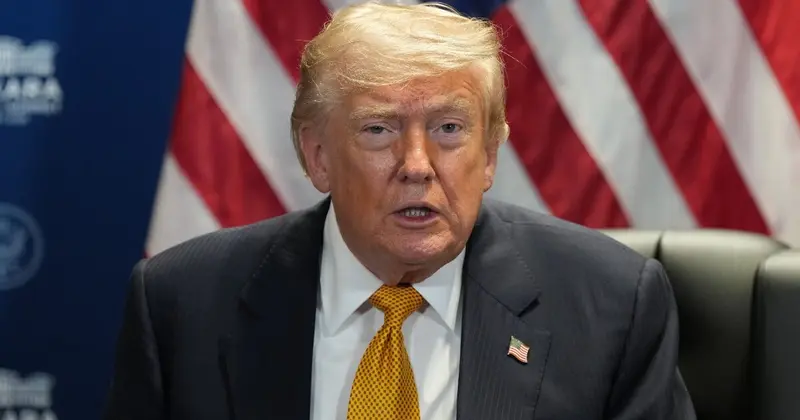
Speaking to reporters in the Oval Office on September 28, Trump said he believed Canada would contact the United States and agree to what he described as a fair deal. He said Canadian officials would eventually tell him, “Sir, we are sorry.”
Trump also accused Canada of treating the United States unfairly and repeated claims about high Canadian tariffs on U.S. farmers. The Canadian Press described those claims as inaccurate. Trump said Canada was “entitled” and argued that the United States had little need for Canadian products, while also saying Washington provides military support and icebreaker assistance.
Trump’s comments did not indicate that formal negotiations had resumed. Trade discussions ended acrimoniously last month, with both governments saying the other side had introduced last-minute changes to a potential agreement. Canadian Prime Minister Mark Carney has accused U.S. negotiators of seeking to limit Canada’s ability to negotiate other trade deals and of trying to curb Canadian protections for language and culture.
Ottawa says it will protect domestic industries
The office of Canadian Trade Minister Dominic LeBlanc said Ottawa had taken note of the U.S. measures coming into force. Spokesperson Gabriel Brunet said the government’s priority remained protecting and supporting Canadian workers, farmers, families and businesses from “unjustified actions.”
Canada’s exporters face a significant market risk. Canadian companies exported C$1.4 billion in alcoholic beverages to the United States during the 2024–25 fiscal year. BMO estimated that the products covered by the bans were worth about US$1 billion. A report by the Canadian Press said the restrictions were unlikely to have a major effect on Canadian economic growth in the near term, although they represented another deterioration in relations between Ottawa and the Trump administration.
The dispute also includes a 10 percent U.S. tariff that the Trump administration has linked to forced labor in supply chains. The duty does not apply to goods that comply with the Canada-United States-Mexico Agreement, known as CUSMA. Separate U.S. sectoral tariffs are affecting Canadian steel, aluminum, automobiles and cabinetry.
Washington says Canadian commodities reduce the pressure
U.S. Trade Representative Jamieson Greer said Washington was comfortable with the current position and saw no immediate urgency to reach another agreement. “We’re still getting what we need from them in terms of oil, gas, potash, all of these things,” Greer said, according to Reuters.
Greer said Canadians contacted the United States from time to time and that discussions about possible deals continued, but he did not suggest that an agreement was imminent. His comments contrast with Trump’s prediction that Canada will approach Washington within weeks.
Carney has said he is “very reluctant” to limit, tax or otherwise restrict Canadian energy exports to the United States. He added, however, that it was not possible to rule out such a step under every circumstance. He said Canada’s starting position was that it should remain a reliable supplier of energy and food.
Other measures deepen the dispute
Trump also signed an order directing some federal agencies to remove Canadian goods from procurement lists. Another executive order changed the name of Lake Ontario to Lake America, according to the reports.
Against this backdrop, economic ties have not stopped entirely. Canadian drone maker Draganfly announced US$10 million in financing, with US$5 million invested by Unusual Machines, a U.S. company whose advisory board includes Donald Trump Jr. Draganfly recently received a five-year Canadian military contract initially covering 100 tactical intelligence, surveillance and reconnaissance systems, with options for up to 4,900 more.
The investment illustrates that commercial and defense links continue even as the governments remain at odds. For now, the import bans are moving ahead, while Washington says it can tolerate a stalled agreement because essential Canadian commodities continue to cross the border.



Comments
To comment, sign in or create an account. Sign in Create an account
No comments yet.