
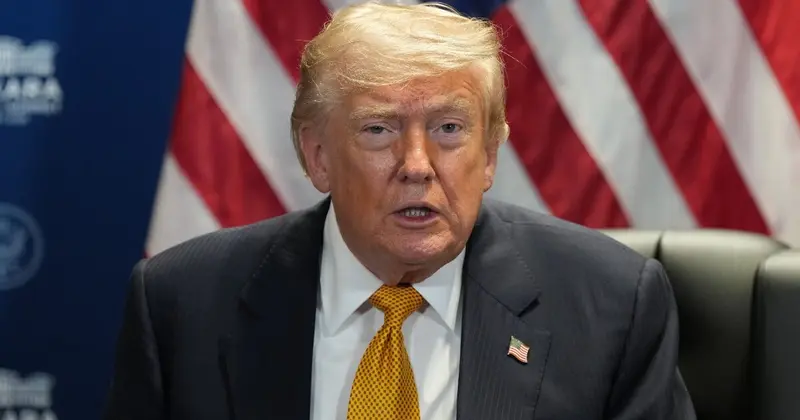
President Donald Trump said on Sept. 28 that the United States was nearing victory in its conflict with Iran, while diplomatic efforts continued and maritime tensions remained high around the Strait of Hormuz.
Speaking to reporters in the Oval Office, Trump said U.S. officials had held talks with mediators trying to end the hostilities. “We will win, one way or another. It will happen quite quickly,” he said. Trump predicted that fuel and gas prices would fall sharply after the conflict ended. The administration’s stated priority includes preventing Iran from obtaining nuclear weapons.
Trump also said the United States had intervened to prevent what he described as the possible destruction of Israel and the Middle East. “Israel would have disappeared by now. There would be no Israel, there would be no Middle East, and then the missiles and bombs would start heading toward us and Europe. And I stopped it,” he said. His account was not independently verified.
Iranian leader predicts US departure
Iran’s Supreme Leader Mojtaba Khamenei said the United States would eventually leave the Middle East after suffering “painful blows” in the Strait of Hormuz. The statement was carried by Iranian state television. Khamenei, who has not appeared publicly since succeeding his father in March, said U.S. forces and their allies no longer dared to move beyond the Arabian Sea.
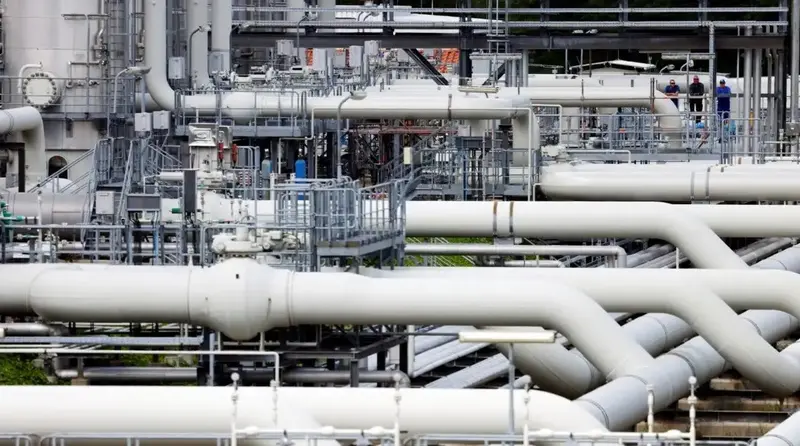
Iran and the United States are contesting control of the Strait of Hormuz, a strategic waterway. The new report said roughly one-fifth of the world’s hydrocarbons passed through the strait before the war. It also said Iran closed the passage after the conflict began on Feb. 28, sending oil prices higher, while the United States responded by imposing a blockade on Iranian ports. The current extent of those measures was not independently confirmed.
Explosions reported near Qeshm Island
Explosions were heard from the sea near Iran’s Qeshm Island, according to Iranian state media. Iranian outlets linked the incident to operations involving vessels that were allegedly moving through the Strait of Hormuz without following routes designated by Iranian authorities. There was no immediate independent confirmation of the cause.
Tehran has demanded that ships use routes approved by Iranian authorities, while Washington has insisted on freedom of navigation. Mediators from Qatar were expected to hold separate discussions with Iranian Foreign Minister Abbas Araghchi and the U.S. side.
Uncertainty over nuclear and sanctions diplomacy
Trump denied a report by Axios that he had offered Iran sanctions relief or the unfreezing of Iranian funds abroad in exchange for commitments on its nuclear program. In a post on Truth Social, he wrote that he had offered Iran “nothing.” Axios had cited U.S. government sources in reporting possible American concessions.
Talks between Washington and Tehran had resumed the previous week on the sidelines of the U.N. General Assembly, but their future remained uncertain. Iranian state news agency IRNA reported that no new meeting was planned. Trump had rejected an Iranian proposal to reopen the Strait of Hormuz within seven days, according to the supplied reports.
British suspects released as investigation continues
Trump criticized the release on bail or under restrictions of five British men arrested near RAF Fairford, a base used by U.S. armed forces. The men, aged 23 to 25, were detained on suspicion of preparing a terrorist act and offenses under explosives legislation. They remain under investigation.
“I was surprised they were released. I would not have done that,” Trump said. British authorities are examining several possible motives and any potential connection to a foreign state. No such connection has been established, and Iran has denied involvement.
Steel investment and Canada trade talks
Trump said the United States and Canada would eventually reach a trade agreement, arguing that Canadian officials were repeatedly calling and wanted a deal. The two countries have been negotiating for months to ease trade tensions.
He also announced plans by Mesabi Metallics to build a major steel mill in Iowa. The investment is expected to total $18 billion, with 6,000 construction jobs and 2,000 long-term industrial positions. Trump called it the largest steel mill project in U.S. history and said the American economy had never been in better condition.
Trump did not rule out further military strikes against Iran before the November midterm elections. He also described his meeting with Chinese President Xi Jinping as “very respectful.”

Comments
To comment, sign in or create an account. Sign in Create an account
No comments yet.