
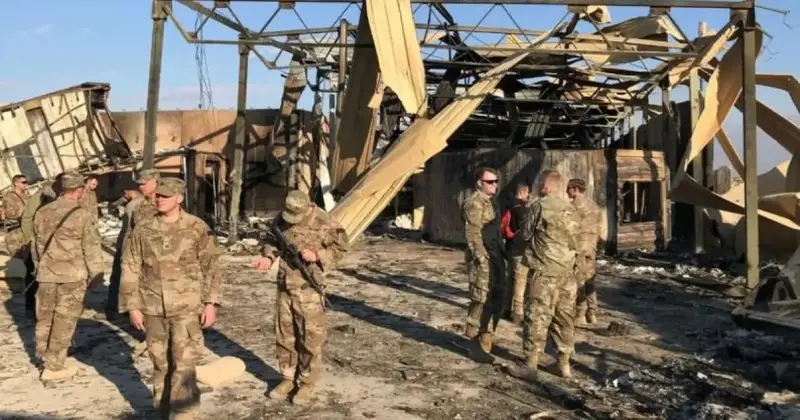
Nine U.S. soldiers wounded in an Iranian drone attack in Kuwait described failures in their evacuation and medical treatment. Their accounts, reported on October 6, concern care after the March 1 strike at Shuaiba Port, which killed six U.S. service members and injured dozens.
The soldiers and family members said military authorities underestimated some injuries and lacked adequate plans for hospital transfers. They also said bureaucratic obstacles made follow-up treatment difficult, leaving some wounded personnel to arrange care themselves.
Soldiers describe difficulties finding care
After the attack, soldiers trained in first aid used bleeding-control equipment to help injured colleagues. According to their accounts, they then searched Google for a hospital in Kuwait City, about 20 minutes away.
Among the wounded was U.S. Army Lieutenant Colonel Arturo Lincoln, who suffered shrapnel injuries to his jaw and neck. His injuries included damage to an artery supplying blood to the brain, putting him at risk of a stroke.
Lincoln spent a week in hospital and underwent surgery to remove shrapnel from his jaw. Some severely wounded soldiers were evacuated from Kuwait within two days, according to the soldiers’ accounts.
Officer Rodney Berman suffered shrapnel wounds to his face and legs. He and other soldiers were sent to housing for U.S. government employees after brief visits to Kuwaiti medical facilities.
Iranian missile and drone launches made air evacuations risky. The accounts describe wounded soldiers being flown to Germany on a cargo aircraft about ten days after the attack.
Hospital admission decisions draw criticism
Lincoln was not admitted to Landstuhl Regional Medical Center, a U.S. military hospital in Germany. Instead, he was sent to nearby barracks and told to book an outpatient appointment.
Berman said soldiers arriving in Germany learned they had not been classified as battle casualties. He said they were therefore sent to barracks rather than admitted to Landstuhl, and told to arrange outpatient appointments. The medical criteria behind those individual admission decisions remain unclear.
An Associated Press investigation reported that some soldiers’ traumatic brain injuries were diagnosed weeks later. Others struggled to see specialists or secure follow-up treatment.
A Pentagon official said Landstuhl’s role was to stabilize battlefield patients before transfer to military hospitals in the United States. The official said it was not intended to provide long-term treatment.
Pentagon defends care as soldiers report lasting effects
The Pentagon said the care provided was appropriate and followed established procedures. The Army declined to comment on the soldiers’ accounts, saying families of those killed had not yet received the attack investigation’s findings. The Pentagon also declined to comment on the accounts.
Soldiers and critics linked the difficulties to years of reduced U.S. investment and military withdrawals from the Middle East. They said the region lacked large U.S.-run medical facilities equipped to handle mass casualties.
Lincoln later received seven weeks of specialist outpatient care at Walter Reed, a military medical center in Maryland, before returning home to Kansas. A fragment remained near his spine, and he said continuing dizziness interfered with everyday life.


Comments
To comment, sign in or create an account. Sign in Create an account
No comments yet.