

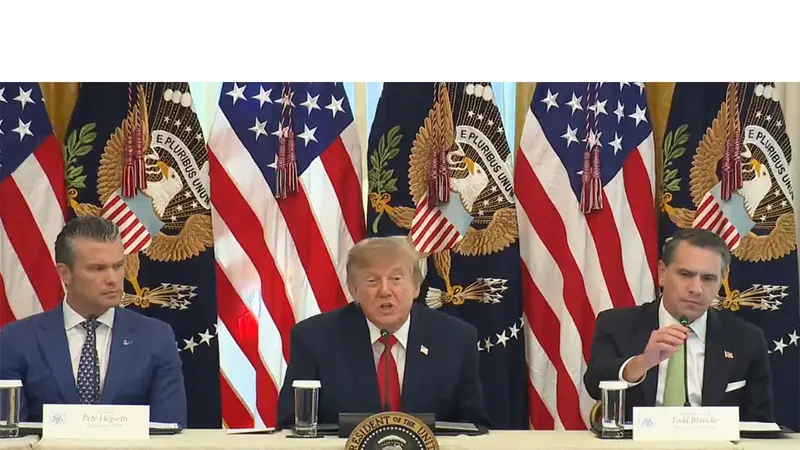
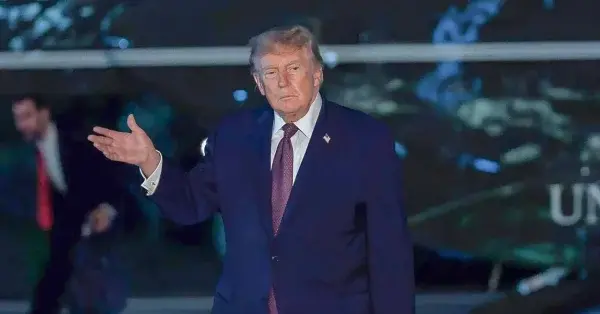
US President Donald Trump said at a South Carolina campaign rally on October 21 that the war with Iran would end soon. He said American forces could leave now, but Washington wanted to ensure a lasting outcome. Further military action remains an option as negotiations stall over Iran’s nuclear programme.
Trump credited two US military operations, Midnight Hammer and Epic Fury, with destroying Iran’s uranium-enrichment capacity. He also said the United States had defeated Iran militarily and financially. Iran denies seeking nuclear weapons and continues to reject demands to transfer its enriched uranium abroad.
More forces, but no new strike order
The United States is deploying the USS Theodore Roosevelt aircraft carrier strike group and the USS Makin Island amphibious group to the Middle East. The deployments involve about 9,000 sailors and Marines, according to the Financial Times and the US Naval Institute.
The Roosevelt left San Diego on September 27 and is expected to replace a carrier already in the region. The additional forces expand the military options available to Trump while diplomatic efforts remain unresolved.
The New York Times reported that American and Israeli planners had intensified preparations for a possible short, powerful campaign after the November 3 US midterm elections. Potential targets include nuclear facilities, energy infrastructure, missile production sites and drone arsenals.
Trump has not authorized a new offensive. During Oval Office remarks on Tuesday, he said he still had to decide how to bring the conflict to an end, contrasting a conciliatory approach with a harsher one without explaining either option.
Iran refuses to send uranium abroad
Iran’s refusal to surrender enriched uranium remains a central obstacle to an agreement. Mohsen Rezaei, secretary of Iran’s Supreme National Security Council, said no enriched nuclear material would leave the country. He said Washington must take steps to rebuild trust before negotiations resume.
Tehran has previously indicated it might consider diluting uranium enriched to 60% within Iran. Washington says any agreement must prevent the country from developing nuclear weapons.
Iranian President Masoud Pezeshkian rejected talks under military threats and demanded sanctions relief before negotiations. Parliament Speaker Mohammad Bagher Ghalibaf said Washington must meet seven Iranian conditions. These include ending the US blockade of Iranian ports, releasing frozen assets and halting regional hostilities.
Tehran challenges Trump’s account
Iranian Foreign Minister Abbas Araghchi said the nuclear dispute was a pretext for Washington’s opposition to Iranian ideology and resistance to US dominance. He said Iran had honoured earlier international agreements, only for the United States to withdraw without justification.
Araghchi also said Washington could not achieve its goals through war. He described Iran’s military readiness as the main deterrent to another US attack.
The conflict began on February 28 with US and Israeli strikes on Iran, followed by Iranian missile and drone attacks and disruption to commercial shipping. Pakistan helped broker an April ceasefire and a June memorandum intended to provide a framework for a permanent settlement. That process subsequently broke down.
Comments
To comment, sign in or create an account. Sign in Create an account
No comments yet.