

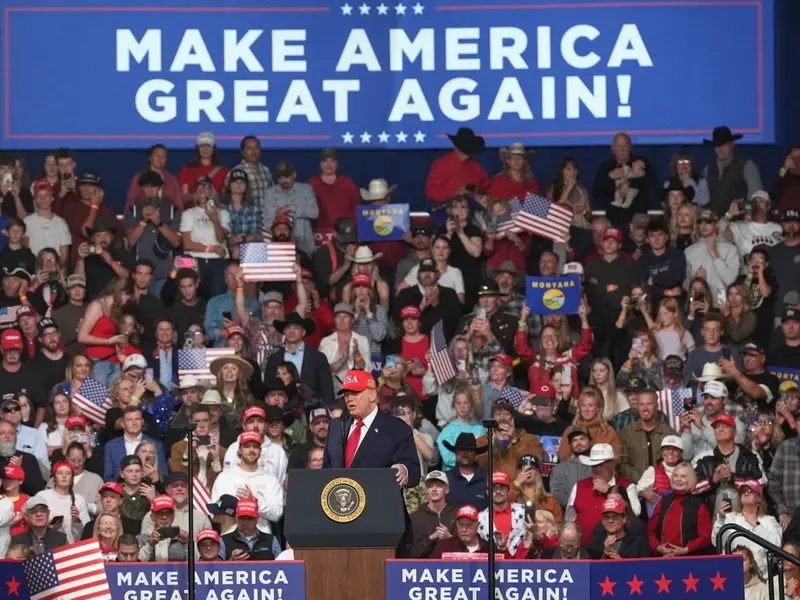
US President Donald Trump said the war with Iran would end soon during remarks in Arizona. At a rally in Bullhead City, he also asserted that American forces controlled the Strait of Hormuz, a key passage for international oil shipments.
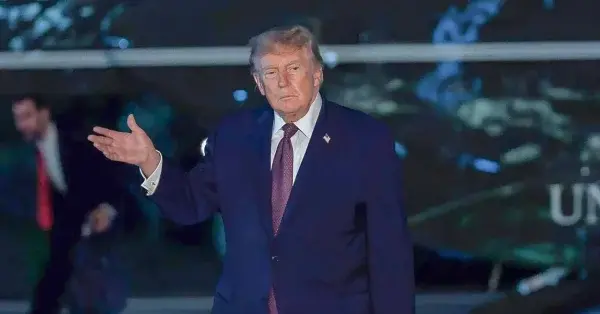
Trump repeated his forecast to reporters before leaving Arizona for an election rally in Montana. He gave no specific date for ending the conflict and did not explain whether negotiations with Tehran were underway.
Trump asserts US control of oil route
Trump said the United States had taken full control of the Strait of Hormuz through American naval operations. He described a blockade and said more oil was moving through the waterway than before the conflict began.
His remarks came amid reports of increased attacks on commercial vessels in the strait. US control of the passage, the reported recovery in oil flows and the scale of damage to Iran’s military have not been independently verified.
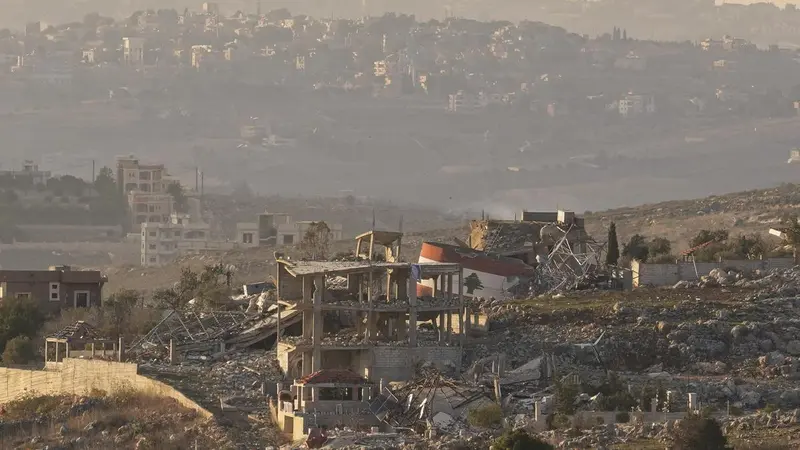
Trump said American operations had severely weakened Iran’s military, including its naval and air capabilities. He also asserted that Iran had lost its radar systems and air defences.
Strikes complicate efforts to reach agreement
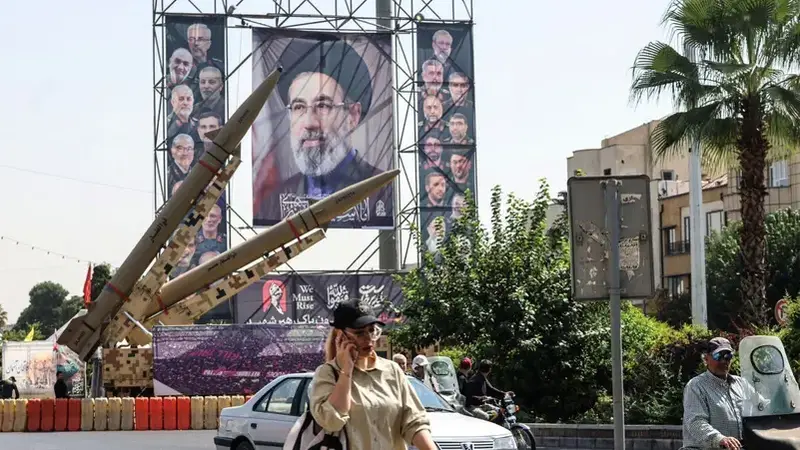
Trump said successive levels of Iran’s leadership had been removed, forcing repeated replacements of senior officials. According to his account, the first and second tiers were gone, along with half of the third.
He said some people had asked him to halt further strikes and that he had promised to do so. He did not identify those who made the request.
Trump said recent developments and attacks on ships had made an agreement with Tehran harder to reach. He also said the scale of the military campaign had left him unsure which Iranian officials to negotiate with.
Speaking to reporters, Trump said preventing Iran from acquiring nuclear weapons was the central US military objective. He asserted that American operations had achieved that goal.
Trump predicts lower energy prices
Trump acknowledged that fuel prices had risen more sharply than he expected during the conflict. He said he had anticipated an increase, but not one of that size.
He predicted that energy prices would fall rapidly once the war ended. His forecast tied the expected price decline to an end to the fighting, for which he offered no timetable.
Comments
To comment, sign in or create an account. Sign in Create an account
No comments yet.