

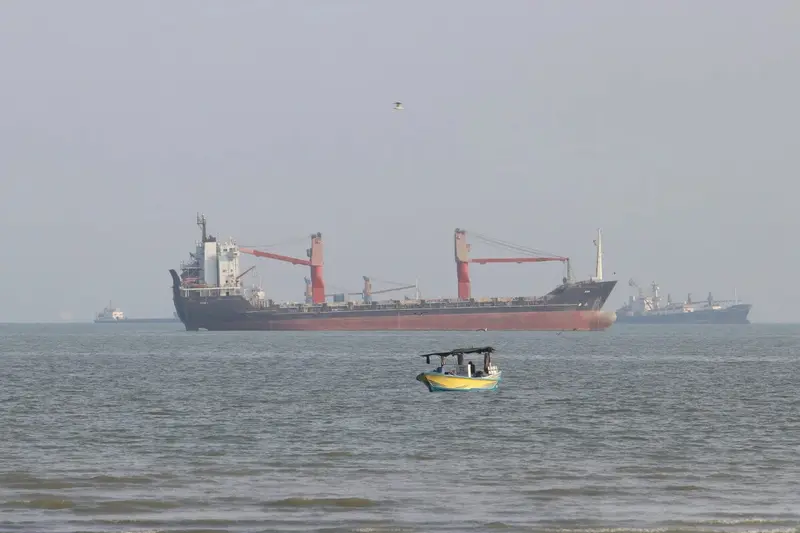
Attacks on merchant ships around the Strait of Hormuz intensified between October 11 and 14, with the container ship GFS Pride sinking and other vessels damaged. The incidents have disrupted oil shipments through a route that carried about one-fifth of global oil and liquefied natural gas trade before the war.
Records from maritime security firm Vanguard, the International Maritime Organization and UK Maritime Trade Operations put at least 10 vessels hit since October 11. Six incidents were recorded that Sunday and four on October 13, involving tankers and container ships.
Crews evacuated as ships sink
The Singapore-flagged GFS Pride sank after suffering damage and a fire, according to Singapore’s Maritime and Port Authority. All 21 crew members were evacuated safely, with no injuries reported.
Another Singapore-flagged container ship, GFS Giselle, suffered hull damage after an unidentified projectile struck it on October 14, shipping publication The Loadstar reported. It reached a safe anchorage under its own power, with all 22 crew members unharmed.
The Cape Dao, a bulk carrier registered in Antigua and Barbuda, was also reported sunk near the strait. It had been hit on September 23, in an incident that killed one crew member. The precise date of its sinking remains unclear.
Cause of container ship sinking disputed
The naval branch of Iran’s Islamic Revolutionary Guard Corps said a container ship carrying more than 2,500 containers struck a naval mine. It said the vessel had entered a route it considered unauthorized and dangerous.
Maritime security firm Marisks said there was no independent evidence confirming a mine. It described Iran’s account as consistent with a campaign intended to frighten shipping operators and discourage commercial traffic. A U.S. official attributed the sinking to an Iranian attack, but responsibility for many recent incidents remains unestablished.
Iranian officials describe wider operations
Two senior Iranian officials told Reuters that Tehran had approved changes to its attack methods and frequency about 10 days earlier. They said the operations targeted vessels Iran considered in breach of its navigation restrictions.
The officials said Iran wanted to prevent global oil prices from falling and put political pressure on President Donald Trump before November’s U.S. midterm elections. They warned that operations could extend into the Gulf of Oman and waters near Qatar and the United Arab Emirates.
Iran’s navy separately announced new naval deployments, according to Iranian state media. It said the units would monitor maritime traffic and what it described as enemy activity in the strait, the Sea of Oman and the Arabian Sea.
A U.S. military official told Reuters that Iranian forces were using small civilian boats with unarmed observers to identify targets. The official said the change followed U.S. strikes that damaged much of Iran’s radar capability.
Iranian authorities said their navigation restrictions were a response to U.S.-Israeli strikes and the U.S. blockade of Iranian ports. Washington has continued the blockade and expanded sanctions. Iranian officials warned that a full closure could follow for ships that disregard Tehran’s restrictions.



Comments
To comment, sign in or create an account. Sign in Create an account
No comments yet.