
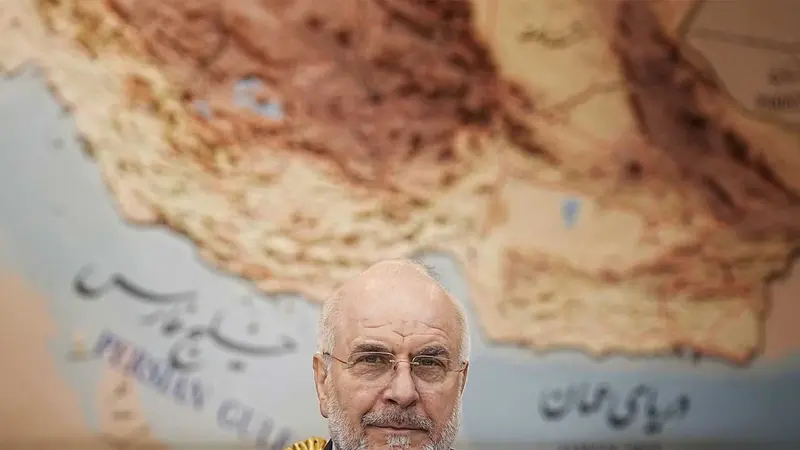
Iran’s parliament speaker, Mohammad Bagher Ghalibaf, told parliament on October 4 that the Strait of Hormuz would remain closed until Washington met seven Iranian conditions. His statement tied reopening the strategic waterway to negotiations between Iran and the United States.
Ghalibaf said the conditions were based on the Islamabad Memorandum of Understanding, an agreement reached in June to end hostilities. He said Washington had recently submitted proposals through a mediator, but Iran would not accept unilateral demands.
Tehran sets conditions for reopening
The Argentine news outlet Crónica reported that Iran’s seven demands covered military action, economic restrictions and earlier commitments. It listed them as:
- An end to war across all Middle Eastern fronts.
- An end to attacks on Iran.
- An end to the U.S. naval blockade.
- An end to economic pressure on Iran.
- The release of Iranian assets frozen abroad.
- The removal of sanctions on Iran’s oil sector.
- Implementation of commitments in the Islamabad memorandum.
Iranian Foreign Minister Abbas Araqchi said Tehran’s proposal could allow the strait to reopen within seven days if Washington agreed. Whether the United States has accepted any of the conditions or the proposed reopening timetable remains unclear.
Mediators carry proposals between the two sides
Qatar has been carrying messages between Washington and Tehran in efforts to end the conflict and restore maritime traffic. A U.S. response to Iran’s proposal was reported to have passed through Qatari channels.
An official familiar with the negotiations, cited by Vietnamese news outlet Tien Phong, described a proposed seven-day confidence-building phase. The document reportedly sought to bring both sides back to an expanded version of the June memorandum. According to the official, the main disagreement concerned the order of steps rather than the plan’s overall content.
Iranian Foreign Ministry spokesperson Esmaeil Baghaei said the Strait of Hormuz was Tehran’s main negotiating focus. He said the nuclear issue was not part of Iran’s seven-point proposal. Nor, he said, had it been raised in talks on the sidelines of the United Nations General Assembly in September.
Earlier agreement collapsed as conflict resumed
The June memorandum contained 14 points and was intended to end hostilities and open a path to further negotiations, particularly on Iran’s nuclear program, according to Indian news agency ANI. Its framework set out a 60-day roadmap toward a final agreement. It also provided for a high-level committee to oversee mediation.
ANI reported that the memorandum collapsed in July and fighting resumed. U.S. forces struck Iranian military and civilian assets, while Iran launched retaliatory strikes on American bases across the Gulf.
Araqchi said the conflict could not be resolved through military action and expressed hope that Washington would choose diplomacy. He also said Iran was prepared to take necessary measures to defend itself if the United States resumed military action.

Comments
To comment, sign in or create an account. Sign in Create an account
No comments yet.