
The war between the United States, Israel and Iran has continued for more than seven months after the opening strikes on February 28, 2026. The attacks killed Supreme Leader Ali Khamenei and several senior Iranian military and security commanders, according to accounts cited by Augsburg Allgemeine and Foreign Policy in Focus. Iran’s political system, however, did not collapse: a new supreme leader emerged, government institutions continued to operate and the country’s military and security structures remained central to governing.
Leadership strikes did not end the conflict
The initial campaign was intended to damage Iran’s nuclear and military capabilities. Washington said the operation was linked to concerns about Iran’s missile program and the possibility that Tehran could develop a nuclear weapon. Israel described the Iranian government as an existential threat, while critics said the U.S. and Israeli action violated international law.
The subsequent course of the war has challenged the assumption that removing senior leaders would quickly force a political collapse. Foreign Policy in Focus said Iran’s institutions were able to replace commanders, redistribute responsibilities and use alternative communications channels. It also noted that disrupting leadership can slow coordination and impose military costs without necessarily changing a government’s decision to continue fighting.
Hormuz remains a central pressure point
Iran responded to the opening attack by closing the Strait of Hormuz, according to Europa Press. The action drove up crude prices and left about 2,000 vessels stranded, the agency reported. The strait is also a major route for global energy supplies: Augsburg Allgemeine said that roughly one-fifth of the oil traded worldwide normally passes through it.
Naval confrontations continued even after the first diplomatic pause. Europa Press reported that a Pakistan-mediated ceasefire took effect on April 8, but said fighting at sea did not stop. Augsburg Allgemeine instead described a framework agreement reached in mid-June and reported that President Donald Trump declared the ceasefire over in early July after attacks by both sides. The differing accounts reflect the succession of diplomatic arrangements and the continued instability around the waterway.
Regional and economic consequences
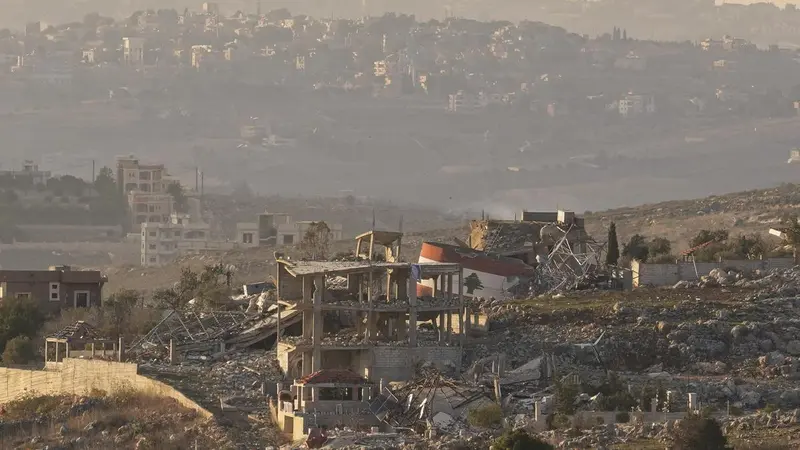
The disruption has affected the wider Gulf and the global energy market. The Iranian-backed Hezbollah movement has fired at Israel from Lebanon, while Israel has attacked targets in Lebanon and advanced ground forces there, Augsburg Allgemeine reported.
The United Nations Office for Project Services has called for political will to allow fertilizer shipments through the strait. Its executive director, Jorge Moreira da Silva, said a limited mechanism for safe passage could help prevent a humanitarian crisis in countries dependent on Gulf fertilizer supplies while full navigation is restored.
Iran has also condemned U.S. measures affecting air transport as “inhumane” and “illegal,” according to Europa Press. The Iranian Foreign Ministry said sanctions against 27 Iranian airlines had disrupted flights to countries including the United Arab Emirates, Oman and Iraq. The statements and the continuing maritime clashes underscore how the conflict remains unresolved despite repeated attempts to halt it.
Comments
To comment, sign in or create an account. Sign in Create an account
No comments yet.