

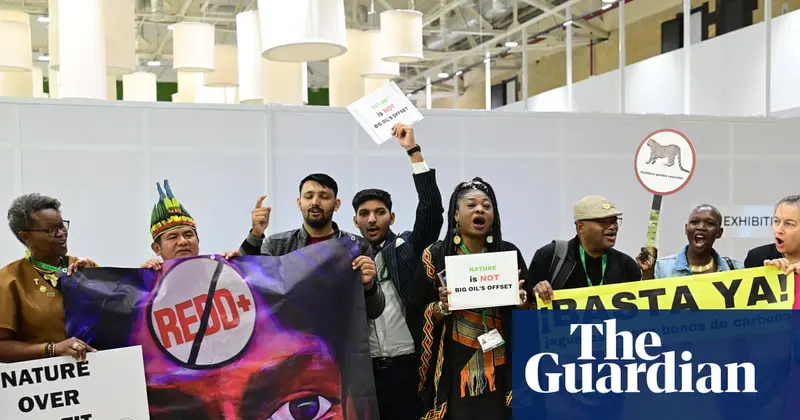
Nearly 200 countries adopted new biodiversity texts in Yerevan after overtime talks at COP17, keeping the 2030 nature agenda alive while leaving the money question unresolved. COP17 president Hambardzum Matevosyan brought down the gavel on the documents as delegates applauded.
The reports on exactly when the deal landed were not identical. Yahoo News said the texts were adopted on Friday, while the BBC said the agreement came together early on Saturday, hours after talks were due to finish.
Targets set in 2022 are still slipping
The talks were built around the Global Biodiversity Framework, the 2022 pact that set 24 targets to halt and reverse nature loss by 2030. One of its headline goals is to protect 30% of the world’s land and seas by the end of the decade, but the UN said this week that the world was on track to achieve only one of them.
As part of the new deal, countries acknowledged that they were falling behind. Draft language earlier in the week called for countries to “accelerate” efforts and for “increased action” to tackle the drivers of nature loss, although the final version was not immediately available.
Money remained the hardest part
A major dispute in Yerevan was over conservation finance. In 2022, governments agreed to put $30 billion towards nature recovery by 2030 and to mobilise another $170 billion from private sources. The UN said pledges were still arriving too slowly, and this week’s summit brought in more than $1 billion, about half of it from philanthropists including Leonardo DiCaprio’s Re:wild organisation.
Anna Ducros, a researcher at the International Institute for Environment and Development, said there had been some progress on cutting subsidies for activities that damage the environment. “A concrete example is that governments subsidise large-scale fishing that is especially harmful for nature - for example, trawling,” she said. “Right now, we have the situation where governments are paying twice.”
Other rows complicated the talks
Delegates also argued over how to reform subsidies and other incentives that encourage fossil fuels, intensive agriculture and overfishing. The European Union pushed for wealthy emerging economies such as China to join the group of countries paying for global conservation, while an earlier draft invited non-donor countries to join voluntarily.
The small but much-watched Cali Fund, designed to share profits from companies that use genetic data from plants and other organisms, remained far below expectations. It was launched in early 2025 with a goal of raising $1 billion a year, but had attracted only about $10,000 by the start of COP17.
Scientific reports also became a point of tension. A small group of countries, including Saudi Arabia and Russia, were reported to have frustrated efforts to approve benchmark findings from a UN-backed biodiversity body, while French Ecological Transition Minister Monique Barbut said, “The attacks on science have bothered me a lot.” Catherine Weller of Fauna & Flora said the deal was “good news” even if it was “not particularly exciting or detailed.”



Comments
To comment, sign in or create an account. Sign in Create an account
No comments yet.