

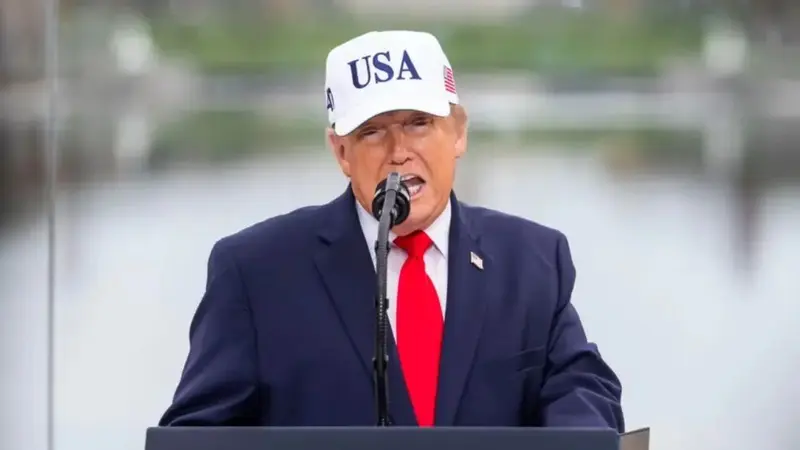
President Donald Trump said on November 4 that Vice President JD Vance was largely right to link the Iran war to Republican losses in the November 3 midterm elections. Trump acknowledged the conflict had pushed up gasoline prices, but said he would order the military action again; Democrats won majorities in both chambers of Congress.
They agree on the cost, not the course
Vance had blamed the war directly in a post on X, saying it was the reason Republicans lost. Trump, speaking at the White House, endorsed that assessment to a large extent and connected the conflict to a slight rise in gasoline prices.
The president did not signal a change in policy. He said he would repeat the decision to attack Iran, arguing that preventing the country from obtaining a nuclear weapon was the only long-term solution. The campaign began on February 28, when Trump ordered joint US-Israeli strikes on Iran.
Vance’s account of the defeat went beyond the war’s effect on fuel costs. He said turnout was not the main problem: many people who backed the Trump-Vance ticket in 2024 voted for Democrats in 2026. Vance attributed that switch to priorities identified in a pollster’s survey: ending the war, tackling the cost of living and inflation, putting America first, and changing the US relationship with Israel. His explanation is a political assessment; the statements do not establish how much the war, or gasoline prices, contributed to the losses compared with other factors.
A new balance in Congress
The Democratic majorities could give the party more leverage over the administration’s policies. Energy consultancy Rystad Energy said Congress could pass resolutions, withhold funds for the war and delay nominations, leaving the administration with less room to maneuver and more pressure to reach an agreement on the Strait of Hormuz.
Michelle Brouhard, Kpler’s head of policy and geopolitical risk, said the election could limit Trump’s options in Congress, though its effects on foreign policy would not be immediate. Neither assessment means the election itself will end the war or settle the dispute over Iran’s nuclear program.
Prices and diplomacy remain in the picture
US benchmark WTI crude closed down 8.3% on November 4 at $88.12 a barrel for December delivery, a decline of $7.97 from the previous close. That figure tracks crude oil, not the gasoline price increase Trump cited, and does not by itself explain what drivers are paying at the pump.
Meanwhile, the United States and Iran had resumed indirect talks mediated by Qatar more than a week before November 4, after more than eight months of war. The talks had produced no results. Iranian authorities said negotiations could allow the Strait of Hormuz, a strategic route for international trade, to reopen within two days; no outcome or timetable had been confirmed.
Comments
To comment, sign in or create an account. Sign in Create an account
No comments yet.