
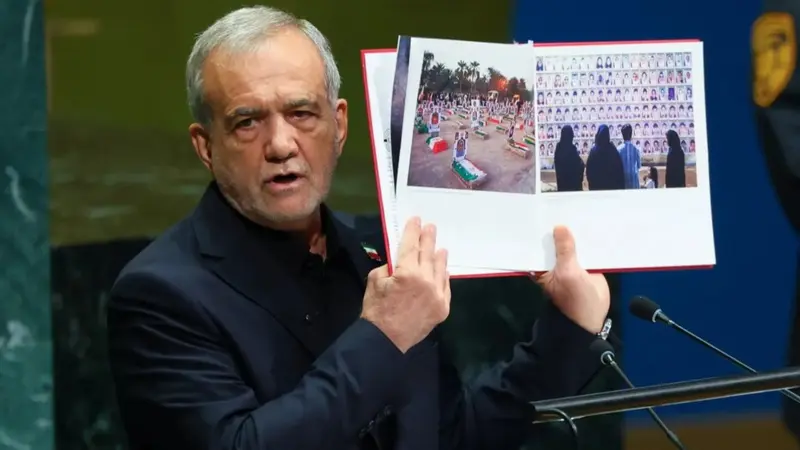
About 80 countries called on Iran to reopen the Strait of Hormuz—a key maritime route between the Persian Gulf and the Gulf of Oman. Bahrain’s Foreign Minister Abdullatif bin Rashid Al-Zayani read the joint statement at the UN. The participants stated that Tehran’s actions threaten international security and freedom of navigation, while Houthi attacks pose additional risks to commercial routes in the Red Sea.
Against this backdrop, there has been a sharp drop in traffic volume. According to the Italian publication La Notizia Giornale, on September 21, tracking systems recorded only two commercial vessels in the strait. Prior to the current escalation, the average was about 125 vessels per day. The report provides a different estimate—nine vessels that passed through the strait during the period in question. The discrepancy may be due to different dates, methodologies, or incomplete data.
A Route for Oil and Gas
The Strait of Hormuz is of particular importance to the global energy market. In 2025, an average of about 20 million barrels of oil and petroleum products passed through it daily—roughly a quarter of global seaborne oil trade. A significant portion of liquefied natural gas (LNG) from Qatar and the United Arab Emirates is exported via this same route; collectively, these shipments accounted for about 19% of global LNG trade.
The reduction in the number of vessels alone does not allow for an accurate determination of the volume of lost shipments: a large tanker can carry more cargo than several smaller vessels. Furthermore, vessels with their transponders turned off may not appear in monitoring systems. However, a sustained decline in traffic could affect the cost of shipping, insurance, and oil and gas.
Most of the oil passing through the Strait of Hormuz in 2025 was headed for Asia. This does not rule out consequences for European consumers: commodity prices are determined on the international market. At the same time, the impact on gasoline, natural gas, and goods prices will depend on the duration of the crisis, actual export volumes, stockpiles, alternative routes, and exchange rates.
Limited Alternatives
Saudi Arabia and the UAE can use pipelines to route some of their oil around the Strait of Hormuz. According to estimates by the International Energy Agency, the available capacity for such rerouting ranges from 3.5 to 5.5 million barrels per day. This is significantly less than the volume that typically passed through the strait.
Alternative routes also depend on the security of ports and infrastructure. In the event of a prolonged disruption to shipping, operators must factor in threats to crews, insurance costs, delays, and the need to reroute. Therefore, even in the absence of a formal, complete closure of the strait, its use may remain irregular and economically unfeasible.
Tehran Denies Link to Houthi Attacks
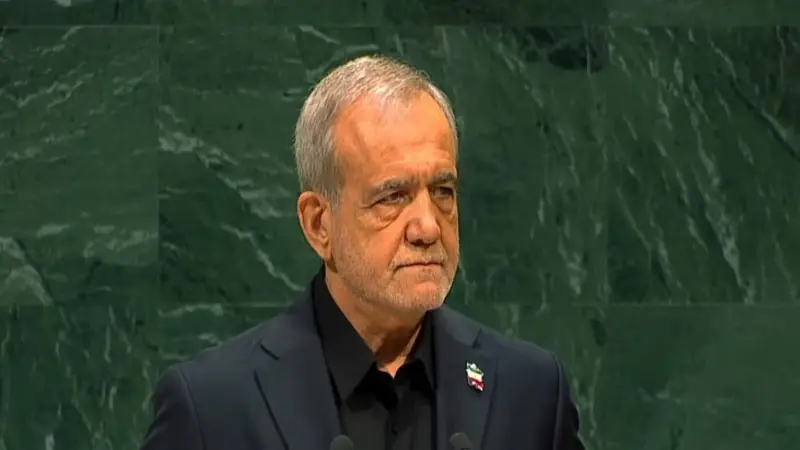
Iranian President Masoud Pezeshkian stated that Tehran is not involved in the Houthi attacks on Saudi Arabia. He called on the Houthis and Saudi authorities to resolve their differences through dialogue and said that Iran is ready to help bring an end to the conflict.
The Saudi-led coalition had previously reported intercepting a drone heading toward Mecca, as well as a ballistic missile launched toward Riyadh. In addition, according to the coalition, attempts were made to attack civilian targets in Yanbu, Taif, Beisha, and on the Farasan Islands. There is no independent confirmation of any of these reports in the materials provided.
The summary of events also reports that Iranian Foreign Minister Abbas Araghchi proposed a seven-day plan to reopen the strait following talks with a U.S. representative. Details of the initiative have not been disclosed. The further development of the crisis will depend on the safety of shipping, the volume of energy supplies, and the results of diplomatic efforts.


Comments
To comment, sign in or create an account. Sign in Create an account
No comments yet.