

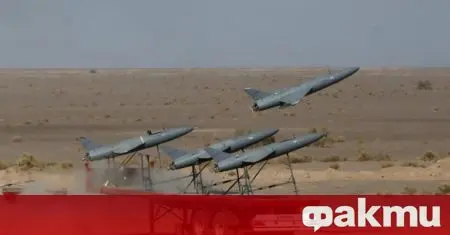
Ukraine has built an electronic-warfare shield over Kyiv to interfere with Russian Shahed drones, according to Serhiy “Flash” Beskrestnov, a presidential adviser on defence technology. He said the system is meant to cut the communications used by remotely controlled drones and marks a major citywide effort to protect the capital.
The shield matters because it is not described as a single device or one location’s defence. Beskrestnov said equipment and antennas were placed at hundreds of sites across Kyiv, turning the project into a coordinated layer of electronic countermeasures rather than an isolated installation.
How the system is meant to work
Beskrestnov said one of the main technologies used by Russian operators is MESH radio communication, which he described as part of how targets are found and drones are controlled. In his account, the drone carries a radio modem that allows an operator in Russia to direct it remotely.
The purpose of the Kyiv shield, he said, is to interrupt that link. Beskrestnov said the shield is intended to disrupt communications used by remotely controlled Shahed drones. Beskrestnov said equipment and antennas were deployed at hundreds of locations across the city.
Beskrestnov said the task was to carry out a large volume of work across Kyiv within several weeks. He described it as technically and logistically complex.
Who was involved
According to Beskrestnov, the operation involved leading producers of electronic-warfare equipment, which worked around the clock to manufacture and install the systems. He also said the Ukrainian General Staff, the Defence Ministry, the Interior Ministry, the National Security and Defence Council, the armed forces and other Ukrainian units were involved.
He said the project was under the president’s constant oversight. The source material does not say when construction was finished, how many systems were deployed, or what share of Kyiv is covered.
What is confirmed and what is not
The clearest confirmed point in the reports is the existence of the claim itself: that Kyiv now has a protective electronic-warfare shield against Shahed drones. Beskrestnov also said the system has forced Russia to pause, modernise Shahed drones and look for new technical solutions.
That effect remains his assessment, not a separately verified result in the material provided. No independent figures are given for the number of systems, the shield’s exact range, or how individual air attacks have changed since the deployment.
Beskrestnov said the system was built to disrupt communications used by Russian Shahed drones. In Kyiv, that has meant a spread-out network of electronic warfare equipment rather than a single visible barrier.


Comments
To comment, sign in or create an account. Sign in Create an account
No comments yet.