

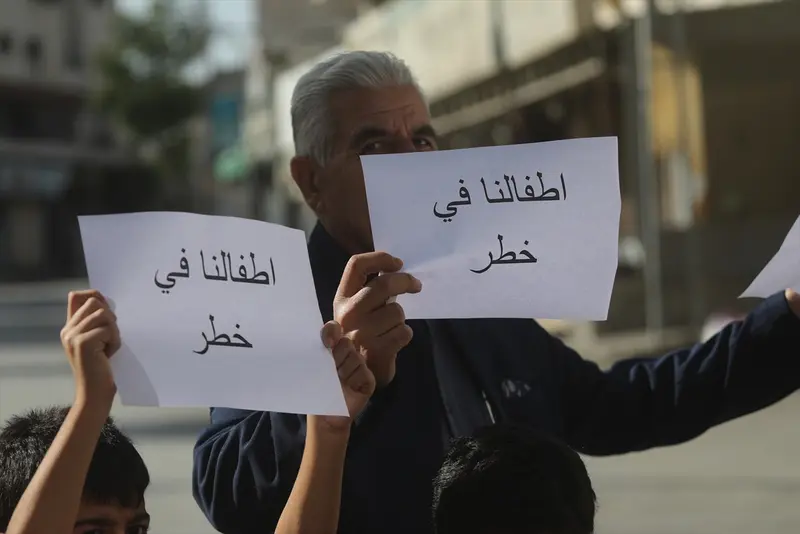
Dozens of Palestinians displaced by Israel’s military operation in Hebron protested at Al-Jelda junction on November 1, demanding the right to return home as local officials said 537 families — about 3,300 people — had been forced out and roughly 5,000 Palestinians were affected overall.
The demonstration gave a public shape to a 10-day campaign of raids, closures and a siege in the city, where the Hebron Governorate Support and Relief Committee said about 750 families remained outside their homes or were experiencing the effects of the closures in targeted areas. Sultan said displaced families were demanding a safe return home as soon as possible, calling it their most basic right.
How the operation began
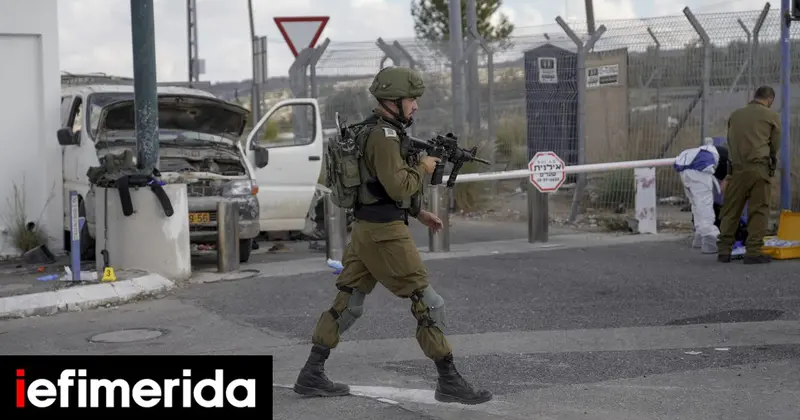
The Israeli operation in Hebron began after an October 23 shooting at a checkpoint in the Farsh al-Hawa area, on the city’s northwestern edge. Two Israeli soldiers were killed, three were wounded and the two Palestinian attackers were killed.
The Israeli army said its operation and siege could last several days. Israeli Prime Minister Benjamin Netanyahu later threatened a military offensive in the occupied West Bank on a scale not seen since the 1967 war.
What local officials say the siege has done
According to the Hebron Governorate Support and Relief Committee, about 537 families have left their homes, while around 750 families remain outside their homes or are living with the effects of the closures in the targeted areas. The committee put the total number of people affected at about 5,000.
It also said direct economic losses were exceeding 12 million shekels a day, infrastructure damage had passed 6 million shekels, and losses in health and environmental sectors were above 500,000 shekels.
The committee said 327 shops and other businesses had been fully closed and 15 facilities destroyed, deepening the disruption to trade and daily life in the city. It said the impact of the closures was spreading beyond the targeted neighbourhoods into Hebron city and the wider governorate.
Relief work is now part of the story
The committee said it was distributing food parcels, baby formula, cleaning supplies, bedding, blankets, women’s essentials and other basic items to affected families. It also said it was arranging temporary accommodation for some of the households forced to leave.
The aid body said it includes official, civic, health and security institutions, international organisations, the private sector, local community figures and Fatah’s Central Hebron branch, and that its work would continue around the clock. Displaced residents have demanded permission to return to their homes, but no date for their return was reported.


Comments
To comment, sign in or create an account. Sign in Create an account
No comments yet.