
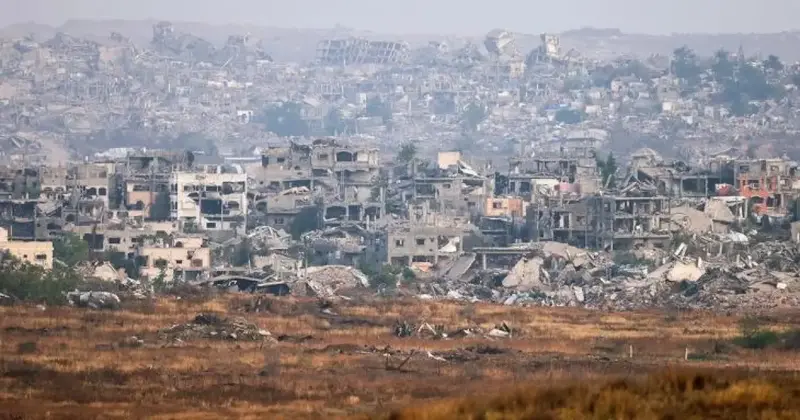
The Palestinian Central Bureau of Statistics said on October 5 that around 82% of Gaza’s buildings had been damaged. Its figures also described widespread displacement and damage to essential services, including water and sanitation infrastructure.
The bureau released the figures to mark World Habitat Day. It attributed the destruction to the Israeli offensive that began on October 7, 2023.
More than 134,000 buildings destroyed
The Gaza estimate draws on an assessment by UNOSAT, the United Nations satellite centre. It covers the period from October 7, 2023, to June 16, 2026, rather than the full period up to the announcement.
The assessment put the number of damaged buildings at about 201,000. Of those, more than 134,000 were completely destroyed and about 13,800 suffered severe damage, the bureau said.
The bureau separately estimated that roughly 329,000 housing units had been damaged. That figure counts housing units rather than buildings.
Displacement and damaged water systems
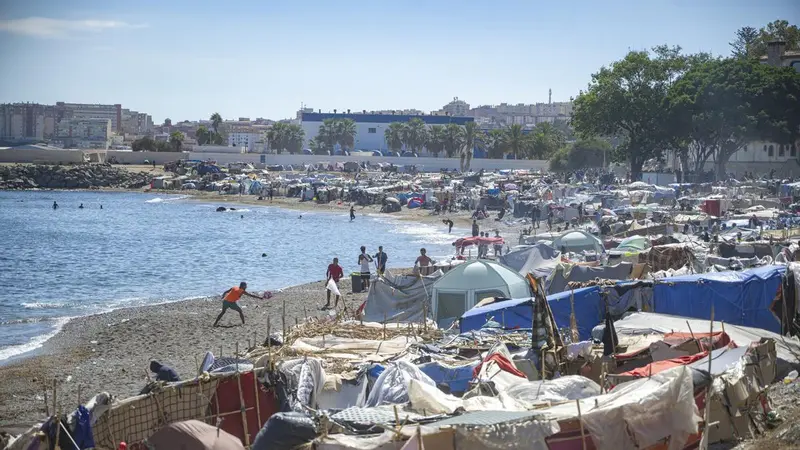
The bureau said most displaced people in Gaza were confined to less than 40% of the territory’s area. Its account linked repeated displacement to military operations and damage to homes and basic services.
About 90% of Gaza’s water and sanitation infrastructure had been damaged or destroyed, according to the bureau. It also said 82% of households faced insecurity over their water supply.
West Bank camps face extensive damage
The report also detailed damage in three West Bank refugee camps. Figures through February 2026 showed that around 680 buildings in Jenin camp had been damaged, representing 53% of its buildings.
In Nur Shams camp, 434 buildings had been damaged, or 55% of the total. Tulkarm camp recorded damage to 407 buildings, around 37%.
The Palestinian Commission for Wall and Settlement Resistance reported about 341 demolition operations in the West Bank during the first half of 2026. Those operations destroyed 740 Palestinian structures. The statistics bureau also reported that demolitions and destruction had displaced more than 4,000 Palestinians.
Housing figures showed that about one in five households in West Bank camps lived in non-traditional accommodation in 2025. Nearly 9% of camp households had at least three people per room, compared with 3.4% across the West Bank.
The bureau called for international support combining emergency relief, early recovery and reconstruction of homes and infrastructure. It said displaced families and vulnerable groups should take priority. Funding and a timetable for that response remain unspecified.
Comments
To comment, sign in or create an account. Sign in Create an account
No comments yet.