

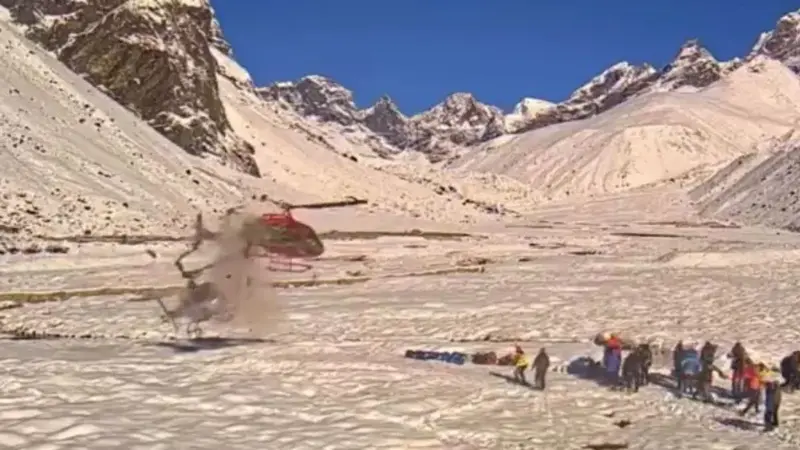
Two helicopters collided while trying to land near Mount Everest in Nepal, killing an Indian tourist and leaving the number of injured people unsettled. The crash matters because this is a lifeline route in a roadless mountain region where helicopters move trekkers, guides and supplies, and where rescue flights are common.
What happened at Pheriche
The collision happened on Tuesday morning at the heliport in Pheriche, in Nepal’s Solukhumbu district, around 8:00 a.m. local time, according to the reports. The aircraft involved were operated by Fishtail Air and Air Dynasty, and both came down after the impact.
Solukhumbu district police chief Nabin Raja Budhathoki said a 47-year-old Indian man died at the scene. Reports placed the crash site at about 4,200 metres, just below Everest base camp, in a region known for challenging terrain and rapidly changing weather.
Who was hurt, and what is still unclear
The most immediate uncertainty is the injury count. VOL.AT said three people were injured: a New Zealand passenger and both pilots. Bahamas Spectator and Jamaica Inquirer said a New Zealand national and a Nepali pilot were injured. Südtirol News said the injured passenger was a 53-year-old New Zealander of Indian descent and added that both pilots survived.
What all of the accounts do agree on is that the total number of people aboard the two helicopters has not been confirmed. The name of the dead passenger has also not been released in the reports reviewed, even though his age and nationality have been identified.
Why Everest helicopter routes matter
Helicopters are used heavily in the Everest region because there are no roads. They shuttle tourists, climbers and equipment into the mountains, and they are also used to evacuate trekkers and guides who become ill or exhausted on the way to base camp.
Helicopters in the region are used for tourism and emergency response in a challenging mountain environment. It hits a transport system that is central to tourism and emergency response in one of the world’s hardest places to fly, and it puts landing procedures and safety controls back under scrutiny.
Authorities have said the cause is still unknown and that an investigation is under way. For now, the confirmed facts are a fatal collision, a disputed injury toll and helicopter services used for travel and evacuations in Nepal’s high mountains.


Comments
To comment, sign in or create an account. Sign in Create an account
No comments yet.