

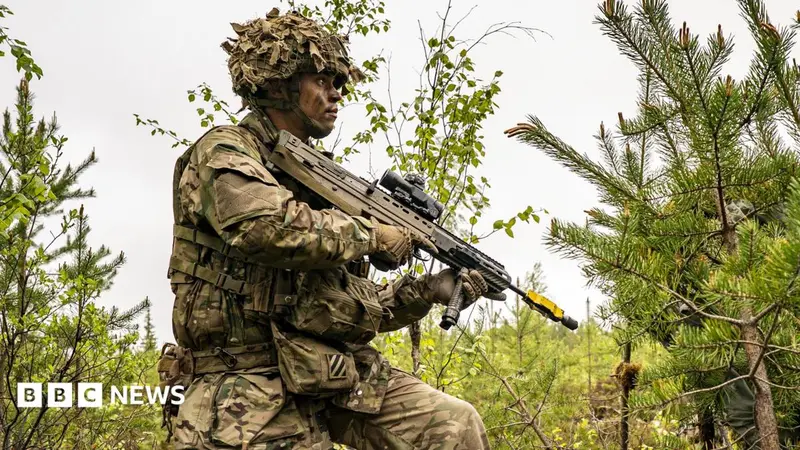
The UK and France will lead 2,800 troops in a November exercise in Poland to rehearse how a multinational force could support Ukraine after fighting ends. It is the first major exercise run by the Multinational Force Ukraine (MNF-U), turning plans for a postwar security role into a test of how troops, equipment and supplies could move together.
From a proposed guarantee to a military rehearsal
European countries set out plans for a reassurance force last year as one possible long-term security guarantee for Ukraine. Exercise Koalicja, scheduled for November 9–22, will test parts of that plan; it does not mean troops are being sent to Ukraine now.
The UK government says the force would enter Ukraine only after fighting had ceased and at the request of the Ukrainian government. It would help rebuild Ukraine’s armed forces and support safer skies and seas. Western officials say it would not take part in offensive operations, peacekeeping or ceasefire monitoring, and would not operate under NATO command or on the front line.
The exercise will test how the force moves, protects and supplies personnel, and whether units from different countries can work under shared command arrangements. The distinction matters: a multinational force would need to coordinate national contingents, while its final structure and size remain undecided.
What the exercise will test
Of the 2,800 participants, 300 will be from the UK. British forces will bring RAF Typhoon jets and a Voyager refuelling aircraft; the jets will simulate reassuring commercial aviation once Ukraine’s skies reopen.
Türkiye will lead the maritime component, with forces testing mine-clearance arrangements in Istanbul. The longer-term aim is to help commercial shipping return to Ukrainian ports and allow Black Sea trade to resume. These are preparations, not evidence that mines have been cleared or shipping restored.
The UK government lists 11 participating countries. The BBC’s opening summary gives 12, although the list of nations later in its account names 11. The government names Belgium, Estonia, France, Germany, Lithuania, the Netherlands, Poland, Spain, Sweden, Türkiye and the UK.
Deployment remains conditional
The United States has taken part in discussions but is not contributing to the mission, according to the BBC. Russia opposes foreign troops being stationed in Ukraine; President Vladimir Putin said last year that they would be legitimate targets. Western officials say the force could defend itself but have not specified how it would respond if attacked.
Officials say the eventual force’s composition will depend on the circumstances in which hostilities stop and on individual countries’ political decisions. Military experts have previously suggested that Western countries might need to send tens of thousands of troops to guarantee Ukraine’s security—a separate estimate from the 2,800 personnel taking part in this rehearsal.
The exercise can test readiness and coordination, but it cannot resolve the main conditions for deployment: the fighting must stop, Ukraine’s government must request the force, and participating countries must decide what they will contribute.

Comments
To comment, sign in or create an account. Sign in Create an account
No comments yet.