

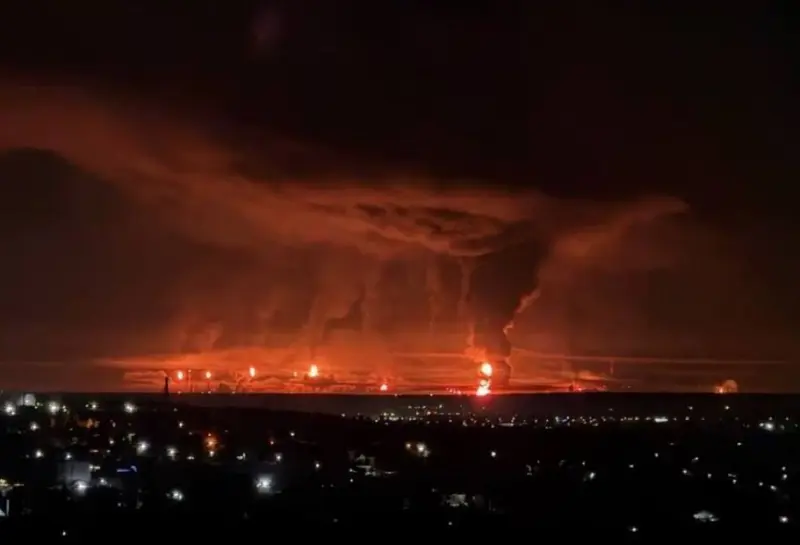
Russian authorities have opened a criminal case for a terrorist act after a large drone attack damaged an industrial facility in Kstovo district, in Nizhny Novgorod Oblast, about 400 kilometres east of Moscow. The scale of the strike matters because regional officials are already moving to protect fuel supplies, while reports from Ukrainian media say the target was one of Russia’s biggest oil refineries.
The governor of Nizhny Novgorod Oblast, Gleb Nikitin, said a large-scale drone attack took place overnight and on Sunday morning. He said more than 100 drones were destroyed and that, based on preliminary information, there were no casualties. Russian investigators later opened a criminal case in connection with the attack on an industrial enterprise and civilian infrastructure in the region.
What is confirmed — and what is not
What Russia has publicly confirmed is damage to an unnamed industrial site in the Kstovo area. Officials have not identified the facility, and they have not confirmed that the site was the NORSI refinery.
That is where the account from Ukrainian media diverges. They reported that the target was the NORSI oil refinery, also known as Lukoil-Nizhegorodorgsintez. Telegram monitoring channels said the refinery was struck, and some posted images and video said to show fires at the site. The Kyiv Independent said it could not immediately verify the footage and related details.
The refinery matters because it is described as one of Russia’s largest. According to the material circulating after the strike, it can process about 15 million to 17 million metric tonnes of crude oil a year and produces gasoline, diesel and aviation fuel. The site is also reported to have been hit before: on August 26, 2026, a strike caused a major fire, severe damage and a suspension of operations.
Why the fuel angle matters
Regional authorities moved quickly to avoid disruption beyond the damaged site. They said measures were being taken to keep petrol stations supplied across Nizhny Novgorod Oblast. The regional administration also urged drivers to buy only the fuel they need, to avoid panic buying and additional shortages.
The administration said an even-odd refuelling system remains in force, meaning access to fuel is rationed by date and by the first digit of a vehicle’s registration number. Nikitin also said restoration work could bring temporary power cuts, along with reduced hot-water and heating supplies in some parts of the utility network serving residential buildings.
The full extent of the damage has not been disclosed, and it is still unclear whether the reported fires affected refinery operations. What is clear is that regional authorities announced measures to maintain fuel supplies, while Ukrainian media reported that NORSI was targeted.
A repeated target in a wider campaign
The reported strike fits a broader pattern. Since the start of 2026, Ukraine has stepped up long-range attacks on Russian refineries, fuel depots and other energy installations, according to the material in the sources. The stated aim is to hit hydrocarbon revenues that fund the Kremlin’s war effort.
That is why the Kstovo attack is being watched beyond the region itself. If the damaged facility is indeed the NORSI refinery, the strike would add fresh pressure to a site already linked to previous fires and production disruptions. If it is not, the unanswered question is just as important: how vulnerable are Russia’s fuel hubs when local officials are already warning of shortages and temporary utility disruptions?


Comments
To comment, sign in or create an account. Sign in Create an account
No comments yet.