

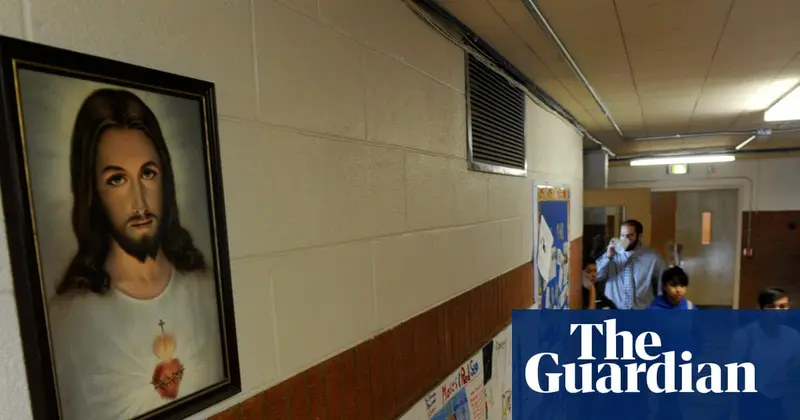
On November 3, the U.S. Supreme Court heard arguments over whether Catholic preschools can receive Colorado funding while refusing admission to children from LGBTQ families. Several conservative justices pressed the state to explain why it would not exempt the schools, but the court has not ruled.
What the Colorado program requires
Colorado’s publicly funded preschool program offers four-year-olds up to 15 hours of preschool a week, with a reported benefit of $6,300 per child annually. Participating providers must give eligible children an equal opportunity to enroll, regardless of characteristics including race, religion, sexual orientation and gender identity.
The dispute reaches beyond the terms of that rule. The Archdiocese of Denver, which oversees 34 preschools, sought an exemption because the schools’ admission policies reflect Catholic teachings on marriage, family and sexual identity. St. Mary Catholic Parish, another parish and a family sued after Colorado refused the accommodation.
Two different views of equal treatment
The plaintiffs argue that conditioning public funding on compliance with the rule burdens their religious exercise. They want families to be able to use state preschool benefits at Catholic schools while those schools keep their admission policies. Colorado says religious providers can participate and teach their beliefs, but must meet the same nondiscrimination requirements as every other publicly funded preschool.
That distinction shaped the justices’ questions. The conservative justices focused on whether a rule that applies to religious and secular providers alike can still exclude religious schools in practice. Justice Brett Kavanaugh pointed to roughly 2,000 other participating programs and the 34 preschools overseen by the archdiocese as a way, in his view, to accommodate both religious schools and LGBTQ families.
The court’s liberal justices questioned whether an exemption would instead give religious providers special treatment by allowing them to turn away children based on protected characteristics. Justice Ketanji Brown Jackson also raised the risk of treating exclusion based on a family’s LGBTQ identity differently from exclusion on other grounds.
Why the legal distinction matters
Lower courts sided with Colorado. They reasoned that the state had not barred religious preschools from the program outright, but had invited them to participate under conditions that applied to all providers. Chief Justice John Roberts noted that earlier cases cited by the plaintiffs involved laws that explicitly discriminated against religious schools—unlike Colorado’s rule, as it is framed in this case.
The Supreme Court is weighing how religious freedom protections apply when a public benefit comes with a generally applicable condition. The case also raises how far the court’s 1990 precedent, which says religious beliefs do not automatically exempt people from laws that apply to everyone, reaches into public funding programs.
The outcome could determine whether the schools may receive state funding without following Colorado’s admission rule. For families, the immediate question is whether preschool benefits can be used at Catholic schools that exclude children from LGBTQ families. The justices heard arguments, not evidence of a final decision; no ruling was reported.




Comments
To comment, sign in or create an account. Sign in Create an account
No comments yet.