


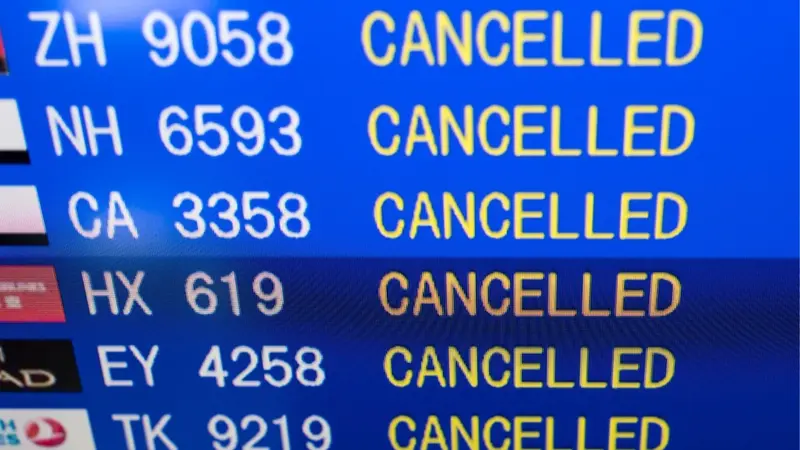
Bomb threats on November 6 targeted air traffic at Copenhagen and Prague airports and broadcasters in several European countries, prompting media evacuations, interrupted programming and the diversion of a Wizz Air flight to Venice. The incidents add to a week of aviation threats that have disrupted flights across Europe, while authorities have yet to establish whether the threats are connected.
Airport checks and a diverted flight
Danish police said they were investigating a threat targeting air traffic at Copenhagen Airport. They said there appeared to be no danger to passengers so far; the investigation was continuing. Czech police reported renewed threats against aircraft arriving at and departing from Prague Airport, and said security measures had been taken with minimal disruption to airport operations.
Italian news agency ANSA reported that a Wizz Air flight from Prague to Rome was diverted to Venice. Separately, Portuguese police said a bomb threat against a Ryanair flight scheduled to travel from Lisbon to Rome proved to be a false alarm. The accounts do not establish that the threats at Copenhagen or Prague were false.
Broadcasters and newsrooms evacuated
Threatening messages also led to evacuations at media organisations in Ireland. The offices of public broadcaster RTÉ, the Irish Independent newspaper, radio stations Newstalk and Today FM, and broadcaster Virgin Media were among those cleared, according to reports. RTÉ temporarily replaced programming with music and a recorded message, in some cases for up to three hours.
Other reported targets included Britain’s Sky, Bulgaria’s Nova TV and France’s TF1. No explosive devices were found at the media facilities covered in the reports. An email sent to RTÉ and Nova TV, signed with the name “Mikhail Andropov”, claimed a device had been placed in the recipient’s building and warned that it would explode within 45 minutes. The sender’s identity has not been confirmed.
How large is the wider wave?
Greek news site tanea.gr reported that more than 20 false bomb threats had disrupted European air traffic since the start of the week, leading to flight diversions and fighter-jet escorts. Cyprus news outlet OmegaLive described nearly 30 passenger flights as targets. These are different measures—threats and flights—and should not be treated as directly interchangeable counts.
The emails to RTÉ and Nova TV also described the sender as a member of an organisation responsible for threats against aircraft earlier in the week. Reader.gr noted that the name and wording appeared to echo references to former Soviet leader Yuri Andropov, but said it was unclear whether this signalled Russian involvement or was intended to direct suspicion towards Moscow. The report does not establish who sent the messages.
Irish Prime Minister Micheál Martin said European security services had not determined whether the aviation and media threats came from individuals or formed part of a coordinated attack. The investigations in Denmark and Czechia were ongoing, leaving both the authorship of the latest threats and any link between the airport and newsroom incidents unresolved.



Comments
To comment, sign in or create an account. Sign in Create an account
No comments yet.