

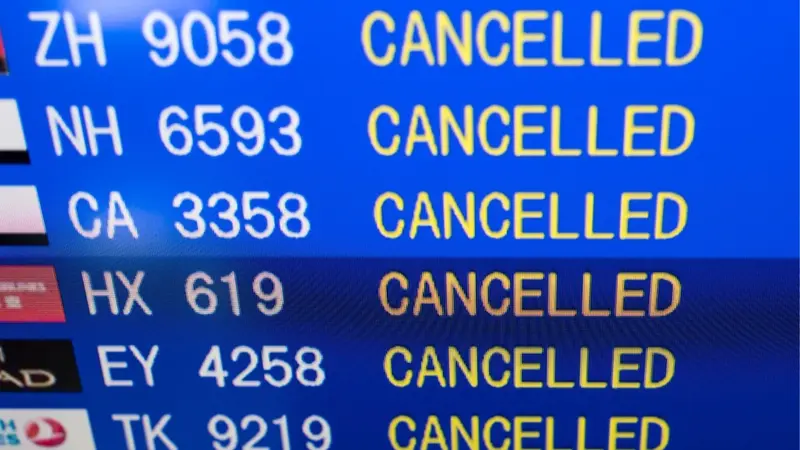
Bomb alerts disrupted at least 15 commercial flights across Europe on Thursday, Nov. 5, triggering diversions, emergency landings, inspections and military escorts, according to a tally by Brazilian news outlet Diário do Centro do Mundo. The disruption involved several airlines and routes, but authorities had not established whether the cases were connected or identified those responsible.
Routes changed, checks followed
An Aer Lingus Airbus A320 travelling from Dublin to Rome diverted to France’s Évreux air base. Reports said it landed safely with 151 passengers and six crew members, after a French fighter escorted it. The French prime minister’s office confirmed the diversion and said it was monitoring the situation; explosive-ordnance teams were due to inspect the aircraft on the ground.
Two Wizz Air flights from Milan were affected: one bound for Warsaw landed in Vienna, and another landed in Bucharest with 182 passengers before being inspected. Italy’s air force escorted a Finnair flight from Helsinki to Rome, where it landed as planned and was searched.
Three Ryanair flights heading to Sofia faced security measures. Flights from Copenhagen and Madrid landed in the Bulgarian capital, while a service from London Stansted diverted to Plovdiv. Actualno.com, a Bulgarian news site, reported that checks in Bulgaria found no explosive devices. LOT Polish Airlines said threats affected flights from Warsaw to Brussels and Paris; both landed and were checked, with no signs of explosives found. Czech police, meanwhile, arranged post-landing inspections after receiving alerts about possible devices on four aircraft bound for Prague. Police assessed the threats as low-credibility but said they would not be ignored.
Why the totals do not line up
The overall scale is not settled by a single comparable count. Diário do Centro do Mundo put Thursday’s toll at at least 15 commercial flights. Actualno.com cited more than 25 aircraft making emergency landings in Europe because of bomb threats, but did not specify the period covered, so that figure cannot be matched directly to Thursday’s tally.
Counts for the previous Tuesday’s alerts also differ. Primera Edición reported four flights that activated security procedures and said the threats proved false. Macedonian news site Makpress put the number of targeted commercial flights at around ten, while Diário do Centro do Mundo counted at least seven flights that faced inspections or diversions. Those figures describe different measures; the latter outlet also reported that no explosives were found in Tuesday’s incidents.
What the alerts mean for passengers
Todor Ivandzhikov, chairman of the Association of the Bulgarian Aviation Industry, said airports and airlines have procedures for bomb alerts and that air travel remains safe. He said aircraft facing a threat are given priority to land, which can delay other flights by several minutes. The immediate impact, then, can include missed schedules and unexpected airport changes even when checks find no device.


Comments
To comment, sign in or create an account. Sign in Create an account
No comments yet.