

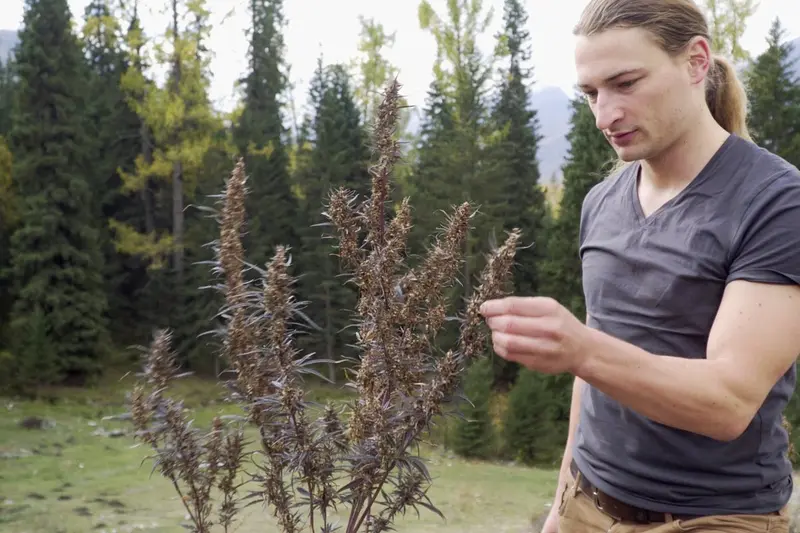
Archaeologists studying a Scythian burial mound in southern Siberia say they have found the earliest known evidence of people using cannabis for its psychoactive effects. Their study, published in Science on November 5, 2026, bases that interpretation on more than 1,000 seeds and preserved human hair from the Tunnug 1 tomb.
Seeds and hair in the same burial
Tunnug 1 lies in the Uyuk Valley and dates to between the eighth and ninth centuries BCE. Excavation began in 2017. Radiocarbon dating of six cannabis seeds placed them in the first decade of the eighth century BCE, around 2,800 years ago.
The seeds matter because they were found alongside preserved hair. Testing detected cannabinol in the hair, at an average of 560 parts per billion per sample. The researchers interpret the two kinds of evidence together as a sign that people associated with the burial consumed cannabis, likely as part of a funerary ritual.
That combination is more significant than seeds alone. Cannabis seeds can be used to make oil, while the plant’s fibres can be made into cloth; their presence in a tomb does not by itself show that anyone sought an intoxicating effect. The hair finding is central to the study’s claim that the cannabis was consumed.
What the evidence can—and cannot—show
The study does not establish how the cannabis was taken. Co-author Gino Caspari, an archaeologist, said it is unclear whether people inhaled or ingested it. Nor does the evidence specify exactly what role cannabis played in the burial rite.
Volker Auwaerter, head of the forensic toxicology section at University Medical Center in Freiburg, said the hair analysis was scientifically weak. He argued that the test could not distinguish consumption from traces picked up through contact with cannabis during burial, and said forensic toxicology testing would have been advisable.
That concern challenges the step from finding cannabis in the tomb to concluding that people used it to get high. The seeds establish the plant’s presence in the burial; whether the hair shows consumption or exposure remains disputed.
Experts disagree on the hair test
Elisa Guerra Doce, a University of Valladolid scholar who studies psychoactive substances in European prehistory, offered a different assessment. She said toxicological hair analysis has been used in archaeology to identify consumption and praised the researchers’ case that cannabis was not merely placed in the tomb as an offering.
The disagreement leaves the study’s central interpretation open to scrutiny. If the hair traces resulted from consumption, the find would push the known record of psychoactive cannabis use back to the early eighth century BCE. If they came from contact with the plant after burial, the seeds still show cannabis had a place in the funerary context, but would not establish that people used it for its effects.




Comments
To comment, sign in or create an account. Sign in Create an account
No comments yet.