Spain says Toledo train crash toll may rise above 70
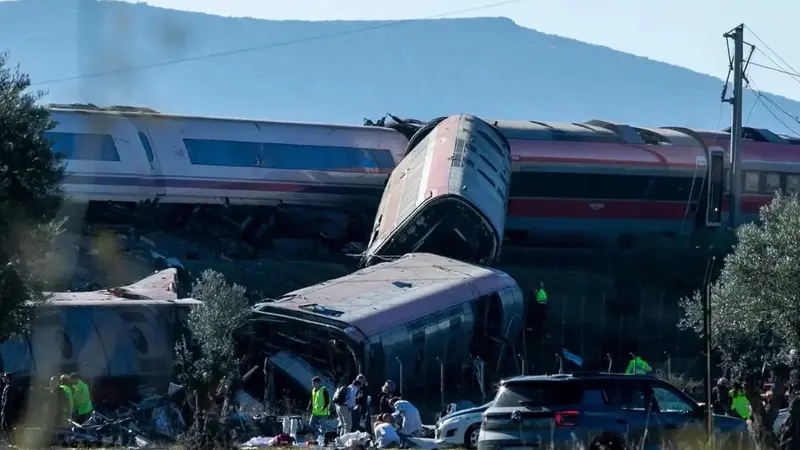
Spain's Castilla-La Mancha leader says the Toledo train crash death toll remains at 69, but could climb above 70 as investigators identify partial remains. The update comes as recordings point to control-centre decisions before the collision.
First reported Oct 28, 18:09 UTC · Updated Oct 31, 06:23 UTC · 3 updates
What changed · Oct 31, 06:23 UTC
The regional president said the verified toll was 69 but could exceed 70; he cited 70 missing-person reports and 31 bags of partial remains awaiting identification.
A 51-year-old Argentine passenger, Agustín Randazzo, was identified as the second Argentine victim.
Updated hospital figures said 60 of at least 110 people receiving hospital care had been discharged and 50 remained in treatment.
New reporting said Spain had declared three days of national mourning and that train drivers were on strike; it also reported safety commitments from the prime minister and a call for preventive measures from the king.
All updates (3)
major
The regional president said the verified toll was 69 but could exceed 70; he cited 70 missing-person reports and 31 bags of partial remains awaiting identification.
A 51-year-old Argentine passenger, Agustín Randazzo, was identified as the second Argentine victim.
Updated hospital figures said 60 of at least 110 people receiving hospital care had been discharged and 50 remained in treatment.
New reporting said Spain had declared three days of national mourning and that train drivers were on strike; it also reported safety commitments from the prime minister and a call for preventive measures from the king.
major
New reporting says the AVE driver reported a Meta 0 indication showing the section ahead was occupied before the control centre authorized travel at normal speed.
The Adif worker who issued the instruction declined to give a statement to the Guardia Civil; his conduct is under inquiry, and the drivers had not yet been questioned.
A source records that CIAF’s initial toll of 74 was later corrected to 69 confirmed deaths.
major
Authorities corrected the earlier CIAF figure of at least 74 deaths; the provisional toll was reported as 69.
New reports gave updated injury-treatment figures and further details about the LZB signalling failure and investigation.
Spain's prime minister and king called for a full inquiry and stronger safety measures; Sánchez announced three days of national mourning.
Emiliano García-Page said 69 deaths had been verified after the October 28 collision near Urda in Toledo province, but warned the toll could still rise above 70 as investigators identify partial remains. The accident has already left dozens of injured passengers in hospital.
The toll is still being counted
Spain’s railway accident investigation commission, CIAF, briefly put the death toll at 74 before authorities corrected it back to 69 confirmed deaths. García-Page said the figure could still move higher because investigators were dealing with 70 disappearance reports and 31 bags of partial remains.
Authorities in Castilla-La Mancha said at least 110 people received hospital care after the crash. Of those, 60 had been discharged and 50 were still being treated, while four of the 15 patients initially classed as seriously ill were improving.
One of the victims identified in later reporting was Agustín Randazzo, a 51-year-old Argentine passenger. His identification added another named fatality to a toll that has shifted several times since the collision.
What the recordings suggest
Argentina’s La Nación reported that Spanish broadcaster Cadena SER published three recordings of calls before the crash, later analysed by El País and RTVE. In them, the AVE driver warned the Atocha control centre in Madrid that the track ahead was occupied, while controllers discussed which procedure to use before authorizing the train to continue.
The reports said the driver described a Meta 0 indication on the safety system, a signal understood to mean the line ahead was occupied. That detail is now part of the broader inquiry into how two high-speed trains came to collide on the Madrid–Seville line.
Inquiry under pressure
An Adif worker at the control centre who ordered the AVE to resume has refused to give a statement to the Guardia Civil, according to reporting published on October 30. His conduct is under investigation for possible criminal responsibility, and the same report said the drivers had not yet been questioned.
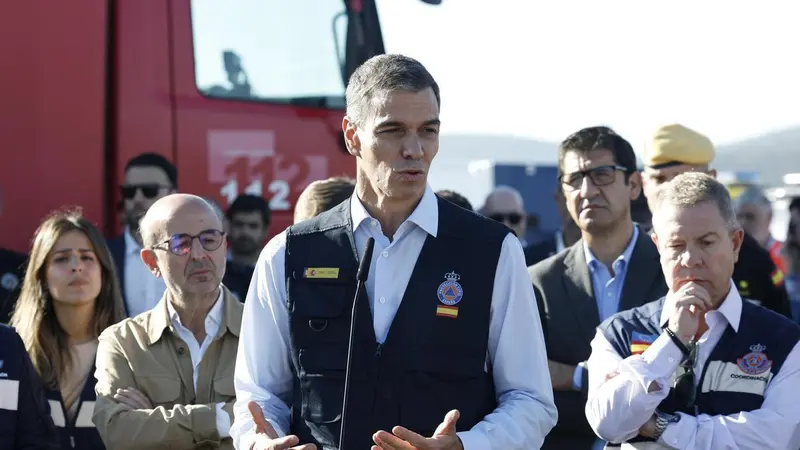
Prime Minister Pedro Sánchez said Spanish institutions would fully clarify the circumstances of the tragedy and strengthen safety measures. King Felipe VI, after visiting injured passengers in a Toledo hospital, said investigators must establish how and why the collision happened and called for measures to prevent another rail disaster.
ConfirmedRenfe and Iryo high-speed trains collided near Urda in Toledo province on October 28.5 publishers
Reported by: , , , ,
ConfirmedThe collision occurred in Toledo province on the Madrid–Seville route; the AVE had departed Madrid’s Atocha station for Seville.4 publishers
Reported by: , , ,
Media reportLa Nación reported that the LZB system failed at about 8:31 a.m. on the day of the collision.reported by 2 publishers
Reported by: ,
Show more (7)Show less
Media reportThe AVE driver told the Atocha control centre that the system showed a partial-blockage 000, or Meta 0, indication; reports said this meant the section ahead was occupied and the train should stop.reported by 4 publishers
Reported by: , , ,
Media reportLa Nación reported that control-centre workers discussed which procedure to use and expressed uncertainty before authorizing the AVE to continue.reported by 2 publishers
Reported by: ,
PreliminarySpanish authorities put the provisional death toll at 69; the regional government said the figure included a victim who died in hospital.2 publishers
Reported by: ,
Statement by CIAF, Spain's Railway Accident Investigation CommissionCIAF initially announced a toll of at least 74, but authorities later said that figure was a mistaken earlier update and that the provisional count remained 69.reported by 2 publishers
Reported by: ,
Media reportAt 8:36 a.m., the Atocha control centre instructed the AVE driver to disconnect and reconnect LZB, continue under the alternative BSL signalling system and proceed at normal speed.reported by 1 publisher
Reported by:
Media reportEl Faro de Ceuta, citing EFE and sources close to the inquiry, reported that the Adif control-centre worker who ordered the AVE to resume at normal speed declined to give a statement to the Guardia Civil on 30 October.reported by 1 publisher
Reported by:
Media reportEl Faro de Ceuta reported that the worker’s conduct was under investigation to establish possible criminal responsibility.reported by 1 publisher
Reported by:
Where sources differ
Death toll
, : CIAF initially announced 74 deaths, then corrected the figure; Spanish authorities confirmed 69 deaths.·: On 30 October, García-Page said 69 deaths were verified but the total could exceed 70 as remains were identified.
The status shows how many independent publishers report the same thing. Reprints of one agency report count as one publisher. It is not a verdict on the events. How we compare sources
Pedro Sánchez said trust in Spain’s high-speed rail network had been broken after the Toledo collision that killed 69 people. Pressure on Transport Minister Óscar Puente…
The FBI says the North Korea-linked group TraderTraitor carried out the Binance attack; Pyongyang rejects the accusation. South Korea has separately reported several…
Traffic to Ukraine’s ports has fallen sharply and insurance premiums have risen. The high-risk designation now covers the Black Sea region but excludes the territorial…
The Abu Dhabi meetings are set at official level, not between presidents. Moscow has separately said it is ready for Putin-Zelensky talks, which Kyiv hopes could lead to…




Comments
To comment, sign in or create an account. Sign in Create an account
No comments yet.