

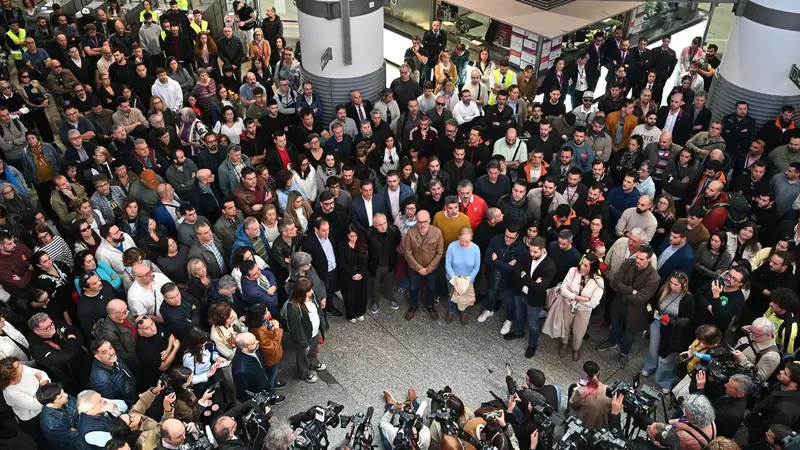
Spain's transport minister, Óscar Puente, rejected resignation calls on October 30 after the Urda train crash killed at least 69 people and put the country's high-speed rail safety under renewed pressure. Authorities said 49 autopsies had been completed and five victims identified as the investigation continued.
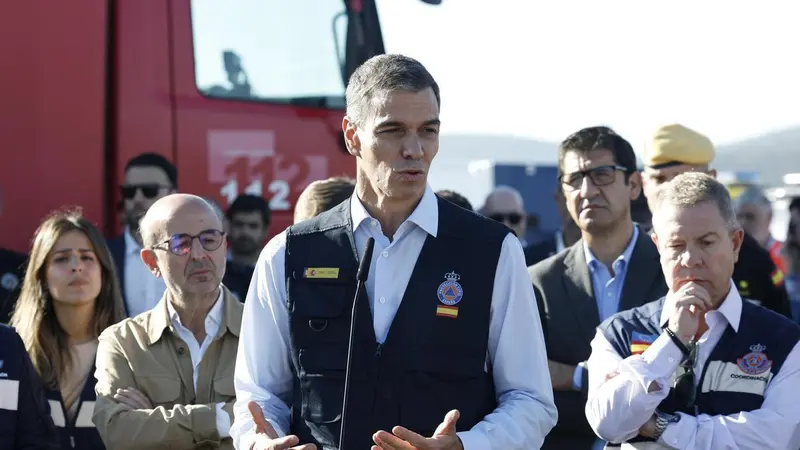
Puente said his job was to solve the problem, establish exactly what happened and explain it clearly, rather than focus on whether he should stay in office. Calls for him to quit have come from political rivals and a rail workers' union; demonstrators also protested outside the transport ministry.
Investigators are still piecing together the crash
A preliminary report released late on Thursday said the Renfe high-speed train was travelling between 160km/h and 200km/h when it struck a stationary Iryo train near Urda, in Toledo province, on the Madrid-Seville line. The impact drove the front carriage into the tail of the standing train.
The toll remains provisional, and authorities have not ruled out further fatalities.
Puente says maintenance is not in question
Puente said there had been 170 incidents involving the LZB signalling system in 2026, a figure he described as within European norms and stable over recent years. He said investigators do not yet know what caused the communication failure and are waiting for Hitachi to receive permission to extract the records.
He also said maintenance was not in question in this crash, argued that the ERTMS system can fail too, and said the LZB replacement on the line had been delayed only a limited amount, with completion expected in early 2027.
Safety questions are reaching beyond one crash
The collision has reopened a debate over Spain's high-speed network, the largest in Europe. In January, another crash on the same Madrid-Seville route killed 46 people in Adamuz, turning rail safety into a political problem as well as a technical one.
Alberto Núñez Feijóo, the leader of the opposition People's Party, accused the government of abandoning a safety culture and called for a rigorous investigation, a full review of the Madrid-Andalusia line, an immediate emergency plan and dedicated maintenance funding. The Junta of Andalusia said its own calculations showed traffic had risen by nearly 50% while investment per train and kilometre had fallen by 26.1%.
Leaked audio recordings published in Spanish media also added to the scrutiny, appearing to show a train being cleared to move even though another train had stalled on the track about 25 kilometres ahead. The recordings have been published in Spanish media as questions about the crash remain unresolved.


Comments
To comment, sign in or create an account. Sign in Create an account
No comments yet.